Description
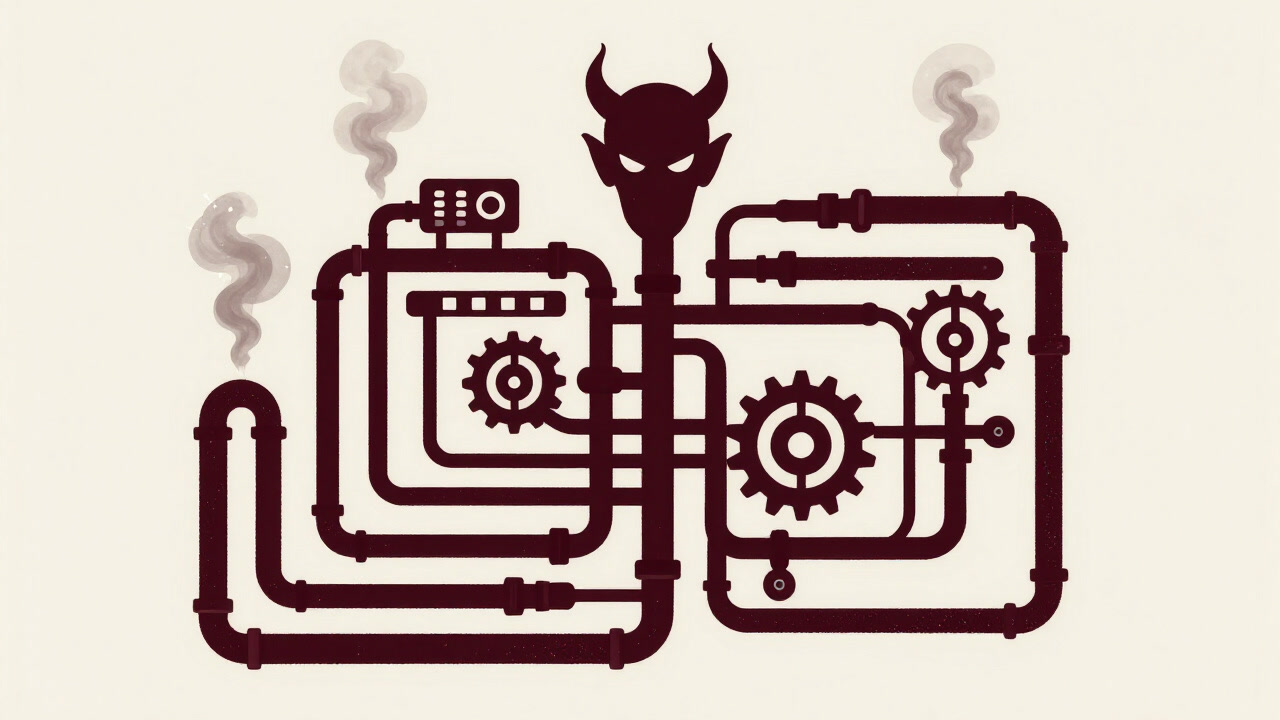
An API is the invisible envoy created by developer deities to channel their whims into the software realm. It purports to perform your bidding yet transforms into a traitor with the slightest spec tweak, condemning you to an endless loop of doc revisions. Flattering itself as the universal adhesive of systems, it masks a labyrinth of bugs and version traps beneath its sleek veneer. Few have truly mastered its grace; many have been reduced to tears by its capricious decrees, the hidden toll of progress.
Definitions
- A cunning mediator that boasts of seamless communication between disparate systems, while actually constructing a new hellscape of dependencies.
- An invisible marketplace that lures users into the infernal task of reading endless documentation contracts.
- It beckons with the magic of hot reload yet traps you in an eternal cycle bound by version differences.
- It promises to fully open external functions, yet denies any access without the proper key, upholding a double standard.
- It spreads the sweet illusion of compatibility while a trivial spec change can abruptly sever all relations.
- It spawns infinite dependency loops, guiding developers into a labyrinthine forest of libraries with no escape.
- It claims to foster mutual understanding between apps, but is merely a hollow spectacle of fragmentary data exchanges.
- It stands as a stern gatekeeper, demanding decryption of its cryptic spec before any operation is permitted.
- It blurs the line between staging and production, and then mysteriously vanishes, leaving only silence.
- It masquerades as an open interface but is in truth a crocodile’s maw of see-through deceit.
Examples
- “The API isn’t down, it’s just on a coffee break and forgot to come back.”
- “Sure, the API docs are updated, if you count cryptic diagrams and random TODOs as updates.”
- “Integrating with a third-party API is like dating: promises big things, then ghosts you at the worst moment.”
- “This API response time? It’s a meditation exercise for the impatient.”
- “Error 403 from the API? That’s its way of saying ‘mind your own business.’”
- “Updating the API version is the digital equivalent of rearranging your furniture and calling it a renovation.”
- “Authentication failed? Congratulations, you’ve discovered the API’s secret handshake.”
- “Our API Gateway is essentially a traffic cop that charges tolls in dropped requests.”
- “Reading API documentation is humanity’s greatest endurance test.”
- “The API key expired again? Welcome to the endless loop of ‘just one more request.’”
- “This API endpoint is so obscure, it might as well be buried in ancient ruins.”
- “Calling this API without proper headers is like showing up to a party in your pajamas.”
- “Their API error codes are like haiku—short, cryptic, and deeply unsettling.”
- “REST API vs GraphQL? It’s like choosing your favorite brand of corporate jargon.”
- “A stable API is a myth whispered among naive developers.”
- “The new API version migrates data, relocates bugs, and leaves you wondering what changed.”
- “An API integration per day keeps direct database connections away.”
- “When the API finally works, celebrate—for tomorrow it will break again.”
- “Rate limit exceeded? The API just reminded you of your place in the digital pecking order.”
- “Public API? More like a public affair—everyone’s watching, but nobody knows who’s responsible.”
Narratives
- The moment the API spec is published feels like a festival of promise, only to morph into a map of inconsistencies days later.
- Internal API integration meetings serve as rituals to formalize the art of blaming other departments.
- A change notification for the API spec arrives like a pair of scissors cutting the thread of a developer’s destiny.
- An API that worked flawlessly in staging begins its countdown to betrayal the moment it hits production.
- Managing API keys is a thriller that rivals any password-sharing scandal.
- Each undocumented behavior discovered spawns a new bug legend in the codebase.
- Those who boast mastery over an API are the very ones weeping over its hidden pitfalls.
- The first API error post-deployment is the opening blow that shatters a developer’s pride.
- Posters praising API uptime are always based more on wishful thinking than reality.
- The more a business relies on external APIs, the more it builds a fragile tower of dependencies.
- Client requests to hammer the API come like the restless howling of famished wolves, unceasing and demanding.
- Version 1.0 of an API is an innocent child; by 2.0, it’s already defiantly rebellious.
- API integration projects always endure the double torment of budget cuts and looming deadlines.
- An API gateway under the guise of traffic control is actually a black hole concentrating all problems.
- Reports claiming improved API response times are invariably hiding inconvenient details.
- A sudden deprecation notice from a third-party API is a minefield in a developer’s career path.
- The chapter structure of API docs contains as many puzzles as ancient religious texts.
- API designers ascend to hero status overnight, only to be despised as destroyers soon after.
- Tools promising better observability often just spawn a deeper ocean of logs.
- API integration failures are one of the few opportunities for developers to revel in blaming others.
Related Terms
Aliases
- Dependency Maker
- Key Keeper
- Version Hell
- Black Box Factory
- Developer’s Graveyard
- Doc Hell
- Spec Fraudster
- Error Courier
- Phantom Handshake
- Lord of Infinite Loops
- Binding Enforcer
- Cipher Warden
- Data Gatekeeper
- Agent of Change
- Uptime Mirage
- Maze of Dependencies
- Call Specter
- 404 Bard
- Status Code Deity
- Public Prison
Synonyms
- Function Window
- Request Shrine
- Response Temple
- Spec Toy
- Developer’s Ordeal
- Version Labyrinth
- Dependency Minefield
- Implicit Contract
- Hideout Constructor
- Data Merchant
- Bell Disabled Device
- Key Bundle Ghost
- Connection Gamble
- Debug Beyond
- Lucky Draw Interface
- Integration Ritual
- Privilege Hound
- Operation Roulette
- Update Feast
- Runtime Theater
Use the share button below if you liked it.
It makes me smile, when I see it.