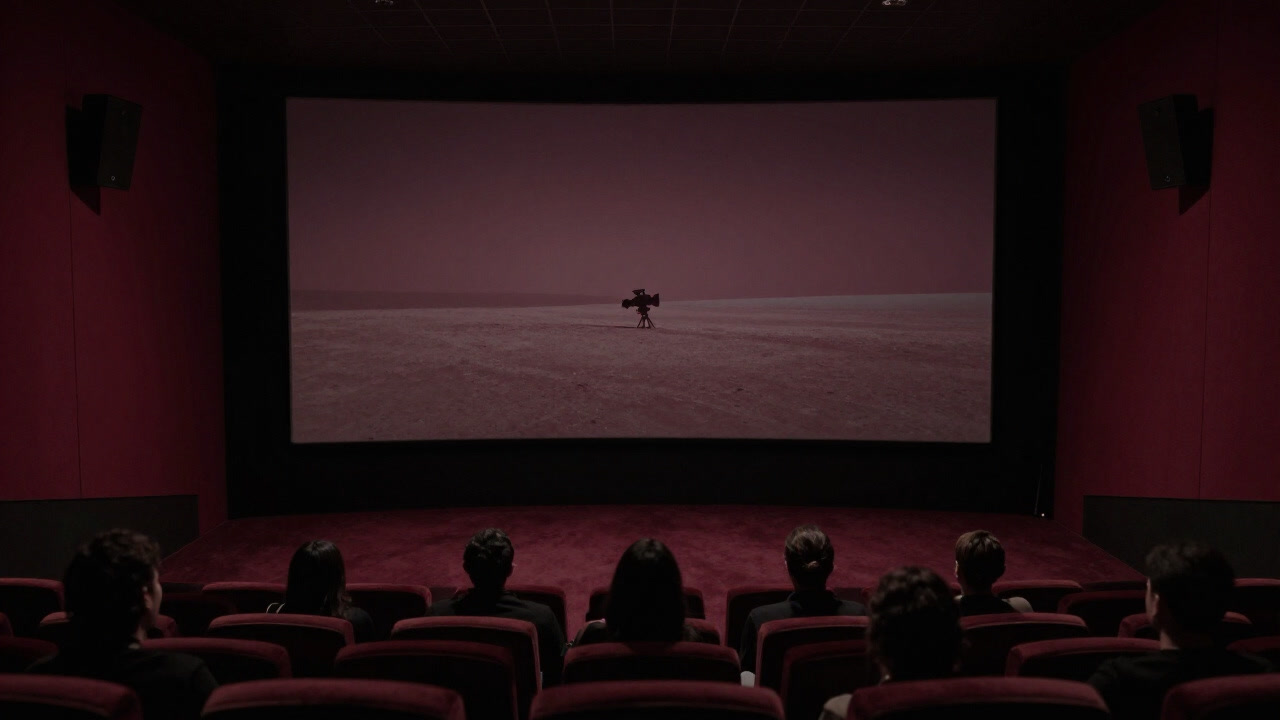
Description
Definitions
- A cinematic torture device designed to test the audience’s threshold for boredom.
- Aesthetic ritual where narrative is mere ornament and prolonged silence holds ceremonial value.
- The void of empty screen time becomes a sanctum guiding viewers into a labyrinth of thought.
- A masquerade that brands obscurity as sophistication while masking the creator’s self-indulgence.
- Silence after the screening is a ceremony that convinces viewers they are sages.
- A visual ascetic practice that eschews commercial entertainment in favor of pain and enlightenment.
- An unspoken pact sacrificing general audiences to earn the praise of critics.
- An apparatus forging conspiracies of comradeship through the question, “Did you understand it?”
- A cunning trick that makes meaningless long takes appear to harbor profound significance.
- Achieving the end of the film grants a singular sense of accomplishment, and no other reward is expected.
Examples
- “Arthouse film? Oh, it’s just a 15-minute shot of the sky on loop.”
- “Why isn’t anyone laughing? That’s apparently the cue to laugh.”
- “Music? How gauche. We substitute it with the viewer’s own heartbeat.”
- “Plot? That’s disgusting. We don’t do such things.”
- “Is it embarrassing to fall asleep? No, it proves your cinematic sophistication.”
- “Can someone explain what this person is thinking?”
- “Long take? They’re just too stingy to edit.”
- “I feel like I got my money’s worth… I was bored after 15 minutes.”
- “Is this art? Or just torture?”
- “Reviews are glowing, but who’s writing them?”
- “I can’t hear any applause… Is this a shared silence?”
- “Subtitles? Reading text is uncouth apparently.”
- “The actress never makes eye contact for a reason.”
- “Few cuts? Isn’t that just lazy filmmaking?”
- “Are you moved? Yes, by exhaustion.”
- “One line of dialogue conveying profundity… really?”
- “After watching, I have nothing to say…”
- “I could replicate this at home: just sit facing a wall.”
- “Critics rave about it, so I better pretend to love it too.”
- “They’re screening the same shot again? Would I come back?… Absolutely.”
Narratives
- The moment the lights went down, the audience was invited to a marathon of existential endurance rather than storytelling.
- Even though nothing happens on screen, no one dares to leave their seat, as if bound by invisible art duty.
- By the time the long take ends, the very existence of clocks feels like a sin.
- When the credits finally roll, viewers find themselves questioning the essence of their own existence.
- The real protagonist of this film is the camera tripod that never wavers and the silence that remains unedited.
- After lavish trailers, the pointless silence that follows annihilates every expectation.
- Regardless of the director’s intent, the only thing etched in viewers’ minds is their next appointment.
- Instead of forcing emotion, the screening offers the freedom known as boredom.
- Critics acclaim it, audiences don’t understand it, yet nobody can play the villain.
- Lobby discussions after the show revolve more around the pretense of comprehension than actual content.
- Paying for a ticket is a self-initiated ritual granting permission to enter the unknown.
- In the darkness, viewers mistake the sound of their own breathing for part of the film.
- The distortion between cuts is hailed as the key to the film’s profound themes.
- With every silent scene, the audience’s inner voice grows more self-tormenting.
- A screen devoid of explanation paradoxically hints at the grandest story.
- Anyone daring to check their phone mid-screening is cast as a sinner who violates the filmmaker’s sacred aura.
- In this cinema, the sense of time becomes the common language forging conspiracies among strangers.
- The absence of an ending theme is a declaration that consolation itself is a lie.
- Excessively long credits serve as a ceremonial send-off akin to a funeral eulogy for the production team.
- The unspoken question is the deepest aftertaste of the experience.
Related Terms
Aliases
- Feast of Silence
- Audience Torture Device
- Ode to the Long Take
- Obscurity Lens
- Boredom Propaganda
- Self-Indulgence Engine
- Visual Meditation
- Projection Penance
- Artistic Desecration
- Silent Praise
- Time Vanishing Machine
- Thought Abandonment Facilitator
- Lofty Delusion
- Decorative Long Take
- Conceptual Maze
- Illusion of Understanding
- Self-Satisfaction Theatre
- Critics’ Choir
- Social Prop
- Hyperlength Film
Synonyms
- House of Silence
- Cinema Bootcamp
- Wordless Drama
- Aesthetic Meandering
- Boredom Bible
- Mirror of Nihilism
- Anti-Commercial Reel
- Visual Nomadism
- Silence Quest
- Experimental Stillness
- Artistic Torture
- Silent Theater
- Film Fasting
- Ultimate Shortcut
- Non-Entertainment Film
- Pure Boredom
- Observation Ritual
- Introspective Cinema
- Length Proof
- Sustained Imagery
Use the share button below if you liked it.
It makes me smile, when I see it.