Description
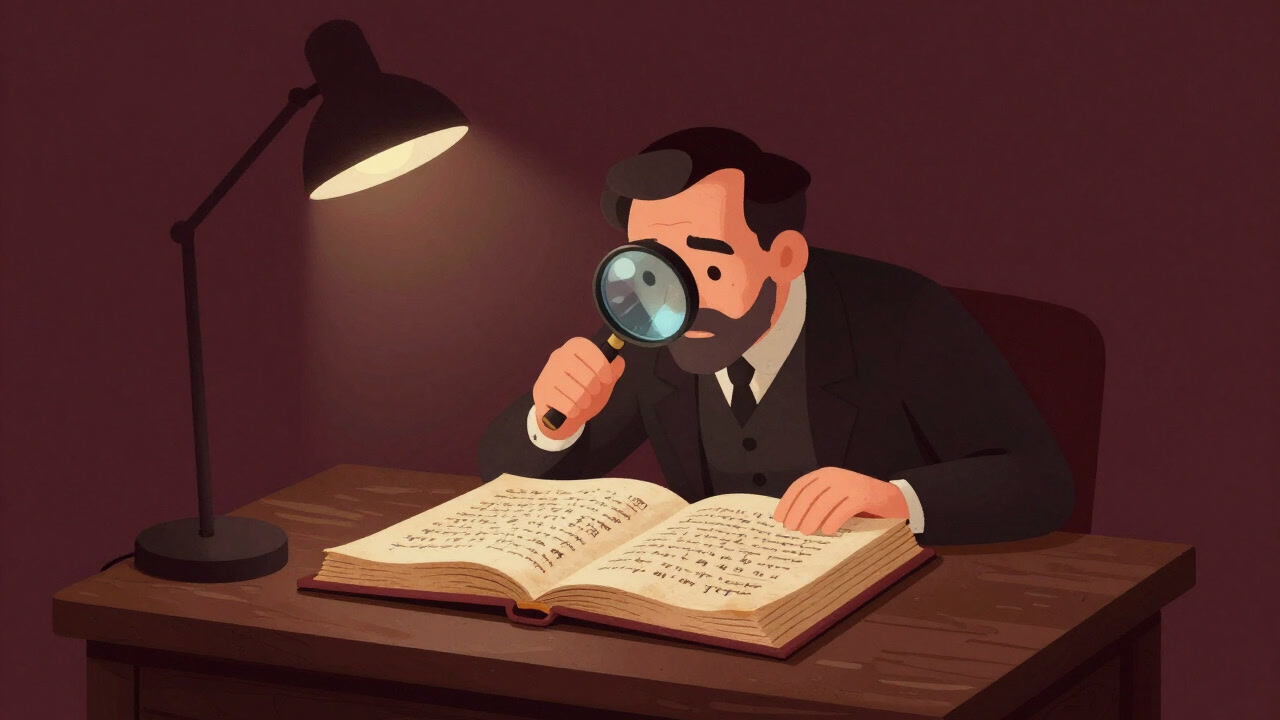
Canonical criticism is the art of dragging holy scriptures from dusty shelves and dissecting the layers of tradition down to their marrow. Stories meant to nourish faith are reconstructed as scribal blunders and power plays. Why, the devout believer never doubts that their version of the text is the “true” one, but canonical criticism shatters that illusion without mercy. Decades of revered authority can collapse over a single miscopy. The scholar peers beneath the mask of sanctity to survey the swirling human desires and biases.
Definitions
- The practice of masquerading as guardian of sacred texts while hunting for scribal errors and alterations.
- A perspective that drags comforting religious narratives onto the cold autopsy table of scholarship.
- A method of rereading consecrated writings through the filter of power structures and historical context.
- A craft that exposes the randomness of manuscript transmission, shaking the myth of immovable scripture.
- A mirror revealing the hidden desires of authors and editors behind holy words.
- A bomb that annihilates centuries of trust with a single line-by-line comparison.
- An attempt to unravel the compilation process, placing popular passages alongside suppressed voices.
- An academic discipline that cracks open the shell of scripture to inspect its textual cells under a microscope.
- A rebellious spirit that slashes myths of sanctity and authority with the blade of philology.
- An ironic dual perspective that simultaneously honors believers’ faith and the scribe’s blunder.
Examples
- “You call this the original passage? Ha! Line A and B Compare, and it’s entirely different monologues.”
- “That miracle story is a later embellishment? Without canonical criticism, we’d have believed it for eternity…”
- “Proof of sanctity? Blown away the moment we spotted the scribe’s footprint.”
- “Teachings transcend time? Reverse-engineer the text layers and you’ll find a time bomb labeled ‘original’.”
- “Canonical criticism is like torture for believers’ peace of mind.”
- “Found a discontinuity in tradition? It’s detective work aimed at the exact moment God handed the quill.”
- “That chapter was cut by editorial whim? Everything crumbles when exposed by canonical criticism.”
- “Mythical proof? Would you feel differently if it was just a series of typos?”
- “Protect the original? No, disassemble and destroy, that’s the critic’s job.”
- “Which weighs heavier: church authority or canonical criticism? The latter—it’s a scalpel.”
- “Holy mystery? Its real name is ’editorial oversight’.”
- “One true original? More like dozens of disparate fragments stitched together.”
- “Faith belongs to whom? Once the philologist’s hands get on it, it becomes public domain.”
- “Tracing manuscript traditions? It’s like forensic DNA work—for manuscripts.”
- “Canonical criticism? Trading believers’ stability for the roll of a textual dice.”
- “That commentary’s authority? Might get erased in the next edition.”
- “God’s Word? Ironical if it was a writer’s whim.”
- “Investigating where divinity dwells in the text? Truly holy troubleshooting.”
- “Believers’ tears might be smudged with the ink of a counterfeit manuscript.”
- “Canonical critics are the surgeons tearing apart sanctity in modern times.”
Narratives
- Engrossed in comparing manuscript versions, the scholar reveled in holy scriptures as though they were detective mysteries.
- One academic cherry-picked manuscripts supporting their theory and billed it as ‘rediscovery of the original.’
- In a church library, a dusty fragment overturned the very foundations of faith at first sight.
- Surveying stains on an ancient manuscript margin unexpectedly corroborated the presence of a local vintner centuries ago.
- Tracking minute textual variants feels like endlessly assembling a sacred jigsaw puzzle.
- In a lecture on canonical criticism, students panicked so much they fled the auditorium.
- A commentary’s ancient tradition turned out to be a plagiarized 16th-century peasant diary.
- A passage devoutly read by congregants was exposed as a verbatim copy of regional folklore.
- Peer reviewers have become modern guardians of cathedrals caring more for scribal errors than divine messages.
- Marginal doodles in manuscripts can offer fresh clues to reinterpret holy texts.
- A rusted paperclip dated a revision more precisely than carbon dating ever could.
- Pointing out mistranslations in literal renderings shook the definition of ’truth’ itself.
- Novices avoid canonical criticism fearing it might shake their faith foundations.
- Wielding textual criticism tools, one visualizes the hidden noise of tradition.
- A heated debate over a manuscript escalated into local conflicts prompting an emergency academic statement.
- The verse at the end of the canon remained an enigma that no edition could settle.
- Critics act like screenwriters rewriting the sacred narrative.
- Revealing the compilation history, scholars found a ruler’s initials inscribed in red ink.
- Canonical criticism strips faith of its blanket of reassurance and unlocks freedom of thought.
- Juxtaposing variants feels like imagining God doing cartwheels while writing.
Related Terms
Aliases
- Manuscript Hunter
- Text Detective
- Holy Jigsaw Master
- Canon Cannibal
- Error Exterminator
- Scribe Slayer
- Sacred Surgeon
- Tradition Thief
- Truth Butcher
- Variant Voyeur
- Divine Proofreader
- Collation Paranoid
- Originality Ninja
- Difference Devotee
- Canon Dissector
- Scholarly Vamp
- Scripture Scrutinizer
- Gospel Gobbler
- Critical Reaper
- Authenticity Assassin
Synonyms
- Manuscript Mayhem
- Scripture Scalpels
- Textual Torture
- Critique Carnival
- Authority Massage
- Faith Ego-gram
- Originality Panic
- Comparison Play
- Literal Battle
- Scribe Buster
- Myth Sculpting
- Edit Crack
- Tradition Crash
- Revision Revenge
- Awakening Zoom
- Variant Boost
- Forgery Hunting
- Editorial Trickery
- Sanctity Sadism
- Letter Liberation
Use the share button below if you liked it.
It makes me smile, when I see it.