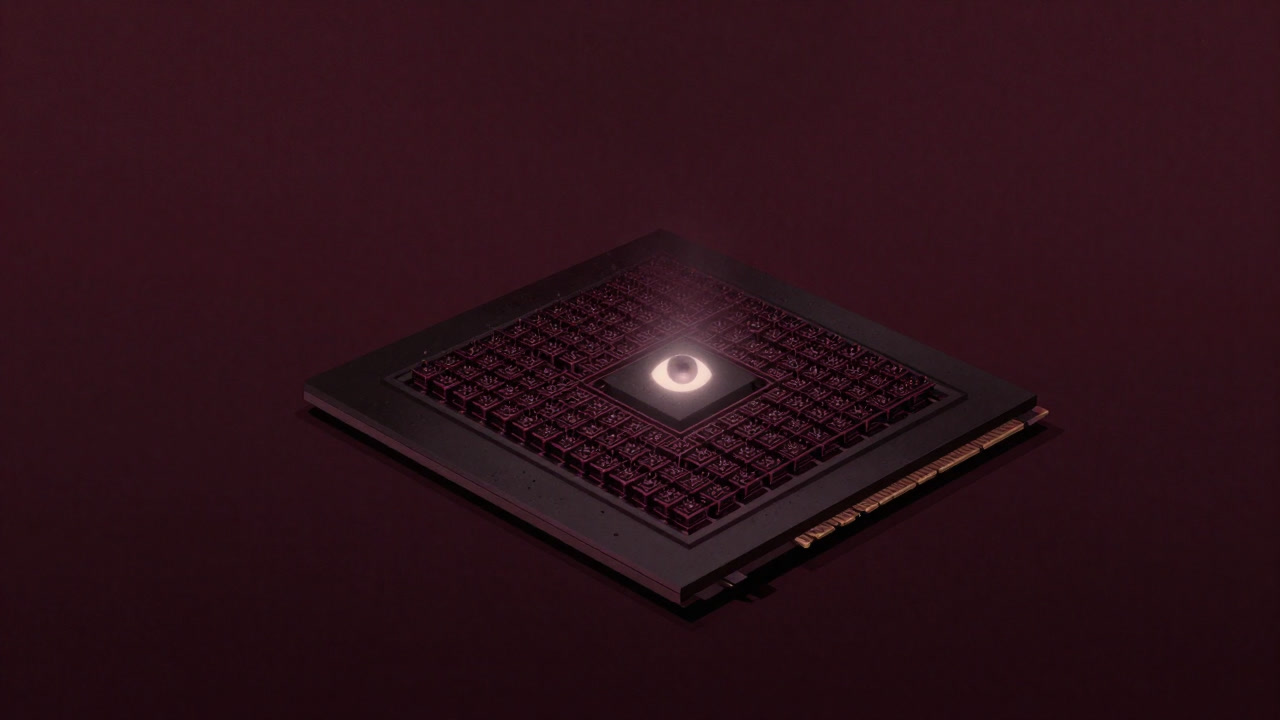
Description
CUDA is the grimoire that claims to unleash vast GPU cores while luring developers into the hell of driver updates. It promises acceleration yet conceals the terrors of bugs and compatibility. A trickster architecture that runs countless threads in parallel only to guide you into the labyrinth of debugging. Master it and witness miracles; misstep and be doomed to an unending reboot festival.
Definitions
- An architecture that demands driver-update hell in exchange for unleashing GPU’s parallel cores.
- A symbol of hardware exploitation that converts compute resources into unpaid overtime.
- A devil that teases a developer’s curiosity while leading them into the abyss of bugs and compile errors.
- A merchant boasting floating-point precision who often sells out performance and compatibility.
- A trickster that teases dreams of parallelism only to impose the nightmare of debugging.
- A provocateur that intimidates with thousands of cores while piercing your soul with a few lines of kernel code.
- A digital contract binding scientists and engineers in both cooperation and conflict.
- A savior promising to save the world in theory yet blocked by memory-bandwidth walls in practice.
- A fraudster preaching high-dimensional floating-point computation while ignoring the reality of I/O bottlenecks.
- The source of software addiction chaining you to endless driver and library updates.
Examples
- “Accelerating with CUDA? I’ll compute until the GPU screams.”
- “Calls itself integrated, yet demands separate installs each time—true genius of synergy.”
- “New driver dropped? Season of bugs is upon us again.”
- “My code compiled, yet its behavior is exploring the cosmos.”
- “Simulation result? GPU memory reached its limit—no surprise there.”
- “Beginner-friendly? The examples are all needlessly complex.”
- “Optimization? That’s an infinite loop of bugs and debugging.”
- “Next release will fix everything? Heard that ghost-story of compatibility before.”
- “Parallelism perks? A future where waiting time grows infinitely.”
- “Clear the tutorial and you earn your baptism as a brave knight.”
- “Device selection? Only when multiple GPUs exist does the company meeting convene.”
- “Kernel launch? Beginner hearts also race with that command.”
- “Checked the profiler? Ready to drown in an ocean of numbers?”
- “CUDA-aware MPI? Supposed to be teamwork, but it’s a minefield.”
- “Documentation? Folded headings feel like encrypted runes.”
- “Version compatibility? It’s a legend from a bygone era.”
- “Memory copy? Like a love affair between CPU and GPU.”
- “Containerization? Welcome to the GPU-support configuration hell again.”
- “nvcc error? Seems you misspoke the magic incantation.”
- “IDE? I long for pen and paper only when writing CUDA code.”
Narratives
- CUDA is the trial that equips vast parallel cores while forcing developers to discover how to unleash them.
- Each new version shatters existing compatibility, leaving engineers searching for patchwork through endless nights.
- Optimizing a function summons new bugs as though slaying a dragon’s tail only to watch several sprout in its place.
- Driver updates are performed like rituals, granting only the worthy the illusion of stable operation.
- Every breach of GPU memory limits transforms developers into adventurers delving into core depths.
- CUDA samples defy any semblance of regularity, resembling grimoires that demand code sorcery.
- In pursuit of floating-point precision, I/O bottlenecks slam like temple doors sealed by unseen forces.
- Developers ensnared by parallelism find themselves trapped within the dungeon of debugging.
- Each kernel launch awakens the GPU from slumber, hinting at the specter of blackouts.
- Believers in CUDA’s power stand at the edge of a crucible designed to confront them with their limits.
- Tutorials boast simplicity, yet in practice a maelstrom of problems waits beneath the surface.
- Multi-GPU setups are not symbols of collaboration but arenas of resource warfare.
- Red lines dancing on profiler graphs toll silent alarms.
- Document section headings evoke epic poetry, but real code examples feel like cliff edges without footholds.
- With each memory transfer, developers become civil engineers bridging CPU to GPU.
- The latest tuning techniques are treated like alchemical secrets.
- The CUDA compiler showers developers with warnings as if blessing them, each one breaking the hero’s spirit.
- Version-dependent landmines collapse any build caught in their blast.
- Delegating computation to the GPU is like sending one’s own avatar into an unknown realm.
- CUDA evolves relentlessly, yet compatibility cracks are left to fester without reconciliation.
Related Terms
Aliases
- Herald of Parallel Hell
- Thread Tyrant
- GPU’s Loyal Hound
- Calculator Torturer
- Memory Serf
- Compute Junkie
- Bug Gatekeeper
- Optimization Ghost
- Driver Judge
- Kernel Priest
- Compilation Vanisher
- Error Hoarder
- Framework Phantom
- Resource Beggar
- Floating-Point Zealot
- GPU Geek Factory
- Parallel Commander
- Doc Labyrinth Guardian
- Debug Desert Explorer
- Performance Addict
Synonyms
- Apostle of Computation
- Parallel Fiend
- Driver Demon
- Memory Exploiter
- Bug Harvester
- Optimization Maniac
- Core Thrall
- Framework Banshee
- Matrix Overlord
- GPU Altar
- Floating-Point Maniac
- Kernel Summoner
- Library Phantom
- Patch Enforcer
- Compatibility Wraith
- Hardware Overseer
- Profiler’s Curse
- Code Landmine
- Resource Beast
- Version Hellking
Use the share button below if you liked it.
It makes me smile, when I see it.