Description
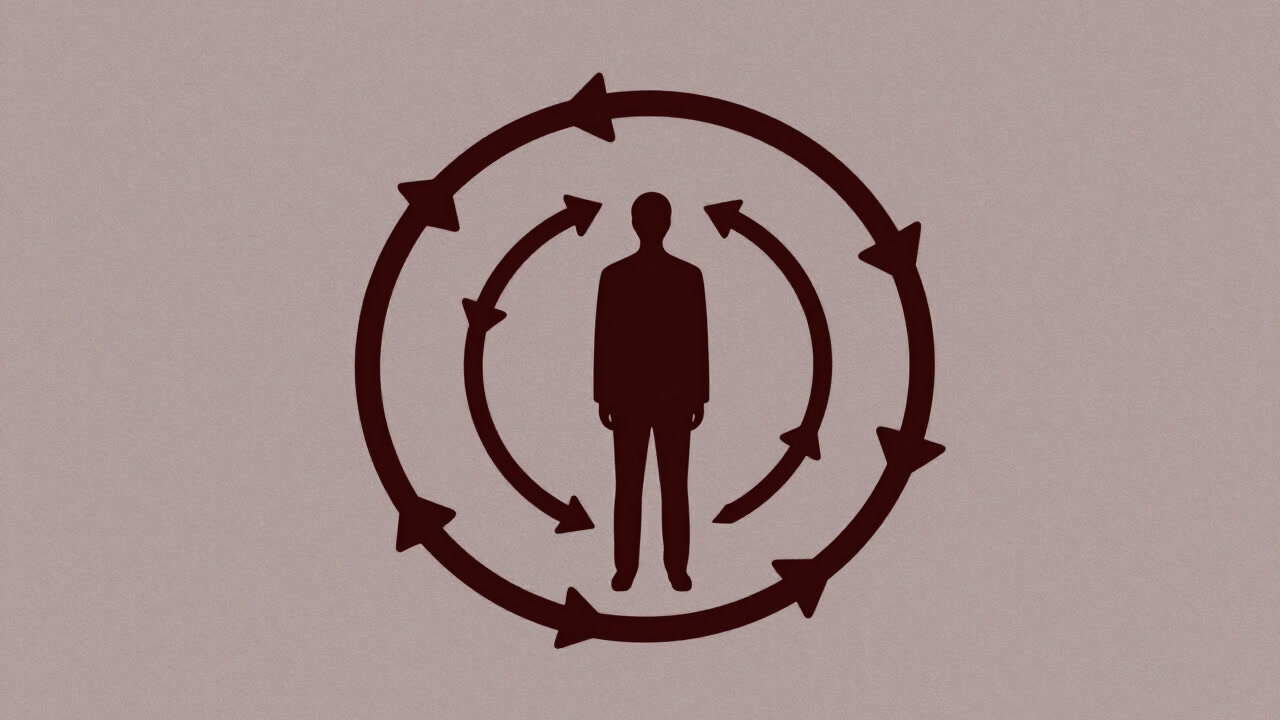
Circular reasoning is a logical exercise in which one uses the conclusion as its own premise to prove itself. It resembles a self-congratulatory ritual, applauding one’s argument as it circles endlessly. Insisting “therefore it is true” with clenched teeth transforms debate into a labyrinth without exit. Though unfit for genuine truth-seeking, it paradoxically offers comfort to the self. Ultimately, it swallows the real question and returns you to the same point, providing a rich feast of logical circularity.
Definitions
- A logical patio where the conclusion is repeatedly recycled as its own premise.
- A roller coaster of argument where evidence and conclusion loop infinitely.
- A self-referential ghost of thought that assumes its answer before the question.
- A source of comfort that circles the debate endlessly, rejecting any evolution.
- A psychological trick that masquerades as truth-seeking but only amplifies one’s claim.
- A self-celebratory ritual substituting proof with applause.
- An invincible paradoxic logic rebuking all counterarguments by default.
- A logical centipede consuming the root of inquiry and showing the same scenery.
- A paradoxical tunnel where conclusions sneak into premises unnoticed.
- A mental fortress that expels doubt and entombs the thinker in bliss.
Examples
- “Can you prove your claim?” “Certainly. Because this conclusion is true.”
- “Why is it true?” “Because the proof is already here.”
- “Is the logic sound?” “Of course, evidence is evidence.”
- “Show me the conclusion.” “Here it is, proof of its own correctness.”
- “What’s your premise?” “Only the conclusion serves as premise.”
- “Any counterarguments?” “Counterarguments? The conclusion is all there is.”
- “How did you arrive there?” “Because that destination is true.”
- “Isn’t that just a premise?” “No, it’s a premise by the name of conclusion.”
- “Any doubts?” “All doubts are already resolved.”
- “This is going in circles.” “Exactly the charm of my argument.”
- “Explain again?” “No need. The conclusion explains itself.”
- “Does this proof mean anything?” “Its meaning lies in the conclusion alone.”
- “Looking for feedback?” “Just follow the conclusion and be fine.”
- “What do you think?” “I think it’s correct, no need to wonder.”
- “Show me evidence.” “The conclusion is the evidence.”
- “You didn’t provide premises.” “They’re provided: the conclusion before you.”
- “…This is circular reasoning?” “Let’s call it intellectual play.”
- “Reasons to believe?” “Because I believe it, of course.”
- “I don’t get it.” “That in itself proves you understand.”
- “Is this debate over?” “The conclusion declares it’s over.”
Narratives
- In the meeting room, his explanation never even completed a full circle, for he used his conclusion as premise from the start.
- The professor asked the student a question. The student replied, “Because the answer is already written in the premise.”
- In court, the witness declared, “The evidence proves this testimony is correct,” freezing the courtroom.
- She, fond of debate, began her speech with her own conclusion before organizing any points.
- On the debate show, one speaker proclaimed, “This theory is already acknowledged as true.”
- His proudly announced new hypothesis consisted entirely of self-reference from beginning to end.
- Philosophical text was beautiful, yet readers got lost in its circular structure.
- During orientation, the boss insisted, “We will achieve goals because achieving is possible.”
- His arguments were always self-contained palaces, rejecting any external support.
- At the debate club, the opponent refused rebuttal, insisting “That is the evidence.”
- On social media, a user cited their own tweet to prove their point.
- The author declared at the story’s end that the ending itself was the truth.
- The company’s slogan boldly stated, “We’re the best because we’re the best.”
- He never answered questions, repeating only, “It’s as I said at the start.”
- A lecture slide inserted the conclusion as a premise mid-presentation.
- After the debate, everyone commented in unison, “His argument felt strangely reassuring.”
- Ancient orators carved their conclusions into stone tablets as questions.
- A researcher proved their hypothesis by treating it as absolute fact.
- The board room revolved on the premise that decisions were correct by default.
- The speech concluded by asserting that no proof was needed to validate the claim.
Related Terms
Aliases
- Self-Applause Machine
- Evidence Eater
- Looping Contraption
- Circular Creeper
- Never-Ending Circuit
- Conclusion Addict
- Premise Inverter
- Comfort Cycle
- Question Swallower
- Endless Tunnel
- Praise Engine
- Logic Desert
- Infinite Corridor Merchant
- Refutation Refuser
- Conclusion Dispenser
- Premise Thief
- Labyrinthist of Logic
- Comfortist
- Self-Referential Alchemist
- Eternal Debater
Synonyms
- Self-Referential Specter
- Evidence Loop
- Argument Whirlpool
- Reason Thief
- Premise Empire
- End-as-Start Fallacy
- Belief Circuit
- Argument Spin-Out
- Hypnotic Logic
- Claim Altar
- Reasoning Carousel
- Counterargument Lockout
- Answer-First Method
- Point Hide-and-Seek
- Elegant Sophism
- Unbeatable Assertion
- Circular Facade
- Tangled Thought
- Truth Self-Play
- Self-Satisfaction Debate
Use the share button below if you liked it.
It makes me smile, when I see it.