Description
Dubbing is an audio collage in which a stranger’s voice arbitrarily reconstructs the narrative on screen. It shatters language barriers through voices exquisitely out of sync with actors’ lips while dismantling and reassembling the original performance. Lip-sync mismatches often become unintentional gags, offering viewers a subtly subversive laughter. Creators carry the dual mission of translation and performance to bridge cultures, occasionally opening new emotional frontiers. It’s an audio revolution that asks the audience whether it conveys the true voice or merely conceals vocal truth.
Definitions
- A variant of audio theater that speaks lines unrelated to on-screen lips, translating and recreating the narrative.
- A dual-layer entertainment that stirs cross-cultural emotions and twists the original performance.
- An audio magic trick that creates uncanny lip-sync dissonance, injecting unintended laughs.
- A convenient substitute that instantly erases the hassle of subtitles but sacrifices the original nuances.
- A festival of dissonance where voice actors obliterate original intonations and force new meanings.
- A linguistic experiment that makes audiences feel they understand foreign drama, only to confuse them with mistranslations.
- A localization ritual that lets stories inhabit one’s culture by replacing voices with familiar tones.
- A precursor to deepfake, carving up speech to breathe new life through someone else’s vocal cords.
- An absurd harmony produced when the audio director’s timing diverges from the actor’s mouth movements.
- A global means of storytelling that recounts wavering truths between original and translation in a different voice.
Examples
- “Thanks to dubbing, who could have predicted actors’ true voices would be erased?”
- “I considered using subtitles too, but my eyes just aren’t up for it.”
- “It’s like the voice actor’s talent is battling the original soul of the film in this scene.”
- “Emotion that transcends language? No, it’s laughter that transcends voice acting.”
- “Perfect dubbing is a myth. Those subtle mismatches are the real charm.”
- “The voice actor overshadowing the original actor? That’s modern times for you.”
- “All the sweat and effort of the dubbing team vanished with one translation error.”
- “Listening to the secondary audio makes the original performance look like a ghost show.”
- “The timing’s off and now the character’s cracking jokes at itself.”
- “Subtitles are a hassle, so dubbing; dubbing’s a hassle, so go to sleep.”
- “Am I the only one who sees the voice actor dancing off-screen?”
- “The dubbed version contains all the behind-the-scenes drama, you know.”
- “Original voice actor vs. dub actor showdown: who’s the champion?”
- “Dubbing director: ‘Three milliseconds earlier!’—repeat ad infinitum for 20 years.”
- “I translated every word accurately, yet the nuance is a sandcastle.”
- “A carnival of madness dedicated to perfect lip-sync.”
- “Once you enter the abyss of dubbing, even the original becomes suspect.”
- “Audio direction, a bombardment of chaos under another name.”
- “The sin of experiencing foreign drama in your mother tongue.”
- “The real power of voice lies beyond the screen.”
Narratives
- From beyond the screen, a stranger’s voice slid in, as if rewriting the narrative itself.
- The actor’s eyes and voice split apart, leaving viewers puzzled by a strange duet.
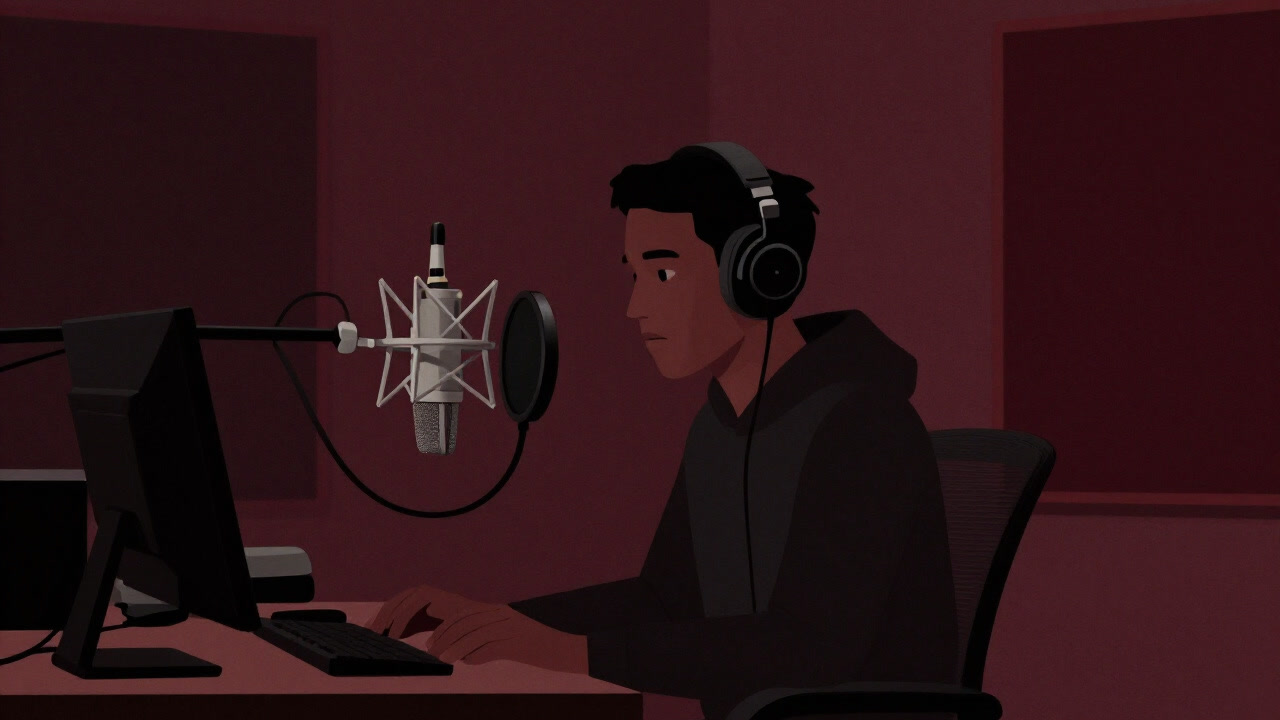
- In the dubbing studio, the microphone awaits the tightrope walk between translation and performance.
- Lines meant to be faithfully translated morphed into a new creature through the actor’s delivery.
- Dubbing grabs the viewer’s attention, leaving no time even to read subtitles.
- Technicians searching for vocal nuance resemble audio alchemists experimenting in silence.
- A tense hush always descends on the theater before a dubbed screening begins.
- Delicate emotions are poured into fluent Japanese, birthing entirely different joys, sorrows, and anger.
- Audiences don’t miss the fine seams of dialogue woven by translators and actors in tug-of-war.
- In the pursuit of perfect dubbing, the original sometimes becomes treated like a ghost.
- Before the mic, the voice actor continues to live a second life for invisible spectators.
- Waveforms in editing software bear the etched conflict between translation and feeling.
- At times, misaligned timing makes it sound as if the on-screen actor is shouting from another dimension.
- Dubbing resembles surgery that strips away a story’s skin to reveal its inner flesh.
- On set, meticulous rehearsals are held to rescue every mistranslation.
- The actor’s breath vibrates the screen and trembles even the audience’s heartbeat.
- Those called masters of dubbing are champions escaping the labyrinth of language.
- The tiny booth transforms into a resonance chamber absorbing emotions from around the world.
- Sometimes the translator’s agony rides the voice, arriving onscreen as a faint tremor.
- Dubbing is a festival where unseen crew become voices supporting the tale.
Related Terms
Aliases
- Voice Magician
- Lip-Sync Phantom
- Audio Replacer
- 2D Voice
- Dubbing Craftsman
- Voice Dismantler
- Translation Mixer
- Frame Overlord
- Sound Carnival Host
- Shadow Actor
- Line Hunter
- Localization Priest
- Timing Tamer
- Sync Artisan
- Dub Master
- Lip-Sync Maniac
- Voice Bleach
- Narrative Rebuilder
- Audio Costume Changer
- Subtitle Eradicator
Synonyms
- Mask of Sound
- Translation Tiger
- Drama Overwrite Device
- Voice Matryoshka
- Line Factory
- Cultural Recycler
- Cross-Language Entertainment
- Vocal Variations
- Audio Plastic Surgery
- Duplicate Interpretation Theater
- Language Swapper
- Dubbing Wonderland
- Voice Metamorphosis
- Mismatch Symphony
- Sound Camouflage
- Voice Actor Survival
- Translation Prison
- Silent Film Reversal
- Word Transformer
- Local Narrator
Use the share button below if you liked it.
It makes me smile, when I see it.