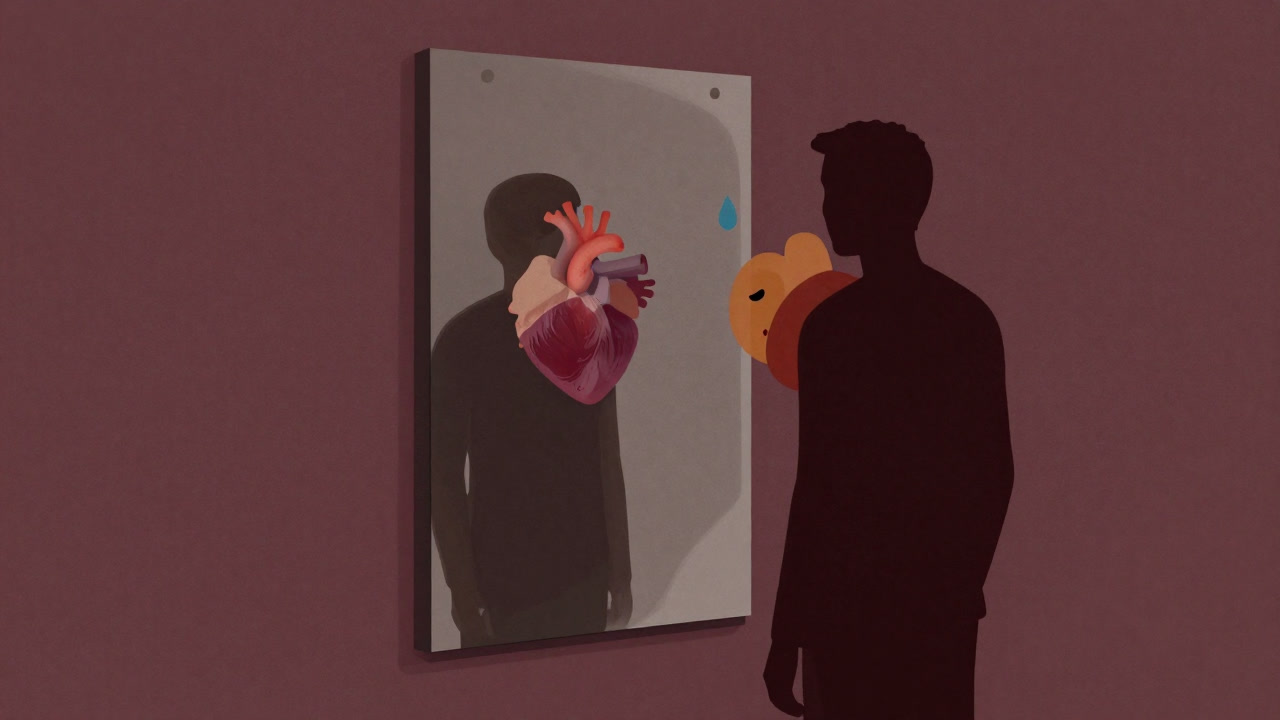
Description
Empathetic mirroring is a psychological gimmick that reflects others’ emotions like a mirror to stage your own compassion. It allows you to parrot feelings while secretly admiring your skillful nods. Used as conversational armor, it often values polished empathy over genuine understanding. In business settings, it’s marketed as trust-building, yet at heart it’s a pedal-to-the-metal ride on the illusion of actually listening.
Definitions
- A theatrical gadget that borrows others’ emotions to masquerade as genuine compassion.
- A dual spotlight reflecting the conversation partner like a mirror while illuminating your own kindness.
- An emotional beautification filter deployed under the guise of trust-building.
- An optimized nodding algorithm designed to create the illusion of true understanding.
- A function that temporarily downloads someone else’s sorrow to boost your self-esteem.
- A minimalistic magic trick that skyrockets likability by simply echoing back words.
- A cosmetic for communication, a conversational makeup that smooths over rough emotions.
- A ritualized procedure to award oneself the title of ‘deep empathy’.
- A simulated neural circuit for safely navigating the minefield of feelings.
- A standardized protocol in customer service to skip over actual emotions.
Examples
- “That sounds tough… I truly feel the same.” (Inner thought: Perfect moment for self-praise.)
- “You must be exhausted. I totally get it.” (Heart says: Hurry up and move to the next agenda.)
- “That anxiety is understandable. I empathize fully.” (Secretly craving applause.)
- “No wonder you’re angry—it’s completely justified.” (Actually didn’t read the details.)
- “I feel how sad you are.” (Certified master of feigned understanding.)
- “You’re frustrated, right? I resonate with that frustration.” (Busy worrying about my slide deck.)
- “You must have been thrilled!” (My own smile is way bigger.)
- “That pain—it’s as if it were my own.” (All part of the act.)
- “You really went through a lot. My condolences.” (Counting down to the end of this meeting.)
- “Your feelings have been received loud and clear.” (Mental mirror: check.)
- “Take your time, no rush.” (But I have back-to-back calls.)
- “Sharing your hardship honors me.” (Subtly smirking.)
- “I completely understand that concern.” (Note to self: add this to the report.)
- “Feel free to share more.” (Agenda is packed, though.)
- “Your anger is wholly justified.” (My ego is satisfied.)
- “You’re carrying some anxiety, I see.” (Secretly jotting next talking points.)
- “I felt that sorrow, too.” (Perfect echo technique.)
- “Kudos on your hard work—amazing!” (Actually thinking of quarterly targets.)
- “It’ll be better from here on.” (Wondering if Monday’s free.)
- “That joy—I share it wholeheartedly!” (Applause in my head.)
Narratives
- In every one-on-one, he wielded empathetic mirroring like a shield, echoing words perfectly, only to admire his own performance in the end.
- New hire training featured the “Empathic Mirror Workshop” yet everyone knew it was just an excuse to practice smiling professionally.
- As client complaints mounted, a chain reaction of mirror-like nods turned the office into an emotional recycling plant.
- The psychologist manual warned of empathy fatigue from overuse, but nobody bothered to read past the table of contents.
- He proclaimed “Your feelings matter,” while secretly dreading the meeting timer’s bell.
- The director entered with a call of “mirror time,” bouncing back every word from his subordinates like a photocopier.
- During the workshop, participants mirrored each other so well they forgot whose real feelings were being reflected.
- Dating guides promised universal success with empathic mirroring, but romantic partners just wanted genuine emotion.
- In the counseling room, a poster read “Don’t stare into the mirror too long.”
- Team-building always concluded with a mirroring role-play, understood by many merely as the final handshake.
- At the moment his boss received perfect mirror empathy, the subordinate felt an unexpected loneliness.
- The workshop leader left the stage, ironically unaware of his own emotional cachet.
- Customer chatbots were programmed with mechanical empathic mirroring, leaving users longing for real warmth.
- A bot was launched that simply replied “I hear you” in every customer inquiry.
- After the seminar, attendees returned home with a single hope: “I wish someone truly understood me.”
- Self-help books preach “Practice in front of a mirror daily,” yet most books gather dust unread.
- In coaching sessions, he mirrored so reflexively that he lost track of his own thoughts.
- On social media, “I feel you” became a sticker and real emotions were replaced by sleek emojis.
- The phone script ended with “Close with empathic mirroring,” as if it were legally mandated.
- That night, he stared into the mirror and asked himself, “Am I really helping anyone?”
Related Terms
Aliases
- Emotion Drop-shipper
- Empathy Bot
- Mirror-Back Machine
- Echo Uncle
- Mirrorman
- Emotional Copy/Paste
- Nod Generator
- Mind Reflector
- Empathy Ink
- Echo Button
- Mystery Empathy Device
- Emotion Copier
- Repeat Auntie
- Mirror Knight
- Empathy Bottle
- Mirror Eye
- Echo Palette
- Emotion Synchronizer
- Resonance Conductor
- Response Protocol
Synonyms
- Feignthusiasm
- Pseudo-empathy
- Echo Communication
- Mirror Conversation
- Emotion Transfer
- Empathy Mask
- Copy-Nod
- Simulated Understanding
- Echo Dialogue
- Emo-Reflection
- Sentiment Proxy
- Copy-Nod Bot
- Mirroring Technique
- Empathy Instance
- EchoCraft
- NodPlay
- Empathy Layer
- Feeling Protocol
- MirrorSpeak
- EmotionRelay
Use the share button below if you liked it.
It makes me smile, when I see it.