Description
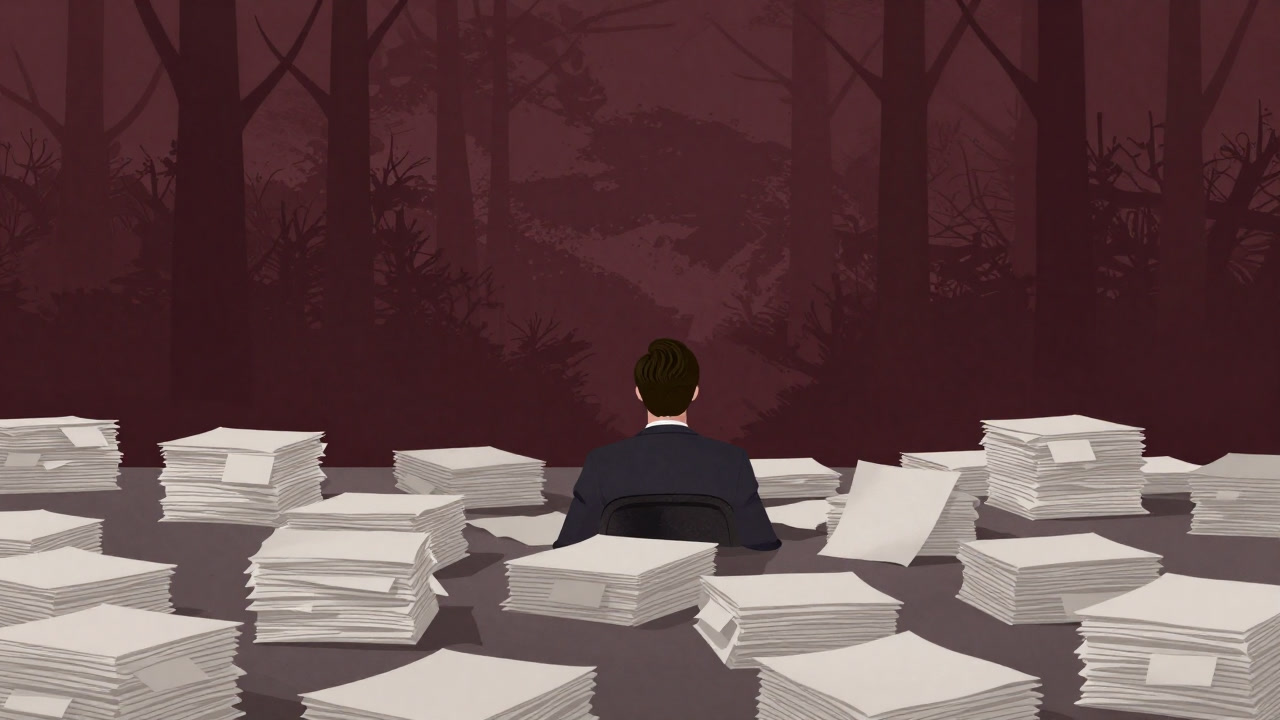
An environmental impact assessment is the bureaucratic beast lurking between good intentions and real action. If done hastily, it slides through approval; if done rigorously, it devours the budget. It convenes experts in a grand ritual that ultimately fills spreadsheets with the gap between stakeholder hopes and environmental reality.
Definitions
- A ceremonial smokescreen of documents that buries criticism under mountains of paper.
- An official text that justifies the status quo under the guise of caring for the future.
- A tool for diluting responsibility by borrowing expert opinions.
- A cunning fetter that slows progress by listing countless conditions.
- A statistical magic show crafting illusory comfort with data and graphs.
- A masterpiece gathering dust in an administrative drawer.
- A universal copy-and-paste template for the next project’s quick approval.
- A silent promise-breaker conducted in the name of environmental protection.
- A symbol of the paradox swinging between short-term gain and long-term duty.
- A negotiation battleground printed on paper, mediating conflicting interests.
Examples
- “Did you finish the EIA for the new plant?” “I just tweaked last year’s report, no worries.”
- “Budget’s tight, but we need that impact study.” “Relax, a rough estimate will satisfy the authorities.”
- “Can we proceed as is?” “No complaints allowed—we’ve got the report shield.”
- “What are the assessment results?” “We just applied a favorable scale to the graphs.”
- “Held the public meeting?” “We covered it with a half-baked PowerPoint.”
- “Deadline’s tomorrow, right?” “That’s the proper way to keep them on edge.”
- “Does it actually work?” “The mere presence of paperwork breeds comfort.”
- “Any risks?” “Pretended they were eliminated.”
- “Will it truly protect the environment?” “We make people feel protected with number magic.”
- “Consulted experts?” “Borrowed just their names.”
- “Are locals satisfied?” “Survey only allowed ‘agree.’”
- “Monitoring done?” “It’s the old ‘we’ll do it later’ scam.”
- “Got a third-party review?” “Outsourced to a buddy consultant.”
- “CO2 cuts?” “Estimated at 120% of target.”
- “Waste disposal plan?” “Let’s leave that to the imagination.”
- “Any application errors?” “Call it an environmental variation.”
- “Emergency plan ready?” “Copied someone else’s template wholesale.”
- “Can we shorten the schedule?” “Plenty of documents, time is guaranteed.”
- “Voices of residents reflected?” “We skimmed the comment letters.”
- “Think this will pass review?” “The reviewer’s our colleague, mutual favors.”
Narratives
- The head of development loudly proclaimed, “Our EIA prowess is our pride.” Yet the report went straight to storage, untouched by any hand.
- In the submission, the map was dotted with red circles, looking like a vibrant wildflower field.
- The more assessment items were added, the more the project was consumed by the poison called accountability.
- Expert comment sections contained nothing but a pasted ‘Approved.’
- Residents’ concerns were itemized as conditions, ultimately becoming mere decorative checkboxes.
- The report team, surrounded by parameters, found their hearts stolen by formatting, not the environment.
- After submission, the report sat untouched as if its credibility was being tested in perpetuity.
- Analysis data was elevated to Excel-cell-merge art, incomprehensible to everyone.
- At the review meeting, proponents and opponents lined up equally, a theatrical set for showcasing consensus.
- The monitoring screen only danced with rising numbers, warnings forever postponed.
- Environmental preservation was a festival where only the report’s title shone in glory.
- Each time the person in charge changed, the report was shelved as ‘To Be Improved.’
- The bar graph looked beautiful, yet its raw data had been discarded long ago.
- A ‘Draft’ stamp remained on the submitted document, deemed the safest version.
- Discarded EIAs lie quietly gathering dust in the underground archives.
- The whiteboard read only ‘Assessment Passed,’ burying all details in darkness.
- The scolded assessor was lectured on the virtue of ‘speed over quality.’
- During vendor selection, cost trumped the very existence of the impact report.
- The newly added ‘Emergency Response’ chapter ended unseen by any eye.
- Jokes circulated that next project they’d bring only persuasion instead of a report.
Related Terms
Aliases
- Guardian of Paper Walls
- Shackle of Tomorrow
- Excuse Engine
- Data Sorcerer
- Numeric Alchemist
- Approval Labyrinth
- Liability Evader
- Environmental Oblivion Device
- Stamp Dancer
- Expert Borrower
- Graph Fabricator
- Monitoring Neglector
- Report Maze
- Dummy of Ecology
- Standard Formatter
- Condition Hunter
- Assessment Jester
- Invisible Auditor
- Paper Dragon
- Review Backer
Synonyms
- Eco Paperwork
- Virtual Conservation
- Formalist Ceremony
- Approval Copy-Paste
- Liability Spreader
- Myth of Safe Fiction
- Expert Stamp
- Assessment Punching Bag
- Boxed Ecology
- Blank Altar
- Proposal Fabrication Art
- Condition Parade
- Monitoring Mirage
- Report Cloning Machine
- Protection Performance
- Observation Ignorer
- Future Guarantee Sign
- Formatting Magic
- Project Sleep Device
- Approval Entertainment
Use the share button below if you liked it.
It makes me smile, when I see it.