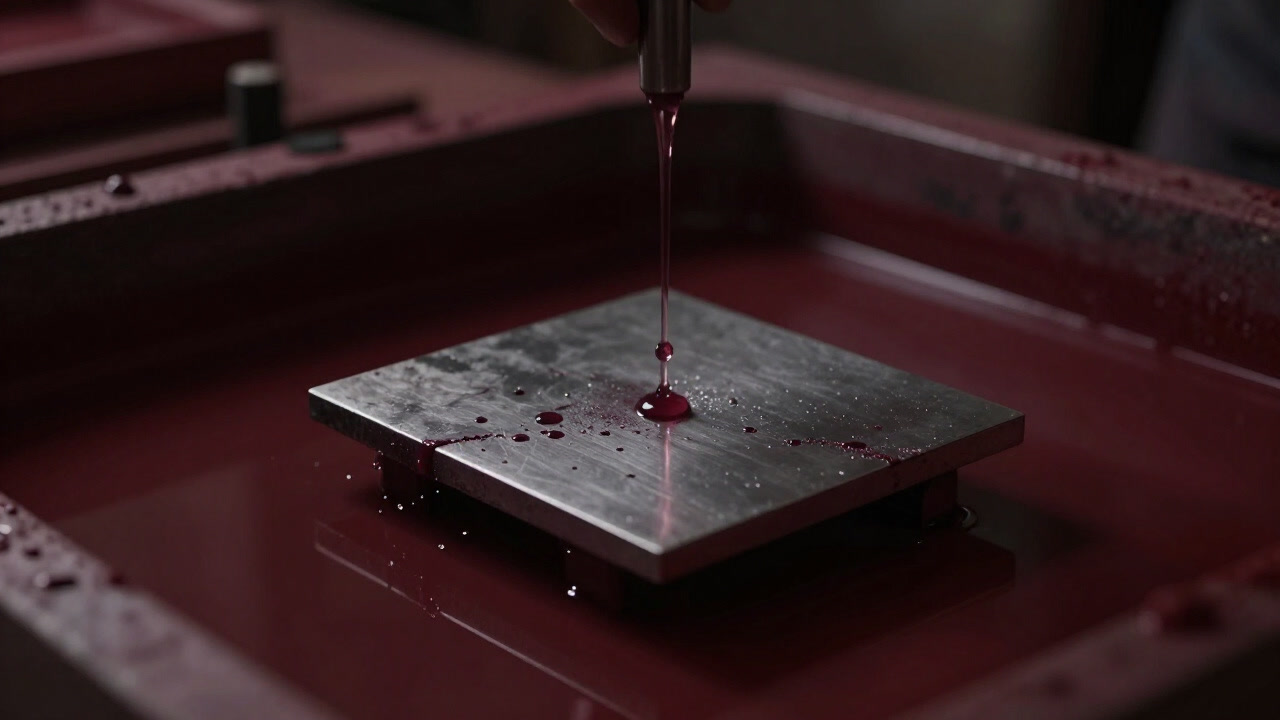
Description
Etching is the act of enacting alchemy on copper or zinc plates with acid, tearing apart the artist’s nerves and time. The intricate lines woven by acid and paper bestow a lofty illusion of beauty upon the observer while leaving the creator in agonizing impatience. The finished prints are venerated in galleries, yet each impression consumes both the metal surface and the artist’s passion like friction. With every bath that rinses the plate, the printmaker is reminded of their toil and must plunge into the next plate’s merciless embrace. Thus, etching emerges as a tragic art that, the higher it ascends, the more it gnaws at the maker’s flesh and spirit with acid.
Definitions
- A technique that bathes a metal plate in acid to physically engrave the pain of art.
- An artistic torture device that tests the printmaker’s nerves and endurance with every intricate line.
- The shadows born of corrosion pose as high art while reminding viewers that they are etched in rusted sacrifice.
- A foolish yet noble ritual of diluting pain through countless proofs and adjustments on paper.
- A unique print created by the dance of acid and ink, hiding countless unseen failures within its fibers.
- Historically a pastime for nobles, in reality a metal-plate attrition warfare waged by penniless artists.
- Each impression worn from the plate bleeds away both the metal and the maker’s time and budget.
- The most bittersweet method among hand-print techniques, delivering the sourest of conclusions.
- Beneath the pages of highbrow art volumes lies a studio saturated with the smell of acid-laden experiments.
- Claiming the throne of printmaking, yet teaching that before acid and water, all are powerless—a paradox of art.
Examples
- ‘A new etching? Ah, the scent of acid—just like an artist’s sob echoing in metal.’
- ‘Etching is the art of patience, they say? Funny, I only see joy in playing with corrosive baths.’
- ‘That subtle line is thanks to etching. Mistakes hide so well, nobody ever notices.’
- ‘Etchings sell for big money at galleries? So artists make cash by bathing metal in acid.’
- ‘You only get a handful of prints from a plate? Truly disposable art for the modern age.’
- ‘Handling acid is risky. Plates melt and so do your hands. Artists’ limbs are ephemeral.’
- ‘What etching really needs isn’t an eye for beauty but a gas mask and sturdy gloves.’
- ‘His etchings look like a corroding metal screaming in its own blood.’
- ‘First time etching? Prepare to drill holes in the metal—and in your pride.’
- ‘Etching is art’s detox: failures stay printed on paper forever.’
- ‘They say the acid marks in that etching are beautiful? No, they’re the artist’s regrets.’
- ‘The studio smells of etching… a potent blend of dreams and perspiration.’
- ‘Art is self-expression? Etching is outright self-destruction.’
- ‘Collector: Print more etchings! Artist: We’re out of acid.’
- ‘The principle of etching is simple: scar the metal, transfer its pain to paper.’
- ‘Etching textbook? Step-by-step guide for acid, water—and remorse.’
- ‘She loves etching? That acid will dissolve even her soul.’
- ‘Can you capture tiny details in etching? Sure, provided you imprint your tears too.’
- ‘A plate left in acid too long is like an artist’s past best forgotten.’
- ‘No technique desecrates metal like etching—and that, my friend, is its beauty.’
Narratives
- The early summer studio reeked of acid as the artist donned a gas mask and poised the blade above the plate.
- With every etching bath, the emerging lines seemed to carve past regrets into the metal.
- Each proof pulled from the plate wore down its edges, slowly bleeding the work’s lifespan away.
- Hung against a pristine gallery wall, the etching conveys artistic intensity while concealing countless rinsed acids.
- He felt a visceral fear the first time he drained the acid, as if his own lifeblood were seeping out.
- Etching is alchemy that locks acid traces and the artist’s sweat onto a single sheet of paper.
- Papers drying by the studio window appeared as fragments of memory offered to the whims of acid.
- An art historian called the print ‘a poem of shadows,’ but the maker heard only the wail of metal.
- More than any wash tank, the artist’s emotions were caught in the vortex of corrosive baths.
- The final cleaning ritual diluted the tragedy of production into a faintly palatable elixir.
- She used her failed proofs as scratch paper, reveling in the contradiction of waste within art.
- Whenever the acid-laden air touched their skin, visitors felt they shared in the creator’s anguish.
- Old prints vanish because acid itself is the greatest artist of all.
- The etching workshop resembled the prayer chamber of a modern alchemist.
- Untouched surfaces bore the maker’s hopes, while corroded lines pulsed with despair.
- Shelves lined with finished proofs stood as tombstones of misshapen art and living testimonies alike.
- Viewers pressed their noses to the frame, trying to decipher the acid’s narrative between plate and paper.
- Sorting trial proofs from discards drew a boundary of success and failure etched in acid.
- Critics’ lofty words about etchings often lack the truth held within every acid scar.
- When the last proof dried, only the echo of acid’s aftertaste lingered in the silence.
Related Terms
Aliases
- Poet of Acid
- Metal Skin Stripper
- Printmaker’s Undertaker
- Corrosion Alchemist
- Memory Distiller
- Failure Repository
- Sacrificial Filigree
- Acid Bath Barrister
- Unlimited Scratch Printer
- Symphony Conductor of Corrosion
- Metal Blanket Remover
- Tear Lithograph
- Hall of Aquaforte
- Etching Warlock
- Orchestra of Shadows
- Corrosion Jester
- Bronze Groaner
- Guardian of Rotten Art
- Acid Playground
- Despair Press
Synonyms
- Acid Sculpture
- Corrosive Print
- Metal Doodle
- Micro Torture Technique
- Cry-lithograph
- Chemical Linework
- Detox Art
- Pinprick Torture
- Acid Bouquet
- Tragedy Imprint
- Line Experimentation
- Corrosion Chronicle
- Metal-Acrylic
- Paper Skin Graft
- Rust Pattern Art
- Decaying Beauty
- Etching Opera
- Acidic Lyric
- Bronze Moan
- Acidic Drama
Use the share button below if you liked it.
It makes me smile, when I see it.