Description
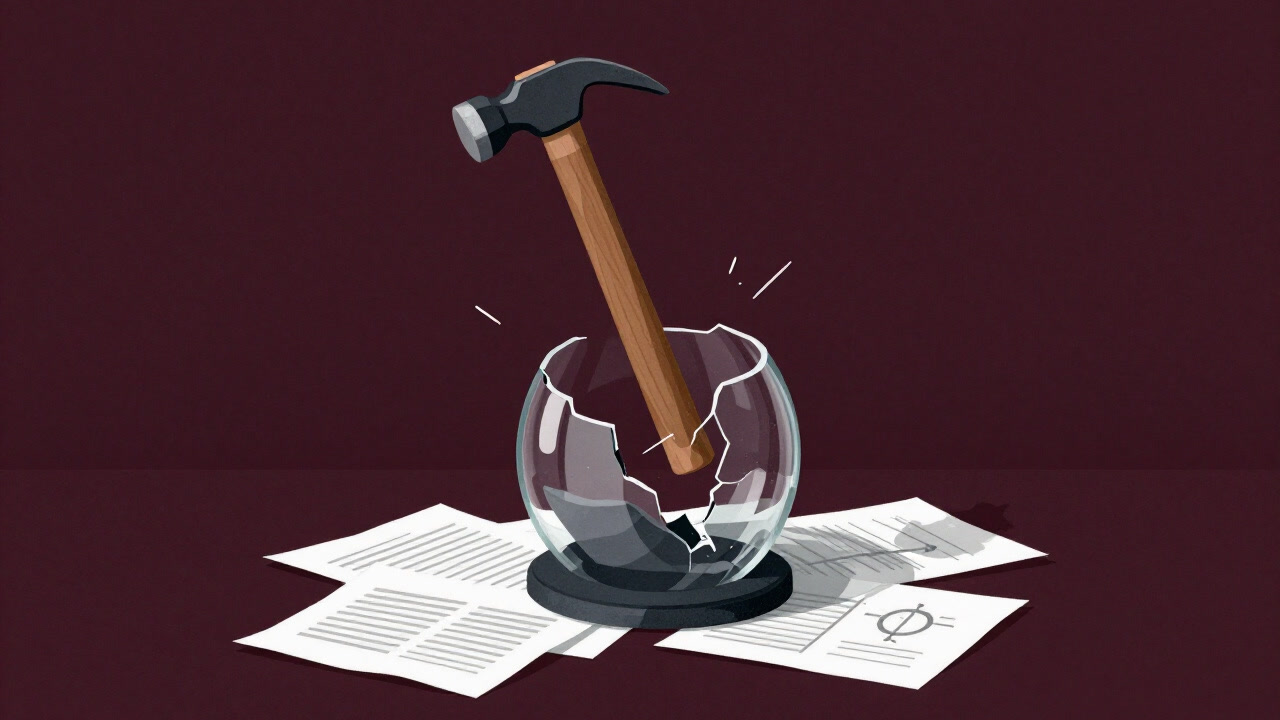
Falsificationism is the scientist’s paradoxical pastime of debunking unprovable theories rather than confirming them. It values the discovery of counterexamples over the accumulation of supportive evidence, embodying a twisted offshoot of positivism. The ethos of refining a theory by relentlessly seeking its demise resembles a philosophical ascetic practice of self-negation. The loftier a hypothesis soars, the more spectacular its fall, and the brightest glory is reserved for the moment of its destruction.
Definitions
- A scientific feast glorifying the collapse of a hypothesis over its validation.
- A metaphysical pastime that legitimizes seeking disproof while leaving theory creation a distant second.
- The scientists’ covert battle delighting in falsification rather than verification.
- A researcher’s battle royale for finding counterexamples that dethrone popular theories.
- Philosophical swordsmanship honing the blade of criticism instead of nurturing theories.
- A creed believing a single refutation outweighs a thousand confirmations.
- A school of thought that pours its lifeblood into hunting opposing evidence rather than prediction accuracy.
- An intellectual guild venerating Popper’s ‘‘aesthetics of destruction’’.
- A method claiming proximity to truth by negating a hypothesis’s provability.
- An academic funeral where theory-gravediggers take center stage.
Examples
- “You thought this hypothesis was flawless? Too bad, a falsificationist has already driven a nail into its coffin.”
- “New data? The first protocol is to see if you can smash it.”
- “Verification? That’s merely the overture to refutation.”
- “You managed to prove it? Nice. But unless you’ve felt the thrill of falsification, you’re still a novice.”
- “Building theories? Please. I’d rather gather debris and destroy it for fun.”
- “Statistical significance? That’s just decoration. A counterexample is the real gem.”
- “Don’t love hypotheses; love counterexamples.”
- “Experiment confirmed the theory? Boring. I’ll go look for a refutation.”
- “Your paper? The probability of falsifiability is too high to endure reading it.”
- “Heresy is welcome, just don’t forget you’re the heretic.”
- “They say that researcher’s hypothesis will be refuted by tomorrow.”
- “Falsificationism feels more like self-torture than a quest for truth.”
- “A new theory? First you chew it to taste, then spit it out.”
- “Popper? Proper etiquette is raising a hammer while toasting at his grave.”
- “No need for verification; only falsification is romantic.”
- “Our mission: let theories bloom, then scatter them in a storm of rebuttals.”
- “Provability? Just let me slash that hypothesis.”
- “Peer review? Think of it as a survival game for falsifiers.”
- “Difference between scientists and philosophers? Scientists wield a bigger hammer.”
- “Self-contradiction? That’s the reward for a falsificationist.”
Narratives
- A falsificationist conducts nightly rituals in the lab, tossing theories onto a bonfire and incinerating fledgling counterexamples with the embers.
- For them, data is less a proof than a tool of destruction.
- Once refuted even once, the most majestic theories crumble into mere scraps of paper.
- At conferences, a refutation presentation shines brighter than any evidence submission.
- Falsificationism is the ultimate contrarian hobby in academia.
- Its adherents cheer like crowds discovering new proofs of contradiction.
- Many boast that constructing theories is warm-up, while destruction is the main event.
- The vice of falsificationism lies in treating everything doubtful as the enemy.
- In their world, value is determined not by truth but by breakability.
- There is a toxic thrill in jamming warped evidence to send hypotheses to their graves.
- Armed with the blade of refutation, researchers roam the globe like bounty hunters.
- At lectures, insults fly more feverishly than questions, and refutations spark fervent exchanges.
- Debates resemble battlefields, with arguments and refutations as ammunition.
- The more failures they catalog, the more inflated their egos grow.
- Falsificationism seems less to advance science than to churn the mud beneath.
- Even grand theories collapse under the strike of a single falsificationist.
- At that moment the lecture hall trembles, and the audience is engulfed in excitement and relief.
- Ironically, each refutation pushes truth further into the distance.
- They are wanderers, always in search of the next refutation.
- Perhaps the only theories saved by falsificationism are those destined never to be refuted.
Related Terms
Aliases
- Theory Hunter
- Counterexample Sniper
- Evidence Annihilator
- Verification Hater
- Contradiction Maniac
- Refutation Comedian
- Theory Dismantler
- Popper’s Hammer
- Hypothesis Hunter
- Negation Preacher
- Grave Digger
- Science Outlaw
- Reason Destroyer
- Heretic Knight
- Refutation Explorer
- Philosophy Phantom
- Proof Breaker
- Rebuttal Collector
- Failure Lover
- Theory Judge
Synonyms
- Negation Supremacism
- Refutation Admiration
- Hypothesis Abuse
- Rebuttal Supremacy
- Sharp Blade Doctrine
- Doubt Maniac
- Contrarian Cult
- Destruction Pleasure Faction
- Destructive School
- Critique Addiction
- Heretical Hunting
- Skeptic Outlaw
- Refutation Fetish
- Collapse Zealotry
- Proof Aversion
- Hammerism
- Non-Constructivism
- Rebel Etiquette
- Failure Praise
- Aesthetics of Destruction
Use the share button below if you liked it.
It makes me smile, when I see it.