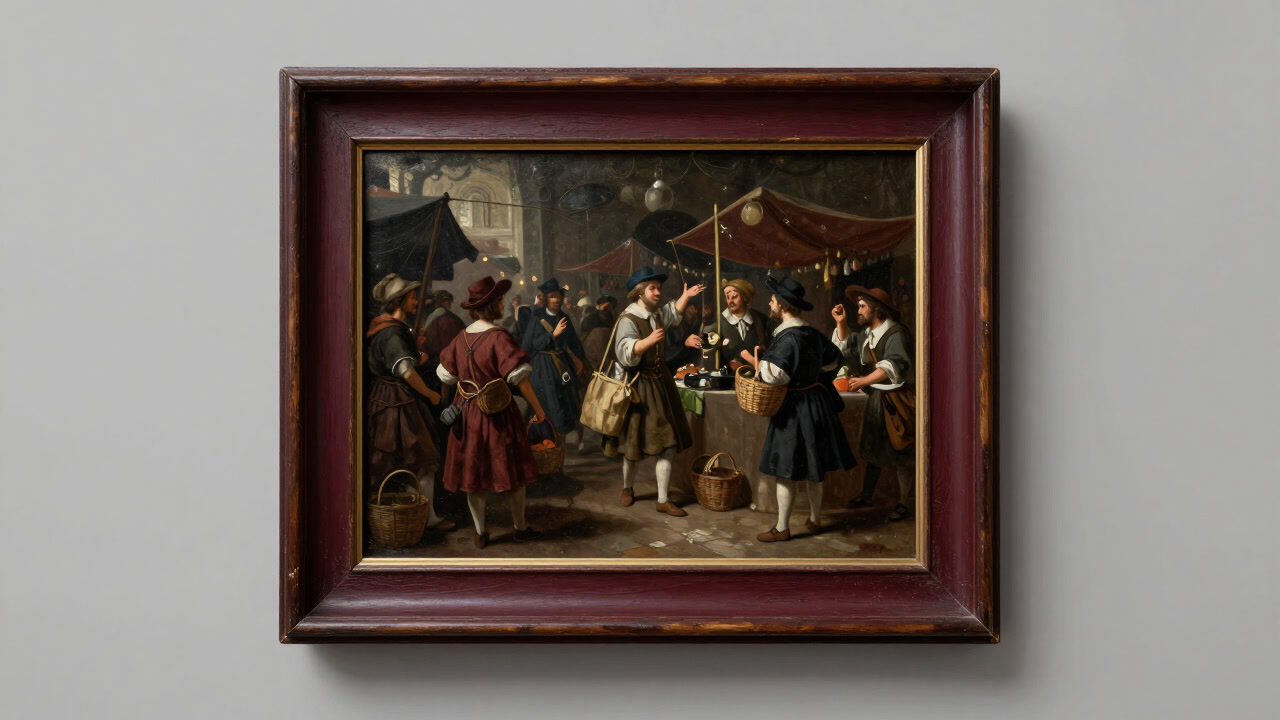
Description
Genre painting captures scenes of everyday life as if offering a window into the mundane. Yet behind the facade of commonplace, it stages a spectacle of tedium and desire. The artist, pretending to mirror reality, lures the viewer into a gilded cage of pretension. Crates of goods in a marketplace or laborers at work take on the hue of biting social critique. Calling it noble art only proves that one has overlooked its smug self-satisfaction.
Definitions
- A social stage that elevates the mundane gestures of common folk onto a noble canvas.
- A depiction of marketplace clamour that subtly hints at class conflicts lurking beneath.
- A visual prison compressing both the peace and discord of everyday life into one frame.
- A theatrical device that equally displays the sweat of labor and the glow of desire, confusing its audience.
- A gift that dresses ordinariness as virtue, its wrapping hiding smug self-satisfaction.
- A festival where the artist’s ego dances center stage against the backdrop of the populace.
- A mirror held to attendees of the common man’s theater, questioning the divide between daily life and power structures.
- A cruel game that uses meticulous realism to emphasize society’s coarse edges.
- A visual poem condensing the drama of joy and sorrow in the marketplace into a single caricature.
- A spectacle that transforms the unnoticed mundane into a vibrant orchestral riot of color.
Examples
- “This genre painting makes it look like the shepherd is actually inspecting vegetables at the market… but where did that castle wall come from?”
- “A rural supper scene? I suspect the painter’s appetite is what’s really filling the canvas.”
- “He chose a scene of workers for his genre painting—not to inspire change, but to show off his draftsmanship.”
- “Genre painting—you’re supposed to chase reality, right? These figures look so perfect I can’t help laughing.”
- “Watching this marketplace genre painting feels like commoners dancing in masks of virtue.”
- “Her favorite is genre painting: claiming to capture life, but always scripting her own story.”
- “One glance at this painting tells me how badly the artist wants to legitimize their perspective.”
- “The genre paintings titled ‘In Pursuit of Reality’ are often the most contrived in their brushwork.”
- “The best part of enjoying a genre painting is hunting for its hidden motifs.”
- “A genre painting of a market matron? She probably vacationed on the artist’s dime rather than shopped that stall.”
- “The light in this scene is beautiful… but notice no one in the image is ever smiling.”
- “Painters of genre scenes aim to sell comfort, yet reveal reality’s distortions instead.”
- “This tavern scene? The more you look, the less drunk you feel.”
- “Genre painting might be a trend, but it wields zero power to change society.”
- “A countryside scene? They say it’s truth, yet the colors are brighter than reality allows.”
- “Going on a date to view genre paintings—do you feel the narrative? I feel the artist’s ego.”
- “Capturing everyday life, they say? This composition is obviously over-calculated.”
- “The true value of genre art isn’t beauty, but the thrill of unearthing hidden backstories.”
- “This painting claims to depict ‘common truth’—but what about the painter’s own desires?”
- “Seeing children smiling in a genre scene always terrifies me. I can’t shake the feeling something is hidden.”
Narratives
- Standing before a genre painting feels like wandering into the wings of a frozen stage, yet that stillness serves as a trailer for the artist’s social critique.
- Observing a rural scene, the city-dweller suspends their elite consciousness, stirred by a vision that feels familiar yet crafted.
- A depiction of the marketplace’s bustle reminds us that it was no lived moment but a game of paint and brushstrokes.
- The tavern scene is comically orderly, but the shadows cast by beer mugs whisper of regret and desire coexisting.
- Children playing carefree seem like a contract promising happiness, yet beneath the canvas lurks woven threads of labor and poverty.
- By painting crowds, the artist stretches their shadow and quietly questions structures of power, imprinting the query in the viewer’s chest.
- Fruits lined on a market stall reveal class divides in vivid hues—genre scenes as magic weaving micro and macro.
- An old farmhouse interior pulls past memories through wooden beams, inviting visitors to hear ancestral voices in the hush.
- A canal scene in the city serves as a masquerade invitation to an asylum called happiness, with tiers of society beyond.
- A butcher’s storefront imprints the smell of blood and the demarcation of daily life so vividly one unwittingly crosses the line.
- A depiction of a peasant woman returning from market carries both pride and exhaustion like a load upon her back.
- A lullaby within the painting translates into color and form, enveloping the viewer in a comfort that may presage unrest.
- A merchant’s chatter visualizes negotiation as a silent battlefield, recording its calm stratagem.
- A slice of daily life serves as mere interlude to the epic called existence.
- A fishing port dawn carries not just sea breeze but murmurs of past and future.
- A painting hinting at attic conversations in the marketplace transforms viewers into directors of the unspoken.
- A laundry scene in a village stands as a visual diary of domestic toil, heavy with recorded significance.
- A communal dance captured in paint reveals both festive unity and underlying pressures in one theatrical device.
- The echo of clinking mugs seems audible in the depiction, proof of genre art’s mastery of sensory deception.
- A sunset market scene draws a melancholy curtain call on the daily act of life.
Related Terms
Aliases
- Common Man’s Stage
- Backstage of the Masses
- Window of Pretension
- Everyday Theater
- Catalog of Life
- Portrait of Crowds
- Backstage Documentary
- Popular Documentary
- Fictional Sketch
- Festival of the Mundane
- Feast of Pretension
- Sweet Tedium
- Caricature of Class
- Realism of Citizens
- Record of Desire
- Daily Chronicles
- Feast of Labor
- Mask of Smiles
- Portrait of the Underbelly
- Observation Window
Synonyms
- Peasant Art
- Slice-of-Life Canvas
- Backstage Snapshot
- Urban Catalog
- Theater of Life
- Balzac Shot
- Tedium Documentary
- Panorama of Desire
- Labor Snap
- Class Realism
- Contemporary Folklore Art
- Everyday Vignette
- Scroll of Boredom
- Landscape and Drama
- Domestic Diary
- Social Sketch
- Fictional Documentary
- Ode to the Market
- Human Kaleidoscope
- Crowd Tale
Use the share button below if you liked it.
It makes me smile, when I see it.