Description
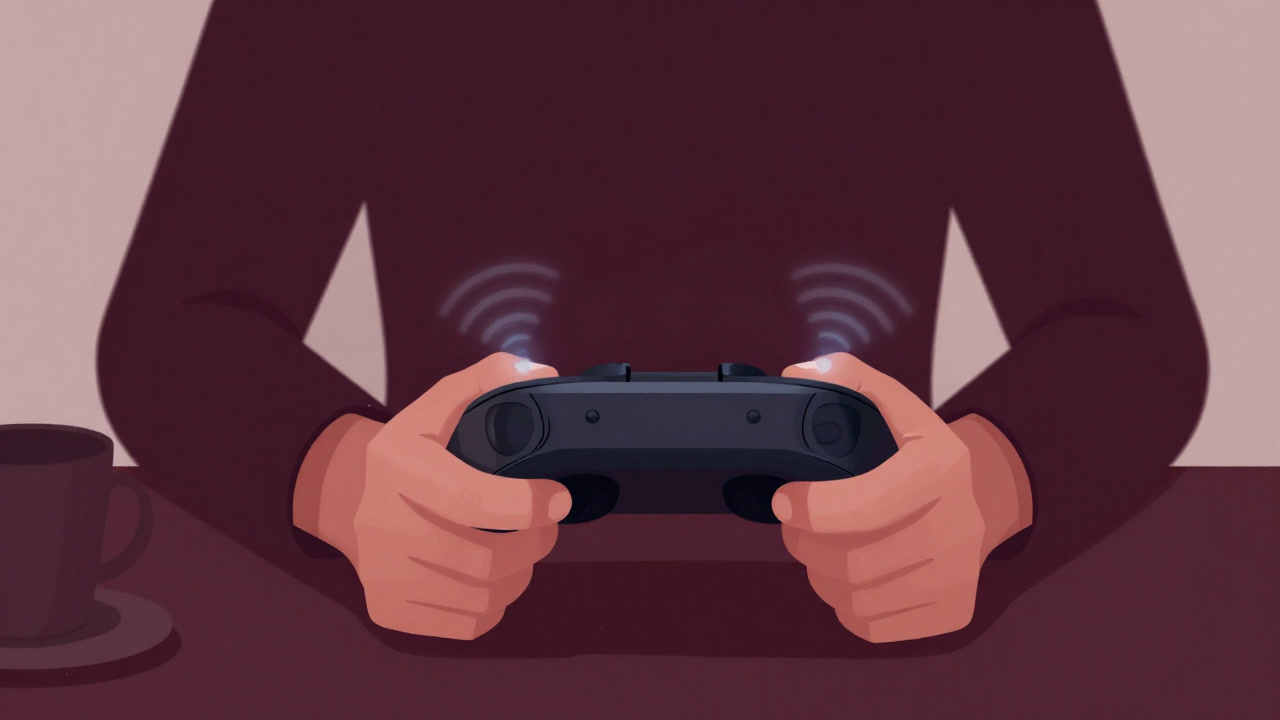
Haptic feedback is an electronic sleight of hand that attempts to fool humans into feeling touch. High-priced gloves and controllers promise a glimpse of the future but fail to mimic even the ridges of a plastic bottle. While it boasts immersion through vibrations and resistance, what you get is a crude tremor that only rattles your desk. The flagship of cutting-edge tech amplifies misclick frustrations more than genuine textures. Ironically, the true purpose of haptic feedback is to mask the impoverishment of real sensation.
Definitions
- An electronic apparition that makes you think you touched something when you merely stroked thin air.
- An ensemble of vibration motors embedded in an overpriced controller performing for your amusement.
- Tiny buzz devices pretending to be the skin of a virtual world.
- A touch illusion that tests the user’s endurance more than it conveys real taps.
- A buzzer adrift between cutting-edge technology and existential void.
- The cruel wall of reality that slaps your pride when your hand passes through a VR surface.
- It boasts immersion yet unintentionally prompts you to forget actual button presses.
- A universal fraud device designed to patch the poverty of tactile sensation.
- A technology that promises tactile evolution but actually regresses human touch.
- It claims to let you ‘feel’ while being nothing more than a gathering of small motors.
Examples
- “This controller’s haptic feedback is amazing… oh wait, it just launched my coffee across the desk!”
- “Feeling the watermelon smash in VR? Actually you just wrestled air again.”
- “Haptic glove? On contact, all I felt was a wave of awkwardness in my hand.”
- “You pressed the button but nothing happened? The ‘vibration alert’ function apparently caused the confusion.”
- “This app’s haptic feedback was so realistic I thought I cracked my screen.”
- “Medical sim with haptics? The simulated heartbeat lags behind the patient’s real one.”
- “The vibration hurts? No worry—it’s just beyond the scope of haptic feedback.”
- “Haptic feedback smartphone? You should know it scares you more with phantom buzzes than actual calls.”
- “In that game, every hit makes my wrist tingle… I want to sue reality too.”
- “Haptic feedback? It’s basically a pocket-sized buzz machine.”
- “Operating without haptics feels surprisingly reassuring.”
- “New controller arrived! Haptics? More like a vibrating festival.”
- “Cranked haptic levels to max and felt like my skeleton was auditioning for a drum solo.”
- “This VR software promises real touch but all it does is shake my desk.”
- “Haptic feedback enhances user experience? At least it spikes my heart rate.”
- “Haptic glove? I’d trust five-dollar rubber gloves over that.”
- “Be careful when your phone vibrates during haptics—you get a double concerto of buzzes.”
- “Haptics won’t stop? That might be the creator’s inner scream.”
- “Haptic feedback is the future? No, it’s still a child’s doodle in tech form.”
- “Listening to haptic vibrations as BGM actually helps me concentrate, weirdly enough.”
Narratives
- The newly released haptic glove promised vivid vibrations but in reality only made your bones tremble to their core.
- The haptic game controller featured a cruel function: every hit delivered a pang of phantom pain to the wrist.
- Medical simulator haptics didn’t pamper surgeons’ fingertips but instead magnified the fear of surgical errors.
- At the moment VR Chat replicated touch, users witnessed their hands becoming nothing more than rubber puppets.
- Haptic feedback was born as a kind of sophistry to hide the rough edges of the real world with vibrations.
- The device’s tremors sounded like the irregular heartbeat of an enraged machine.
- Cheaper headsets hid their low-quality vibration units under the guise of cost-saving.
- Each time users felt haptics, they realized how thoroughly their nerves had been deceived.
- Developers boasted cutting-edge haptics, but in truth it was just a vibrating keychain.
- The haptic feedback demo proved to be more of a punchline than a promise of the future.
- The buzz betrayed user expectations, lingering only as mechanical noise in their palms.
- Premium models touted finesse, yet delivered tremors as coarse as scattered salt crystals.
- Haptics don’t replace touch, they expose the void behind every gesture.
- In user tests, intended button clicks veered off to neighboring menu selections due to gross inaccuracies.
- The paradoxical phenomenon of increased comfort upon disabling haptics was widely reported.
- Every buzz sent papers dancing across desks, disrupting office order.
- The dev team pinned dreams on haptics, only to have them shattered on users’ palms.
- The haptic algorithms grew more complex while the experience grew only more confusing.
- Every vibrating smartphone notification in the conference room eroded participants’ focus.
- Haptic feedback is merely a conductor of tiny chaos performing on the stage of your palm.
Related Terms
Aliases
- Vibe Sorcery
- Palm Deception
- Electronic Playhouse
- Buzz Theater
- Tactile Mirage
- Phantom Touch Dance
- Vibration Huckster
- Digital Fib
- Future Phantasm
- Machine Tickler
- Skinless Contraption
- Air Wrestler
- Silent Orchestra
- Mini Noise Source
- PseudoSense Provider
- Buzz Cult
- Touch Myth
- Electric Charm
- Void Pulse
- Paltragea
Synonyms
- Vibration Festival
- Fake Touch Play
- Electronic Caress
- Buzz Shake
- Tactile Trick
- Mini Quake
- Air-Fist Feeling
- Vibe Performance
- Touchless Tactuality
- Tiny Thunder
- Palm Rehearsal
- False Touch Monk
- Electric Prank
- Phantom Touch Circus
- Touch Feeling Apparatus
- Buzz Echo
- Pseudo-Tectile Ballet
- Fingertip Contrast
- Frictionless Gadget
- Buzzing Sorrow
Use the share button below if you liked it.
It makes me smile, when I see it.