Description
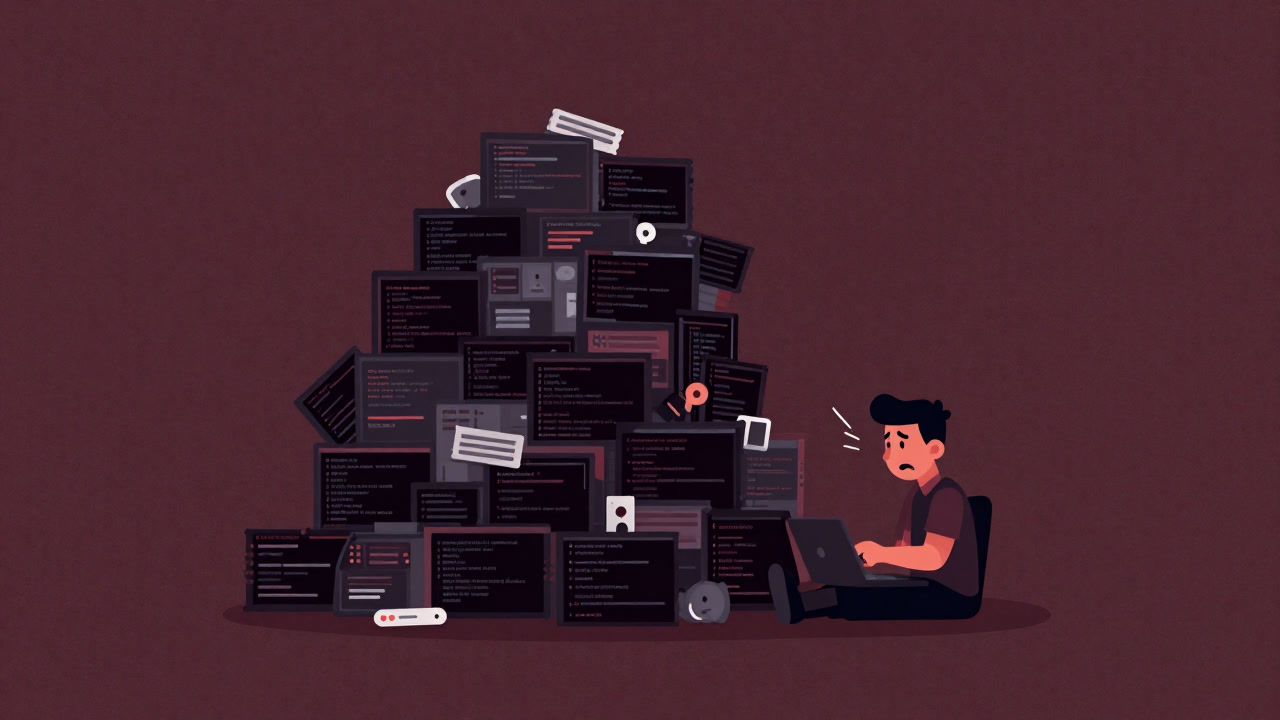
JAMstack is the latest buzzword that adds a new maze to the labyrinth of web development. It’s a magic spell of JavaScript, APIs, and Markup—promising static serenity while summoning infinite build steps behind the scenes. Developers chant its name in pursuit of freedom, only to find themselves imprisoned by CI/CD pipelines. Every adoption of a new feature sees old builds vanish like ghosts, as if progress were a fleeting thrill. And though it preaches serverless, someone always hides a server backstage.
Definitions
- A playful acronym of JavaScript, APIs, and Markup masquerading as groundbreaking architecture.
- A complex contraption that touts static simplicity while harboring endless build steps and config files.
- A development approach where nothing runs without CI/CD, making deployment a perpetual rebuild purgatory.
- A metaphysical paradox that shouts serverless yet inevitably invokes hidden servers somewhere.
- A potion of plugins and libraries whose infinite dependencies lure developers into dependency hell.
- A party trick born between static and dynamic, celebrating middling performance as a feature.
- An endless cycle where adopting a new version mercilessly discards the old, calling it evolution.
- A laid-back architecture stitching together scraps of docs and tutorials for a scavenger hunt experience.
- A promise of speed and SEO that exacts the developer’s peace of mind through agonizing build times.
- A digital mirage that tricks you into believing you’re cutting-edge whenever you adopt the latest trend.
Examples
- “With JAMstack, your site will load in a blink!” — until you hit the two-hour build time.
- “We don’t need servers anymore,” said the CTO, as a hidden server crashed the staging environment.
- “Static site generation is piece of cake,” the developer claimed, watching the build creep through 237 plugins.
- “Deploy with one click,” boasted the docs, “if you ignore the endless pipeline failures.”
- “Serverless revolution!” they chanted, discovering their lambda still lives on a server.
- “Is JAMstack even meaningful?” they asked, drowning in API keys and integration tests.
- “Markdown paradise, right?” — until the markdown-to-html step vomits deprecation warnings.
- “UI is lightning fast!” — “What about the asset pipeline?”
- “Consider yourself a YAML wizard,” when you finally fix the build config.
- “Caching is automatic,” the handbook lied, as cache busting became an art form.
- “Preview in real-time,” promised the plugin, as you waited for sixty seconds.
- “Just use Next.js or Gatsby,” they said, like picking a flavor of coffee.
- “We support hot reloading,” — “Does it ever reload?”
- “API-first approach!” — “Except you still need to configure CORS.”
- “SEO friendly!” — “After you manually add all the meta tags.”
- “No backend!” — “Except for that one function we never told you about.”
- “Delightful dev experience,” until the moment you debug a broken webhook.
- “Embrace CI/CD,” they urged, as pipelines spontaneously combusted.
- “Move fast,” became “stand still while the build runs.”
- “Learn JAMstack or get left behind,” they warned, leading everyone into deployment hell.
Narratives
- JAMstack is the black magic that lures developers into a CI pipeline labyrinth under the guise of static bliss.
- With every added API comes another invoice, leaving teams baffled about where their budget disappeared.
- Intending to write markup, one finds their life consumed by endless build tool configurations.
- Plugin loops multiply like parasitic worms, slowly devouring the project from within.
- Told you won’t write serverless functions, only to end up coding them somewhere anyway.
- The dream of lightning-fast static pages turns into the nightmare of excruciating build times.
- Stitching together scraps of documentation reduces one to a mere document hunter, battling obscure errors.
- Managing content through Git becomes a terror far beyond a simple web interface for non-engineers.
- When everything goes through APIs, a single network glitch can send the whole site crashing.
- While praising frontend minimalism, an army of hidden CLI commands quietly pulls the strings.
- Each new JAMstack update has old configurations exploding as if possessed.
- No moment breeds more anxiety than the notification of ‘Deployment Successful.’
- Caches of static files behave like untrustworthy lovers, betraying you without warning.
- Struggling to manage API keys feels akin to a modern-day alchemist’s plight.
- Meetings about JAMstack inevitably devolve into holy wars over the right framework.
- Every time you test a new generator, the README feels like an arcane grimoire.
- Believing in the static site future, developers eventually pray at the altar of CI.
- Charmed by the promise of real-time preview, only to become conditioned to sixty-second waits.
- Discarded builds under the name of progress become digital fossils buried in history.
- It professes serverless, yet a legion of service ghosts lurk in its shadow.
Related Terms
Aliases
- Static Sorcery
- Plugin Paradise
- Dependency Hell Guide
- Endless Build Machine
- YAML Shackles
- CLI Overlord
- Build Bug Factory
- Headless Enigma
- Automation Junkie
- Bundle Nightmare
- Serverless Phantom
- Deployment Prophet
- Pipeline Zealot
- Markup Messiah
- Cache Casanova
- Framework Cultist
- API Oracle
- Grimoire Coder
- Doc Hunter
- Trend Mirage
Synonyms
- Static Magic
- Ruthless Generator
- Build Purge
- API Overload
- Static Veneer
- Markup Monarch
- Trend Altar
- Performance Illusion
- Plugin Exterminator
- Pseudo-Serverless
- YAML Torture
- Bundle Freak
- Dependency Grail
- Deploy Chains
- Cache Circus
- Hot Reload Hell
- Site Shaman
- Orchestration Ghost
- Doc Mirage
- Build Bound
Use the share button below if you liked it.
It makes me smile, when I see it.