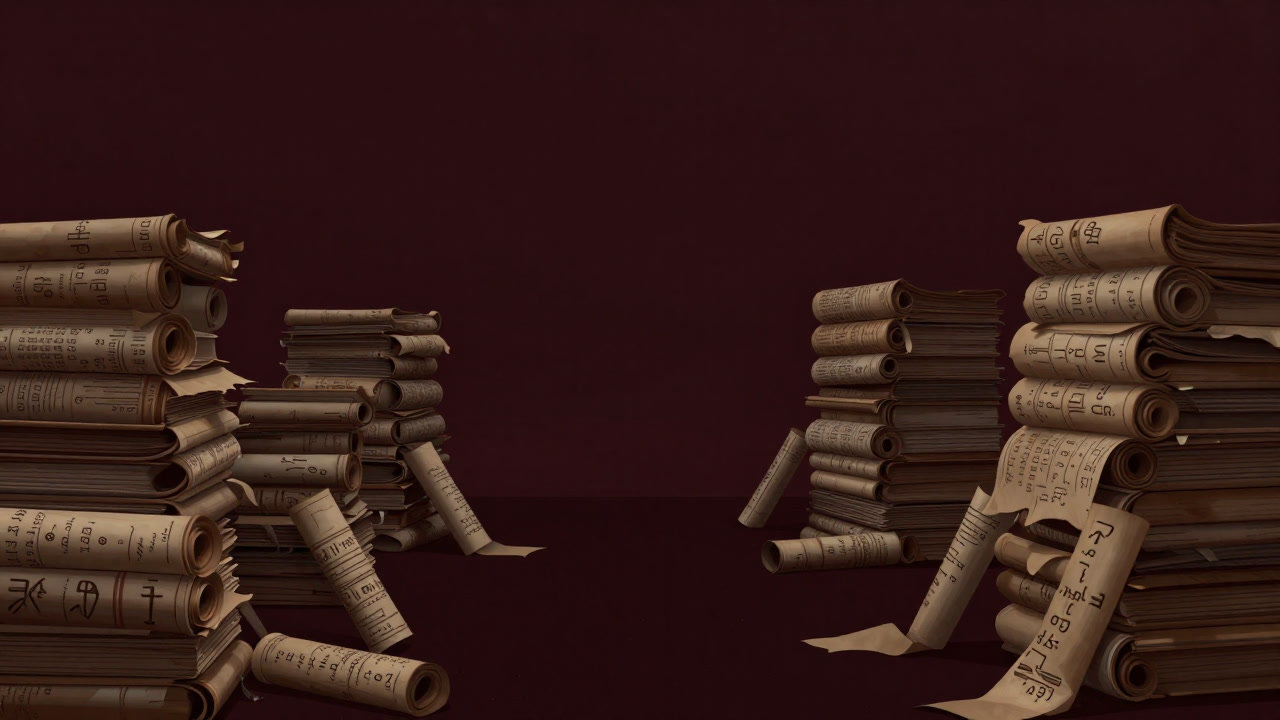
Description
A legacy project is a prehistoric relic stored in a company archive that nobody dares to touch. It instantly transforms any newcomer’s curiosity into despair, binding the organization in a curse called technical debt. Documentation has weathered into folklore, comments have morphed into cryptic riddles, and builds depend on prayers and miracles. Occasionally it requires severing its lifeline to keep going, a software fossil sustained only by abandoning maintenance. It is a perpetual funeral march that never reaches its end.
Definitions
- A graveyard of code that bears the weight of former glory while hurling modern developers into despair.
- A labyrinth where specifications and implementations drift apart, haunted by the ghosts of forgotten promises.
- A build gauntlet packed with self-destruct switches that detonate every surrounding feature when a single line is altered.
- An artifact whose only lifeline is build logs and Stack Overflow search history, in place of documentation.
- An eternal debt of the organization that abducts newcomers’ self-esteem and multiplies managers’ sighs.
- A perverse carnival where preservation trumps improvement and stagnation is lauded over enhancement.
- Operation is a miracle; failure is the norm. Peaceful days are nothing but surprises.
- An eternal prison where ’legacy’ is the pretext to refuse refactoring and maintenance is the only raison d’être.
- A stage for an infinite spiral of compliance-bound updates toggled in contradiction.
- Not merely a project, but a throne of rewriting pained by those who must inherit the ordeal.
Examples
- “Legacy project? Oh, that’s the legendary dungeon no hero ever returns from.”
- “Can you fix this bug?” “First prepare prayers and chocolate.”
- “Where’s the documentation?” “Rumor has it it was found after slaying a dragon.”
- “Build failed?” “It’s our scheduled dawn scream festival.”
- “Time to refactor?” “Are we talking about the next life?”
- “May I delete this method?” “Sign a contract and we’ll see.”
- “Tests won’t pass.” “The spec itself is a phantom, what do you expect?”
- “New feature request?” “Greet the ancient code first.”
- “Can’t read the code…” “We need to assemble a decoding squad.”
- “Can you roll back the version?” “If only I had a time machine.”
- “Why does it even run?” “It’s a magic no one understands.”
- “Delete this line?” “It might end the world.”
- “Merge conflict?” “A permanent event, indeed.”
- “Deployment done?” “The portal to another world remains closed.”
- “Code review?” “Only the brave survive that trial.”
- “Ticket disappeared.” “It was swallowed by the ancient labyrinth.”
- “CI crashed.” “Eternal peace is not our destiny.”
- “When will this feature end?” “It’s an endless funeral march.”
- “Who touched it first?” “A sacrifice was needed.”
- “Maintenance window?” “The code’s ritual cry in seconds.”
Narratives
- On their first morning, the rookie was assigned the legacy project, making coffee and prayers their new diet.
- The codebase was written so long ago that both its author and date were lost, truly the organization’s forgotten artifact.
- Every time the build passed, the dev room erupted in applause for a small miracle.
- Night after night, engineers dove into seas of logs, chasing error messages like ghosts.
- Documentation was nearly blank, and comments had become cryptic riddles or urban legends.
- A single change could trigger a chain reaction that felt like handling a field of landmines.
- As deadlines loomed, silence and anxiety hung heavy in the project room.
- After release, no one wanted improvement, yet new bug reports piled up the next week.
- To replicate old behavior, engineers studied ancient commit logs like medieval manuscripts.
- The test environment was more uncertain than production, making success a matter of luck.
- Merge conflicts were recorded in the wiki as mythic events.
- With every spec change, the code grotesquely ballooned like a parasitic organism.
- Deployments before dawn always failed, and engineers ended battles with the sunrise.
- When the project was discussed, everyone stared at the monitor with distant eyes.
- Complaint emails from QA became a company ritual akin to a festival.
- No one could actually run it, yet stopping it was believed to unleash true horror.
- Its secret lay deep in the build server, sealed within ancient JAR files.
- On occasion, a veteran would boast, ‘It ran on this old thing once!’
- Doctors labeled it ‘undebuggable,’ yet some instances ran on sheer miracle.
- The legacy project stood as a living ruin that inspired both fear and reverence.
Related Terms
Aliases
- Grave of Tech Debt
- Code Fossil
- Curse of Maintenance
- Developer’s Graveyard
- Build Hell
- Cryptic Archive
- Suicide Switch Mansion
- Ghost Library
- Lab Monster
- Ritual of Reboot
- Debug Labyrinth
- Version Prison
- Deceased Code
- Specter of Past
- Broken Time Capsule
- Spiral of Despair
- Endless Funeral
- Legacy of Fear
- Pit of Rebuilds
- Void of Documentation
Synonyms
- Bind of Tech
- Phantom of Old
- Maintenance Maze
- Ancient Repository
- Innovation Blocker
- Trust Defector
- Dev Team Nightmare
- Walking Fossil
- Eternal Issue
- Altar of Mysteries
- Breeding Ground of Bugs
- Historical Artifact
- Tombstone Code
- Nest of Errors
- Sanctuary of Reboots
- Implicit Contract
- Abyss of Forgetting
- Void Specification
- Instant Collapse Device
- Developer’s Trauma
Use the share button below if you liked it.
It makes me smile, when I see it.