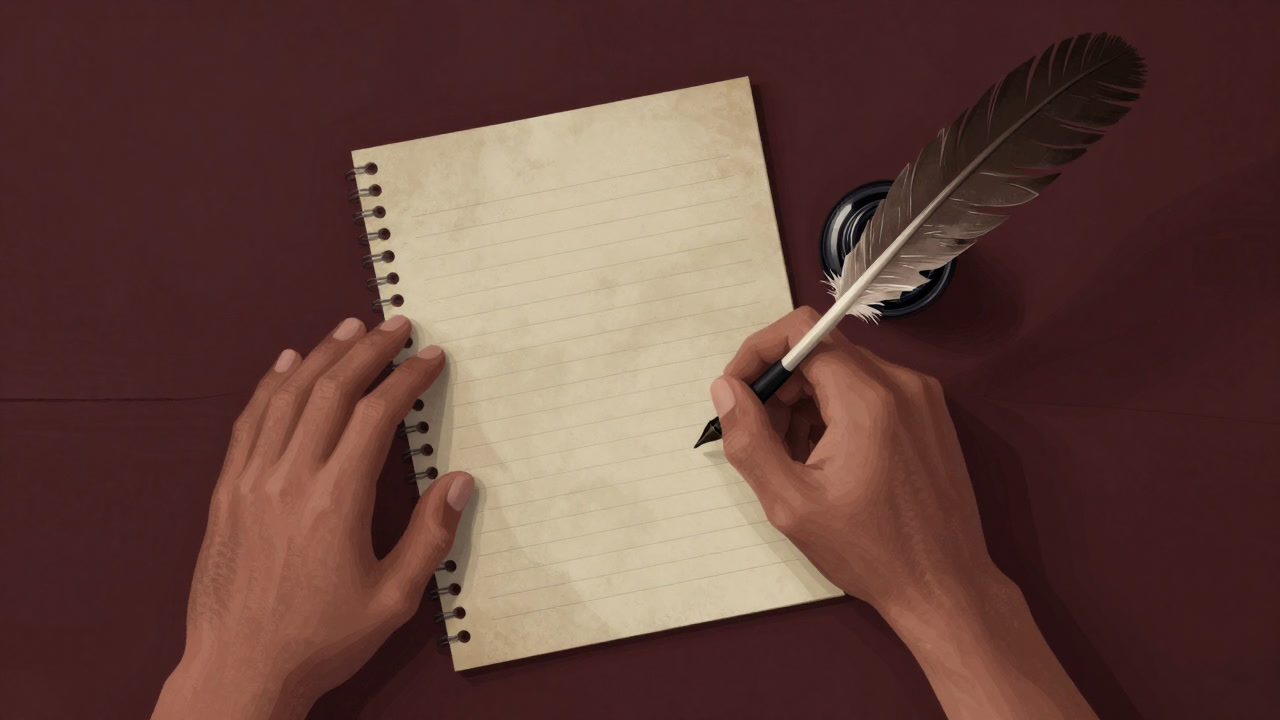
Description
A ritual dating back to antiquity, squeezing words into an envelope-wall to coerce distant others into affirming your existence. Beneath earnest prose often lurks an ulterior motive of seeking “something.” By the time it arrives, more of the writer’s pride than ink has bled through. The pen’s tip tempts poets into madness, and its typos betray the truest intentions.
Definitions
- The forced self-affirmation ritual of imprisoning sentiments within an envelope and demanding others decode them.
- A form of negotiation using ink density to distinguish true feelings from polite ruses.
- A confession of faith by scribes who worship fountain pens and ballpoints like sacred relics.
- A fraud compelling recipients to ponder the sender’s ego, charging interest on their time.
- A monologue on the stationery stage where self-presentation steals the show.
- A business transporting shame and longing under the guise of postal infrastructure.
- A symbol of fragile communication, forever poised to be torn and discarded.
- A paper invoice that generates ink and obligations upon the recipient.
- A retro-cultural maneuver igniting email envy while fueling analog nostalgia.
- A psychological warfare disguised as a memo or love letter, delivered with calculated latency.
Examples
- “A letter after ages? I measure my expectations by the envelope’s thickness.”
- “Handwriting is reliable—no typos to excuse.”
- “Your tone is polite, but your request is as brazen as ever.”
- “Folding stationery neatly feels like being courteous to a paper prison.”
- “Cramming life advice into a single sheet is arguably madness.”
- “A letter without a return envelope is tantamount to demanding a reply.”
- “First you earn respect with ‘Dear Sir’, then betray it with your postscript. That’s the trick.”
- “The thrill of opening a seal is akin to guilt in snooping a lover’s diary.”
- “Choosing the stamp becomes a ritual that reveals one’s humanity.”
- “Long sentences are guaranteed to harbor grudge fuel.”
- “More people now read the paper pattern before the content to gauge mood.”
- “Your handwriting is your mirror; messy script invites judgment.”
- “Delayed mail isn’t the post office’s fault, but your sender’s reputation.”
- “Knowing it might be discarded unread hampers my pen’s flow.”
- “Imagining the recipient’s soul while waiting is an addictive thrill.”
- “I have a hobby diagnosing personalities by stamp placement.”
- “I’m sending codes via the contrast of paper and ink colors.”
- “A signature after each line—feels like a sworn affidavit.”
- “Letter-writing is ego-baring by forcing fragments of your life onto others.”
- “They say the postmark you affix is your rebellion against time’s passage.”
Narratives
- The moment of opening an envelope is a gamble on receiving both distant admiration and latent wrath.
- Those who write letters are artists who shade their solitude in ink and exhibit it vividly on paper.
- The spaces between lines often sow more suspicion than the words themselves.
- Staring at a finished letter torments the sender with endless soul-searching.
- The seconds between affixing a stamp and posting it become an eternal prologue to waiting for a reply.
- The final remark appended to a letter’s end can rekindle a bygone romance or extinguish it entirely.
- As soon as the seal is broken, the sender’s character peeks through, often triggering disillusionment.
- Friends who appear only during New Year’s postcard season are still bound by the truths of letter-writing.
- Letter exchanges wage silent wars through the quiet of pen and paper.
- Believing any content will suffice if enclosed in a plastic sleeve accelerates lazy correspondence.
- Letter-writing unknowingly morphs into espionage, surveying the recipient’s tastes and proclivities.
- Elegant openings often serve as camouflage for audacious requests lurking beneath.
- The more colors the stationery boasts, the higher the sender’s narcissism climbs.
- Legend says picturing the mail carrier’s face slightly alleviates letter-writing guilt.
- Every time a handwriting error vanishes, the writer’s confidence slips away too.
- Lengthy asides reveal the writer’s anxieties, leaving readers anxious by the end.
- Discovering a single typo can drop a letter’s credibility into freefall.
- Once delivered, a missive attains independent life, capable of stirring its recipient’s heart.
- An anonymous proverb claims a letter’s weight is determined more by paper quality and line count than content.
- Letters eventually rest in dusty albums as the writer alone carries past secrets into the void.
Related Terms
Aliases
- Envelope Prisoner
- Stationery Orator
- Letter Junkie
- Ink Waster
- Postmark Enthusiast
- Word Smuggler
- Paper Strategist
- Memory Peddler
- Postal Nutrient
- Stamp Maniac
- Pen Acolyte
- Line-spacing Con Artist
- Cover Letter Bard
- Seal Breaker
- Paper Plane Nemesis
- Delivery Notice Hunter
- Reply Extortionist
- Mailbox Confessor
- Sheet Hoarder
- Wannabe Scribe
Synonyms
- Stationery Scam
- Ink Torture
- Paper Bondage
- Document Voyage
- Emotional Sealing
- Postal Theater
- Script Fatigue
- Envelope Ritual
- Thought Dispatch
- Feeling Freight
- Text Trap
- Handwriting Tactics
- Love Indictment
- Chaos Correspondence
- Missive Strategy
- Stamp Revolution
- Paper Trip
- Imagination Shipping
- Sentiment Posting
- Word Count Contest
Use the share button below if you liked it.
It makes me smile, when I see it.