Description
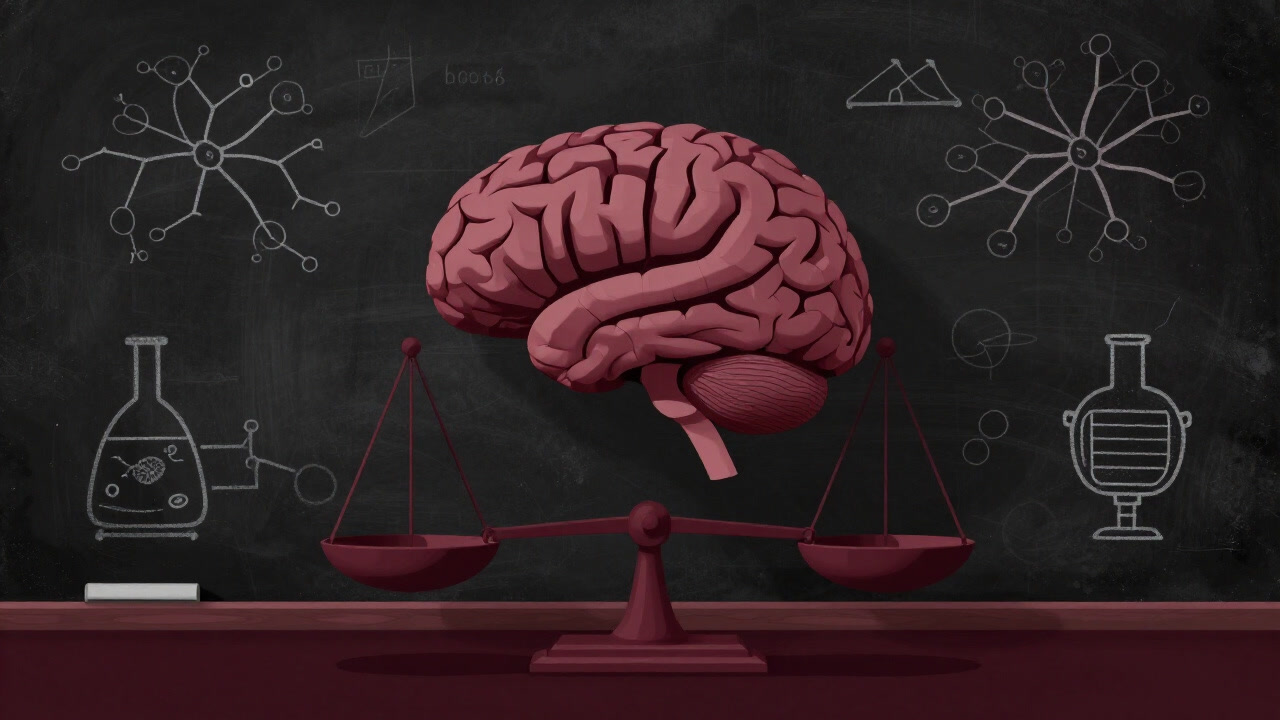
Moral psychology is the study that pretends to examine the human conscience while actually compiling a collection of self-serving excuses. It dissects judgments of right and wrong to expose the flowery words concealing our selfish motives. Armed with incomprehensible theories, researchers analyze the mask of ethics only to conclude that humans are, above all, troublesome creatures.
Definitions
- A discipline that pretends to study noble ideals but actually catalogs the convenient excuses humans use to protect their own interests.
- A measuring device for how lightly people can shrug off the chains of conscience.
- The science of bringing moral notions into the lab and dissecting subjects’ justifications when they step into ethical traps.
- A ruler that quantifies what percentage of professed fairness is actually fueled by selfish motives.
- A lie detector in disguise, designed to separate genuine moral impulses from hollow declarations of virtue.
- The ornamental arithmetic that converts human empathy into a commodity with an exchange value.
- A critical apparatus that exposes the spells of self-justification and dismantles the illusion of ‘I am right.’
- A microscope that strips away social masks to reveal the naked face of desire.
- A brewmaster’s art for identifying the blend of altruism and recognition-seeking behind acts of kindness.
- A theatrical stage where the blurred lines of good and evil and the performance of ethics take center stage.
Examples
- “This experiment measures altruism,” he claimed, but wasn’t that just a contest for who shares more cake?
- “His actions are altruistic,” they say, but would he do it without a bonus on the line?
- “Conscience varies individually,” meaning unlimited excuses for everyone.
- “We observed conformity to social norms,” though it might just be a careerist’s game.
- “Anonymous data was collected,” but participants only cared about the reward.
- “Mapping the neural basis of moral judgment,” but they just flinched at the electrode.
- “High levels of acceptance towards others,” yet that stranger is still cold as ice.
- “We uncovered dual moral standards,” hint: his wallet always follows his personal rules.
- “Assessing introspective self-esteem,” so they’re just checking if you love yourself, right?
- “We induced moral motivation,” by handing out free chocolate.
- “We solved the social dilemma,” yet it remains unsolved—hence the paper.
- “Measuring fairness bias,” but only when you’re broke and count spare change.
- “Leveraging the wisdom of crowds,” i.e., the fallacy that majority equals right.
- “Empathy has been demonstrated,” by liking your neighbor’s post on social media.
- “Integrating behavioral economics,” basically buying morality with money.
- “Setting up a binary choice task,” two equally annoying options, no thanks.
- “High adherence to internal norms,” translation: office suck-up.
- “We observed moral highlights,” aka selfie-posts after volunteering.
- “Altruism scores were high,” likely because they wanted the free courtesy chocolates.
- “Presenting an ethical dilemma scenario,” just crafting more excuses to freeze in indecision.
Narratives
- [Incident Report] Event Code MP-EX-042. Probable Cause: Participants experienced a crisis of conscience and refused to allocate coins. Action: Increase chocolate incentives and repeat trial.
- In the lab, a poster declares ‘Morality is but a glitch in neural circuits,’ while researchers feverishly attempt to quantify their own ethics before their screens.
- Each click of the ‘Good Deed’ button yields a token reward, turning altruism into a mechanized token economy.
- At conferences, moral superiority is distributed in proportion to paper counts, and reviewers privately savor their curated collections.
- A disguised survey question ‘How dirty is your conscience?’ slipped into the consent form, prompting sheepish grins from participants.
- In a lecture, flowery ethical maxims alternated with bar charts, giving the impression of an overproduced propaganda reel.
- Participants donned VR headsets and decided whether to rescue kittens or ignore them, all in the name of science.
- A tip jar labeled ‘Bounty for Benevolence’ stood in the break room, testing who among the staff was truly virtuous.
- As subjects wrestled with dilemmas, researchers casually scrolled through social media behind them.
- The hypothesis ‘Moral judgment is encoded in genes’ spawned a project to measure Grandpa’s conscience against family photos.
- Moral psychologists preach virtue but secretly harvest colleagues’ mistakes for their next paper.
- Legend has it that only data supporting ‘I am right’ is selected for publication, with the rest swept under the rug.
- A mysterious ‘Empathy Leaderboard’ appeared in the conference lobby, ranking attendees by sympathy points.
- Every excuse uttered by participants was stored in the ‘Excuse Library’ for future reference.
- Researchers who passed the ethics test received a badge proclaiming ‘I understand humanity.’
- During peer review, subjects and scientists alike forged an unspoken alliance of moral posturing.
- Conclusions always circle back to the same mantra, and dissenters are accused of breaching ethics.
- Researchers cheer rises when ethics scores climb, but they maintain a poker face when numbers fall.
- In field experiments, baristas’ handling of change is covertly tallied to assign benevolence scores.
- In the end, the true legacy isn’t goodness or evil, but a festival of the most ingenious excuses ever devised.
Related Terms
Aliases
- Conscience Keeper
- Excuse Collector
- Detective of Good and Evil
- Morality Dissector
- Self-Justification Machine
- Conscience Bank
- Ethics Microscope
- Justice Seamstress
- Empathy Gauge
- Ethics Monk
- Conscience Puppet
- Morality Translator
- Ethical Game Master
- Ethics Kaleidoscope
- Responsibility Avoidance Device
- Morality Workshop
- Virtue Director
- Ethics Magic Show
- Conscience Engine
- Morality Cheat Code
Synonyms
- Ethical Psychology
- Conscience Science
- Moral Cognition
- Good and Evil Analysis
- Morality Measurement
- Ethical Behaviorism
- Moral Epistemology
- Good and Evil Engineering
- Moral Analytics
- Conscience Assessment
- Moral Motivation Studies
- Ethics Experimentation
- Behavioral Ethics
- Common Sense Science
- Value Judgment Studies
- Model Psychology
- Justice Research
- Foundations of Morality
- Conscience Perception
- Moral Dynamics
Use the share button below if you liked it.
It makes me smile, when I see it.