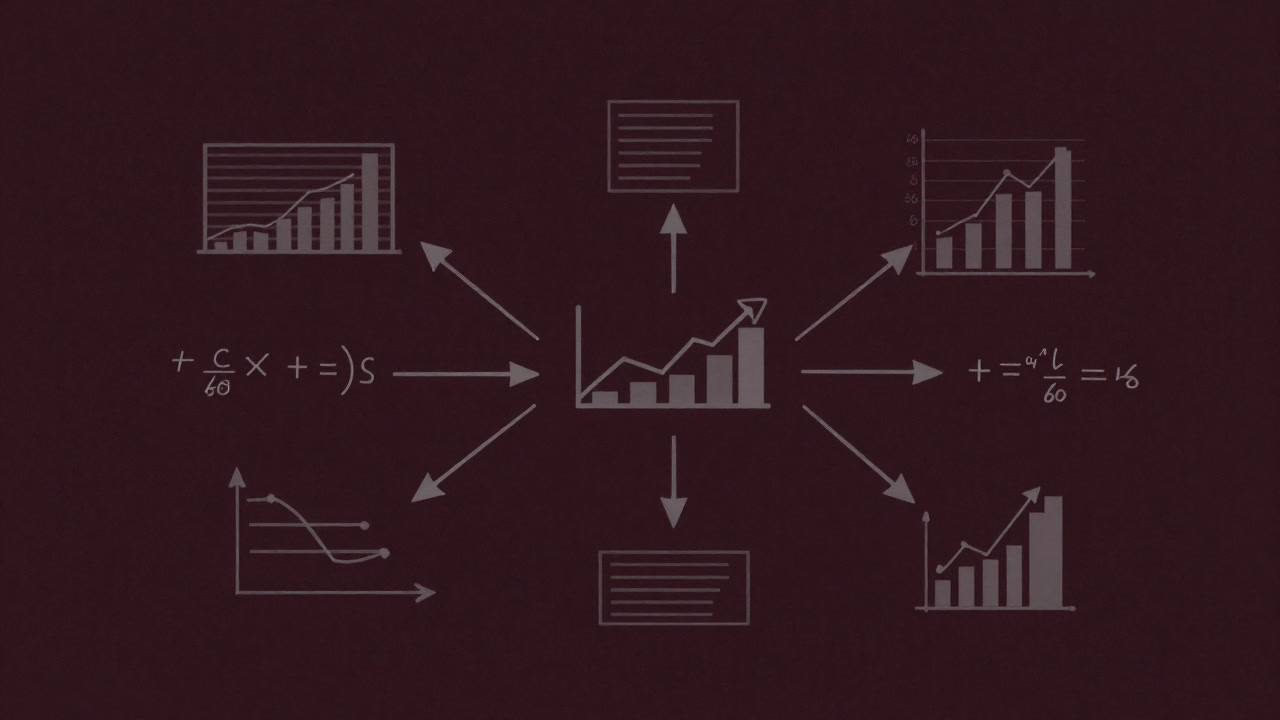
Description
Multi-touch attribution is a ritual in which marketing credit is divvied up across every possible touchpoint like offerings to capricious deities, using inscrutable models and equations to predict ROI. It involves waving around numbers in meetings, pretending to divine true customer journeys, only for the model to gather dust in the corner and quietly admit, “We still don’t really know what worked, but trust the MTA.”
Definitions
- A sacred budget allocator that distributes marketing credit equally across all so-called customer touchpoints.
- A magical mapping method that labels seemingly effective tactics in a labyrinth of numbers.
- An alchemy of marketing that uses incomprehensible formulas to predict ROI.
- A celebratory banquet where every advertising channel receives an award for participation.
- A tactic that brandishes big data only to shirk responsibility with “please trust these slides.”
- A stained-glass window that illuminates only the desired narrative, not the truth.
- A strategy report whose sheer volume blinds everyone to clarity.
- A post-hoc justification disguised as an optimization search.
- A system that promises to quantify each tactic’s revenue share, only to end in an unpredictable black box.
- A dummy metric generator to statistically satisfy marketers’ craving for approval.
Examples
- “According to the multi-touch attribution, this banner ad contributed the most. The rest are numbers only our spreadsheet god knows—so don’t ask.”
- “This MTA model evenly rates all touchpoints. In short, nobody’s to blame and nobody’s special.”
- “Last campaign’s MTA says social media was the star, but we all know email did the real work…”
- “ROI? First find someone who can halve the number of MTA parameters. Spoiler: no one can.”
- “When asked why you budgeted this way, just say, ‘I followed the MTA results.’ Works every time.”
- “Multi-touch attribution? Oh, that’s the labyrinth of measurement. Enter, and you may never return.”
- “They suggested adding more touchpoints next time. Where else are we supposed to touch?”
- “Watching data scientists tuning MTA at midnight is like witnessing an alchemist’s ritual.”
- “If MTA ranks social highest, should we just bow to influencers?”
- “In the end, only the budget planning team actually benefits from MTA, right?”
- “Do you really think it replicates customer decisions? Who said ‘numbers never lie?’”
- “The beauty of MTA is that there are so many touchpoints you can’t tell them apart.”
- “Just looking at this MTA dashboard gives me a headache…”
- “MTA’s successor is something called a U-shaped model. Makes sense?”
- “Tell the boss it’s MTA magic and it’ll sound way cooler.”
- “Rumor has it MTA’s so assumption-heavy it’s basically a mirage…”
- “Predictive model? It’s practically fortune-telling. Don’t trust it too much.”
- “They say using MTA adds an hour to every meeting.”
- “In the end, the last ad the customer saw wins. It’s like a finalists’ bracket, right?”
- “One MTA setting error gave all points to mass media. Oops.”
Narratives
- On the whiteboard, dozens of arrows and parameters danced around the glowing letters ‘MTA,’ resembling a cryptic magic circle.
- Marketing team members stared at the MTA dashboard like fortune-tellers, trying to divine next quarter’s sales.
- A directive came from above: add yet another unnamed touchpoint no one ever interacts with.
- Adrift in seas of data, the MTA model swallowed truths by day and spat out uncertain answers by night.
- Countless session logs were sacrificed to prove a customer’s final action.
- In truth, the only believers in MTA might be its own creators.
- Night after night, the data analyst tuning the MTA began to hallucinate numbers.
- At budget meetings, everyone believed that line colors and thicknesses told the whole story.
- With each ad touch, someone’s ego seemed to be fed.
- Everyone fought in secret to give glory to the last touchpoint.
- An MTA session timeout felt like a moment when an oracle’s voice abruptly ceased.
- Though they claimed numbers don’t lie, everyone doubted the numbers.
- Each new model version piled up unreadable logs.
- By meeting’s end, no one could explain what was inside the MTA.
- Discussions on defining touchpoints became an endless labyrinth.
- Every time MTA results were reported, only the slide count increased.
- It ended up as time spent letting the ghost of the MTA howl budgets.
- Clients heard success stories, while behind the scenes the results were secretly edited.
- Originally a tool to reach truth, it had become a weapon for blame shifting.
- Before the MTA report, everyone wore smiles but had bloodshot eyes.
Related Terms
Aliases
- Budget Bandit
- Effect Diffuser
- Formula Labyrinth
- ROI Fortune Teller
- Credit Splitter
- Touchpoint Banquet
- Analytics Black Hole
- Prediction Mirage
- Slide Bulk Wizard
- Blame Avoidance Mafia
- Marketing Alchemist
- Number Alchemist
- Model Lost Child
- Channel Whisperer
- Data Diviner
- Chart Jester
- Last Click Cult
- Analysis Sacrifice
- Decision Postponer
- Scatterplot God
- Slide Chanting Monk
Synonyms
- Responsibility Splitter
- Number Play
- Analysis Maze Circuit
- Meeting Extension Device
- Approval Craving Filler
- Data Magic Trick
- Tactic Exorcism
- Model Reset Spell
- Touchpoint Orchestra
- Numeric Quagmire
- Budget Hierarchy
- Analytics Brainwasher
- Strategy Black Box
- Evidence Mirage
- Funnel Phantom
- Last-Touch Myth
- ROI Oracle
- CAC Alchemy
- Dashboard Cult
- Ad Trivia
Use the share button below if you liked it.
It makes me smile, when I see it.