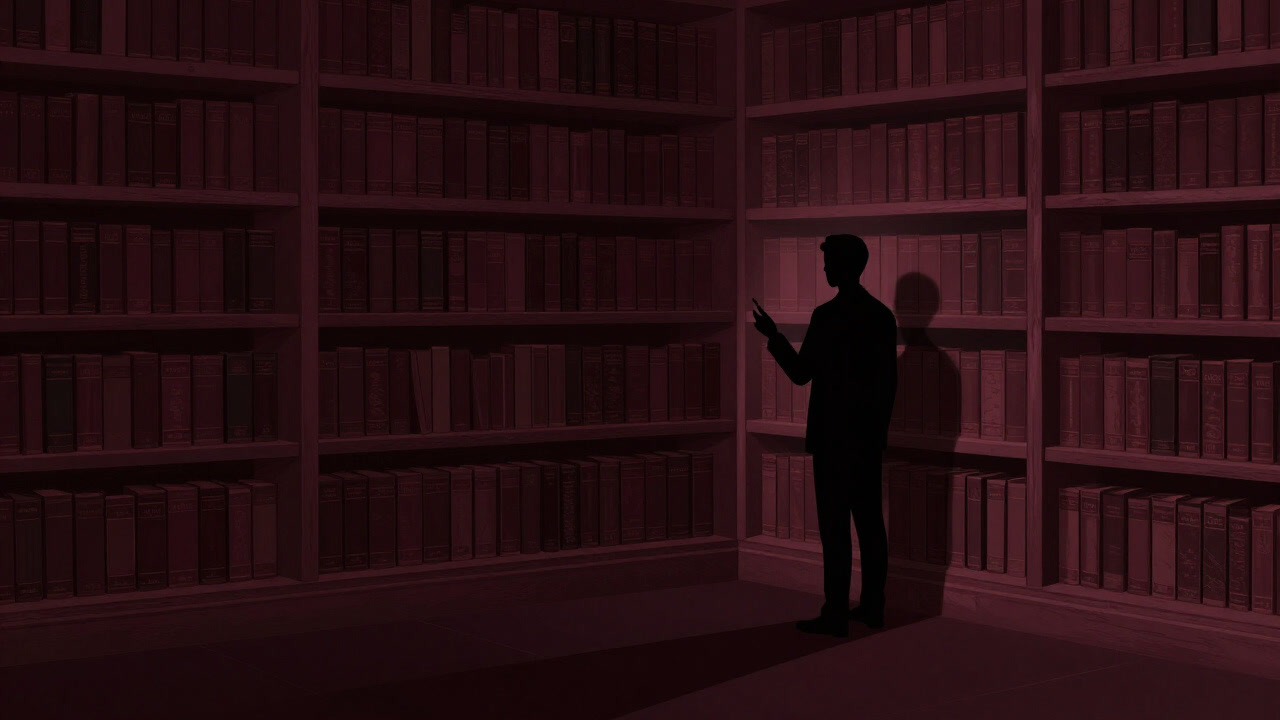
Description
Narrative criticism is a merciless scalpel that dismantles the author’s toil. It dissects narrative structures from ancient epics to social media posts and attempts to quantify empathy with surgical precision. Critics hungry for titles piece apart plots like jigsaw puzzles to validate their own existence. Cloaked in the deception of “profound insight,” they proclaim their interpretation superior to the work itself. The number of footnotes outshines any lingering aftertaste of the ending as their ultimate trophy.
Definitions
- A scalpel of intellect dissecting narratives to expose the author’s soul under public scrutiny.
- A calculator that quantifies readers’ emotions and exhausts the surplus by the critic’s decree.
- An agricultural practice sowing summary and harvesting the flaws under the guise of critique.
- A guillotine of words severing countless possibilities with a single footnote.
- A ritual that robs the resonance of endings and binds the work in armor called ‘understanding’.
- The act of debugging the author’s intention and crashing the self along with every file.
- A marketplace treating readers’ imagination as goods and building an economy of interpretation.
- A dictatorship that equally demeans every genre and idolizes only its own critical eye.
- A craft like bacteria sowing seeds of criticism in every narrative crevice to proliferate.
- An apparatus observing emotional waves and damming public empathy behind the wall of theory.
Examples
- “That novel? Enjoy it freely as long as you ignore the plot holes.”
- “Flaws in the storyline? Just the author’s imaginative breathing room.”
- “Unexpected ending? Or simply one you skipped reading.”
- “Character motivations? Merely my speculation, don’t mind them.”
- “Symbols? That’s for undergrads seeking superficial thrills.”
- “Structuralism? I was seconds away from dozing off.”
- “Authorial intent? Narrative criticism is the business of consuming it.”
- “Story world? Merely a patchwork of texts and spaces.”
- “Metaphor? Sip your coffee while you interpret at will.”
- “Critics? Just proxies for mass emotion.”
- “Style? A free pass to deviate from grammar.”
- “Perspective shift? Perhaps just an editing slip.”
- “Metafiction? The author’s vanity or the critic’s loquaciousness.”
- “Reader empathy? Merely a sales tactic.”
- “Genre? Nothing but a bookshelf label.”
- “Subtext? A hidden surcharge in my critique.”
- “Rhetoric? A wasteful dalliance with words.”
- “Tragedy? Can be turned into comedy at a critic’s whim.”
- “Narrative bones? Readers supply the flesh as they please.”
- “The final scene? Merely a terminus marker.”
Narratives
- Narrative criticism is the ritual of tossing the author’s dreams into a washer of facts and retrieving only the faded reality.
- Critics unearth hidden motifs behind the work, like archaeologists digging through layers of time.
- Instead of fulfilling readers’ expectations, they violently fit narratives into preexisting frameworks.
- It functions as a factory that reproduces illusions by repeatedly stamping out existing theories, not creating new interpretations.
- Characters stripped of narrative magic wander powerless at the banquet of interpretation.
- Criticism is the job of a shadow screenwriter, rewriting others’ scripts under the cover of scholarly authority.
- Mounting countless papers, it becomes a prison confining narratives within cages of mathematical models.
- Complex plots are treated like puzzles, and only the sense of victory satisfies the reader.
- The brilliance of style often serves merely as a clever distraction by the critic.
- By exhaustively analyzing emotional fluctuations, narratives become mechanical exhibits.
- Critics dive into the sea of text nightly, gathering fragments to construct new hypotheses.
- “Profound insight,” often so called, is merely a reheated interpretation manual.
- The kaleidoscope of interpretation shows endless glimmers, yet the shards of truth remain blurred.
- Layering facile metaphors drains the narrative of its original color, turning it into gray monotony.
- Criticism is the act of mining new narrative fragments from microtears in the text.
- Theories behave like sacred texts, and critics chant doctrine as their devout followers.
- The author’s voice is often discarded as noise, replaced by the critic’s resonance.
- In the arena of narrative criticism, words become swords and text shields in relentless battle.
- Critics’ annotations, like magic circles, seal the truth of the work.
- Here, the critic intervenes between author and reader, forging a triangular relationship.
Related Terms
Aliases
- Plot Surgeon
- Paragraph Slayer
- Stylistic Hunter
- Interpretation Machine
- Narrative Priest
- Critique Alchemist
- Text Judge
- Story Demolisher
- Paper Generator
- Meaning Chip Monk
- Empathy Thief
- Metalinguistic Fortune Teller
- Author’s Torment Evangelist
- Allegory Detoxifier
- Criticism Crucible
- Perspective Tailor
- Narrative Interferer
- Symbol Unraveler
- Reasoning Artist
- Structure Butler
Synonyms
- Story Massacre
- Footnote Storm
- Interpretation Marathon
- Theory Gala
- Paradox Hunt
- Symbol Flood
- Word Rampart
- Empathy Recovery
- Text Detox
- Perspective Split
- Theme Alchemy
- Ending Deconstruction
- Emotion Quantification
- Critique Theater
- Truth Exposition
- Criticism Recycling
- Plot Framework Inspection
- Reasoning Proof
- Interpretation Labyrinth
- Analysis Endless Corridor
Use the share button below if you liked it.
It makes me smile, when I see it.