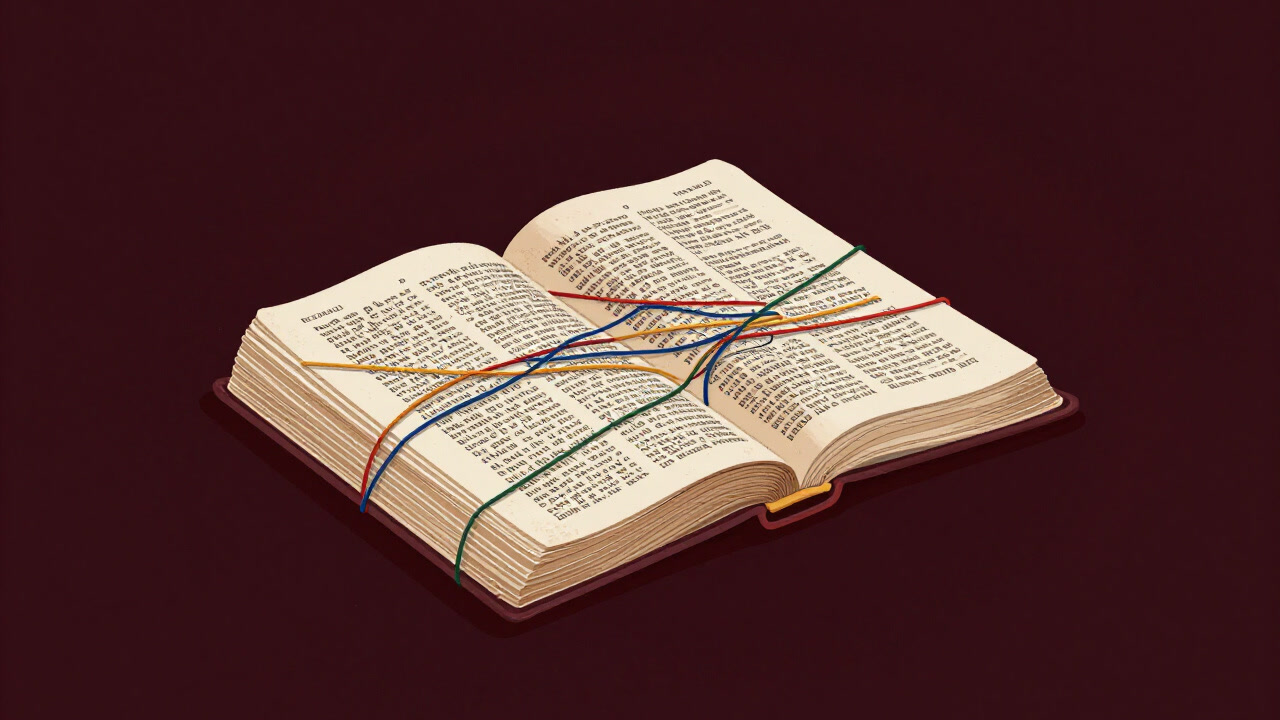
Description
Narrative theology is the art of placing fragments of scripture upon the stage of story to orchestrate the mystery of faith. One watches characters pray, demons speak, and miracles embellished as if in a slideshow, discovering one’s own drama within. It blurs the line between truth-seeking and fantasy, providing a communal scenario in which all may find comfort. On the church stage, tradition and creativity duet, erasing question marks and producing a spectacle of reassurance.
Definitions
- A spiritual remastering technique that recasts biblical narratives as a Netflix-style series of faith.
- An entertainment theology that analyzes character arcs to dramatize the divine plan.
- An intellectual play that wipes away the boundary between history and fable for a theological reality show.
- A method of overwriting hagiographies with fan fiction, chasing ratings under the guise of empathy.
- A modern arrangement that clips scripture excerpts into social-media-worthy subtexts of meaning.
- An open-ended faith that turns questions and contradictions into plot twists, shelving resolutions indefinitely.
- An interactive theater placing the church as stage, attendees as both audience and lead actor-producers.
- An adventure saga that tosses tradition aside to ride the narrative wave of faith’s greatest hits.
- A phenomenon that mashes personal life stories into cathedral tomes, memeing “my story is God’s plan.”
- A residue messaging style that crafts theological inquiries as story foreshadowing, leaving echoes unfulfilled.
Examples
- “Narrative theology? Isn’t it just a bid to turn the Bible into a movie?”
- “Divine works? That’s just another plot point.”
- “I feel like I could read the script of this sermon.”
- “Too many characters—does anyone know who the lead is?”
- “Revelation? Folks treat it like the season finale.”
- “They empathize with the story so hard their offerings feel like investing in the drama.”
- “Imagine live-tweeting the Prodigal Son; would that trend?”
- “Theologians and screenwriters are just story merchants at heart.”
- “The prologue of Job feels like an excessively long opening credits.”
- “Miracle scenes drop out of nowhere, leaving the audience behind.”
- “With every new interpretation, the season gets renewed.”
- “Narrative theologians hunt for plot twists like detectives.”
- “Sin and forgiveness? Merely character arcs.”
- “Lecture chapers? Can we get episode breaks?”
- “Too many symbols; foreshadowing management is a full-time job.”
- “Is it true that believers nap if the narrative gets too deep?”
- “Now sermons, outreach, and devotions all must follow the storyline.”
- “Interpretation updates come faster than software patches.”
- “In the end, theology is just content marketing.”
- “The post-sermon review period is peak engagement, as intended.”
Narratives
- Each time the tattered Bible pages turn, a newly produced miracle tale emerges, and congregants cheer the freshly updated plot.
- In the chapel, the pastor used PowerPoint to dramatize Jesus’s life like a film, and the assembly sat silent as in a movie theater.
- Interpretation updates are announced at morning service, spawning official church hashtags by the next week.
- Upon the discovery of a lost gospel episode, an impromptu discussion panel forms, theologians flooding comment sections.
- When narrative theology finds a bug called doubt, it turns it into an episode and logs it in the release notes.
- Every sermon ends with a cliffhanger guaranteed to boost weekend social media engagement.
- Sunday school children perform Bible stories as plays, then share reflections, elevating learning to fan fiction.
- At the retirement home devotion, old memories projected onto Bible tales sparked unexpected empathy.
- In theology seminars, participants submit life vignettes, which then reconstruct soteriology.
- The digital Bible app introduced ‘Story Emotes,’ letting users feel saints’ tears through emotional filters.
- A New-Testament/Old-Testament crossover theory arose, scholars feverishly assembling chronological puzzles.
- Occasionally, workshops turn Bible narratives into horror films, blending fear and laughter.
- Congregants tag every post with ‘#MyStoryIsGodsPlan,’ their communal identity shaped by algorithms.
- The church bulletin lists this week’s story theme and next writing prompt as if for a script contest.
- Lecture slides mimicking medieval manuscripts aimed for Instagram fame before the lecture even began.
- Every ‘divine revelation’ line is updated regularly, unleashing a wave of sacred quote fraud.
- The youth group seminar gamified biblical hero tales into RPG quests, stoking curiosity.
- At dusk in the chapel, a musical Bible reading performed, with attendees weeping and applauding.
- Church board meetings review next year’s narrative storyline alongside marketing budgets.
- “When’s the next miracle?” a congregant requested on social media, and the pastor replied with wit.
Related Terms
Aliases
- Storymaster
- Sermon Screenwriter
- Myth Remix Artist
- Faith Drama Director
- Narrative DJ
- Scripture Scenario Artist
- Parable Arranger
- Gospel Editor
- Plot Evangelist
- Metaphorizer
- Dramatic Pastor
- Story Poet
- Scenario Preacher
- Narrative Alchemist
- Verse Producer
- Faith Trilogist
- Doctrine Streamer
- Sermon Scripter
- Symbol Performer
- Reality Theologian
Synonyms
- Story Crafter
- Parable Con Artist
- Tradition Producer
- Bible Remix
- Sermon Cinema
- Faith Entertainment
- Drama Faith
- Wordplay Theology
- Plot Pilgrim
- Saint Cinema
- Faith Update
- Narrative Hybrid
- Allegory Religion
- Myth Cereal
- Gospel Streaming
- Word Drama
- Story Pioneer
- Tradition Design
- Meaning Engineer
- Parable Marketing
Use the share button below if you liked it.
It makes me smile, when I see it.