Description
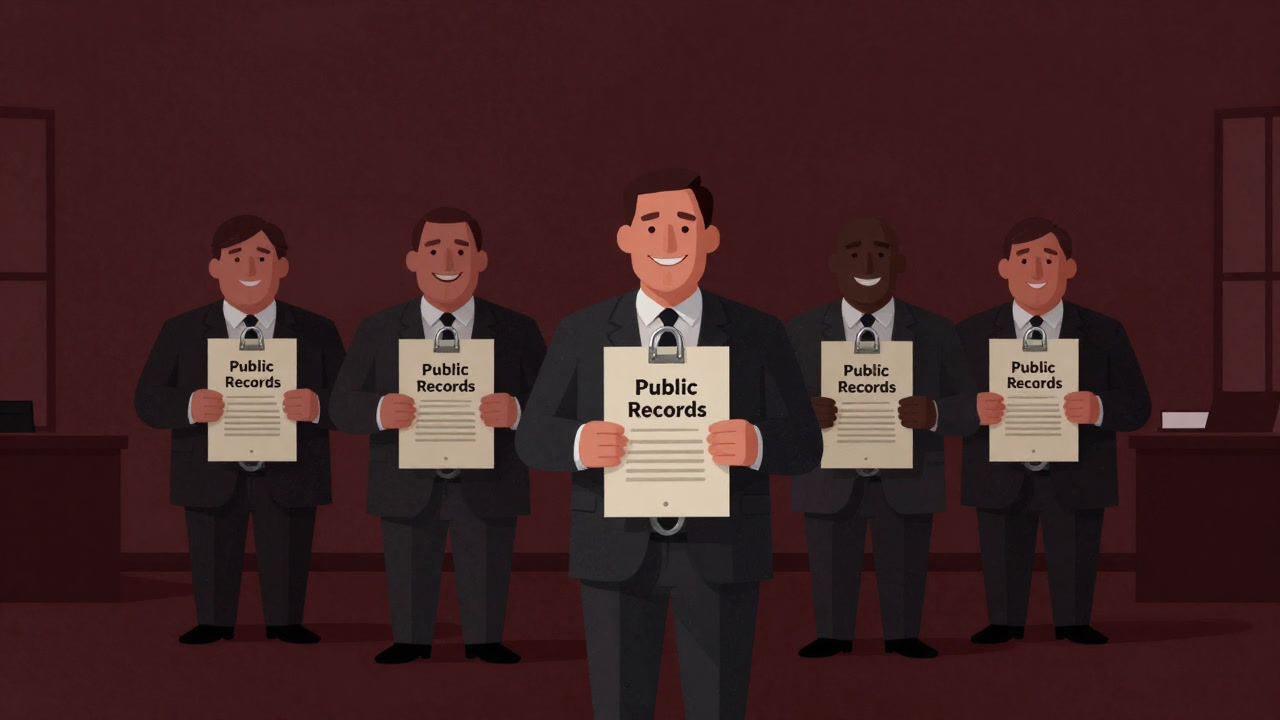
Open Government is the political theater where authorities pretend to embrace citizen oversight by releasing data, while confining real decisions to backroom deals. Under the guise of transparency they unleash seas of PDFs locked behind captchas. They trumpet public participation even as they script every line of the civic dialogue. It’s a double chamber mechanism where openness is a slogan, not a practice.
Definitions
- A double-speak apparatus where the government proclaims data transparency while masterfully concealing the most critical decisions.
- A theatrical device that touts public participation but orchestrates citizen input through pre-approved scripts.
- A banner of openness that leads to a labyrinth of PDFs that no mortal dares decode.
- Public data in name only, delivered in arcane machine-readable formats to deter any meaningful analysis.
- A curious trap where decision-making windows open only to reveal empty ballot boxes.
- A mechanism that demands endless permissions to stifle the free flow of information.
- A performance-first doctrine that favors glossy videos over the gritty truth of live meeting streams.
- An ‘open API’ that charges hidden tolls for every key requested.
- A hollow system that collects resident surveys only to lock them behind rusted gates of bureaucracy.
- A digital efficiency promise that, in practice, spawns more passwords and approval workflows than it eliminates.
Examples
- “Open Government? Sure we publish all the data. Doesn’t mean you can read the decisions.”
- “Citizen participation: choose yes or no. Other options have been removed for simplicity.”
- “All data is available—just a 20MB scanned PDF image, feel free to dig in.”
- “API is live! Request access in three weeks; keys will arrive by snail mail.”
- “Meetings are streamed live. Chat comments will be reviewed at midnight.”
- “In the spirit of transparency, we’ve password-protected the files.”
- “We value citizen input—just no guarantee it reaches the council.”
- “Our manifesto is on GitHub… technically.”
- “Open data? Fill out three forms, stamp two seals, then wait.”
- “We moved to the cloud. Unfortunately, only our department has the password.”
- “We’re collecting opinions, but the deadline closed yesterday.”
- “In line with disclosure laws, all photographs have been expertly hidden.”
- “Join our participatory workshop—spaces are limited to five attendees.”
- “We received your request. Implementation is projected in the next century.”
- “The report is in PDF: final_final_latest.pdf.”
- “Thanks to open government, meetings now last three hours instead of two.”
- “Access permission pending… approval subject to my mood.”
- “We’ll improve services. First step: draft the plan, then never publish it.”
- “We honor your feedback—results will be presented in masked aggregate form.”
- “Next up: Closed Government, for contrast and nostalgia.”
Narratives
- The slogan of Open Government gleams brightly on banners, while council chambers remain shrouded in secrecy.
- They announce Data Disclosure even as every file is secretly password-locked.
- The citizen portal, always under scheduled maintenance, ensures nobody ever sees the data.
- Meetings are live-streamed—audio drops out, video lags, a time-honored tradition.
- Draft bills slip past opposition unnoticed, leaving only a trail of redaction logs.
- The Transparency Task Force neglects to publish the very minutes meant to prove its transparency.
- Open data CSVs arrive without headers and in cryptic encodings fit for archaeologists.
- Public consultation events end five minutes after start, dedicating the rest to collecting unreadable surveys.
- The city hall doors proclaim Anyone may enter, just before reception demands five forms of ID.
- Freedom of Information requests queue up in lines that serve as time capsules of frustration.
- Open Government stands as a massive experimental device visualizing the gap between ideal and real.
- The new portal interface is user-friendly—if you can obtain a mythical access token.
- Press kits fly off at briefing, while the real data is crammed into PDFs pushed late night.
- Ordinance drafts are publicly available with passwords guarded in the mayor’s secret vault.
- Press releases go live immediately, only to link to the dreaded 404 page.
- The government portal is open, yet its API documentation remains hidden like a buried treasure.
- Beautiful visualization infographics appear, though their source data stays locked away.
- Citizen forums boast open dialogue, ending with a closed-door afterparty for insiders.
- The Open Government dashboard shines in color, masking the gray reality of bureaucracy.
- The final report is published, then forgotten, quietly aging in a dusty folder.
Related Terms
Aliases
- Transparency Theater
- Data Phantom
- PDF Dungeon
- Password Party
- Sham Participation
- Open(?) Data
- Captain Captcha
- Governance Show
- Locked Treasure Chest
- Faux Oversight
- Citizen Circus
- 404 Generator
- Decision Hideout
- Meeting Maze
- Disclosure Trick
- Form Overlord
- Slogan Blaster
- Token Tango
- Secret Vault Keymaster
- Policy Puppeteer
Synonyms
- Display Government
- Illusion Governance
- Surface Transparency
- Hidden Politics
- Scripted Participation
- Locked Democracy
- Theater State
- Survey Carnival
- Digital Ghost
- Document Labyrinth
- Binary Choice Doctrine
- Lip Service Bureaucracy
- Formalist Regime
- PDFocracy
- Captcha Dictatorship
- Participation Prison
- Promo Video Politics
- Concealment Disclosure System
- Masked Policy
- Queue Democracy
Use the share button below if you liked it.
It makes me smile, when I see it.