Description
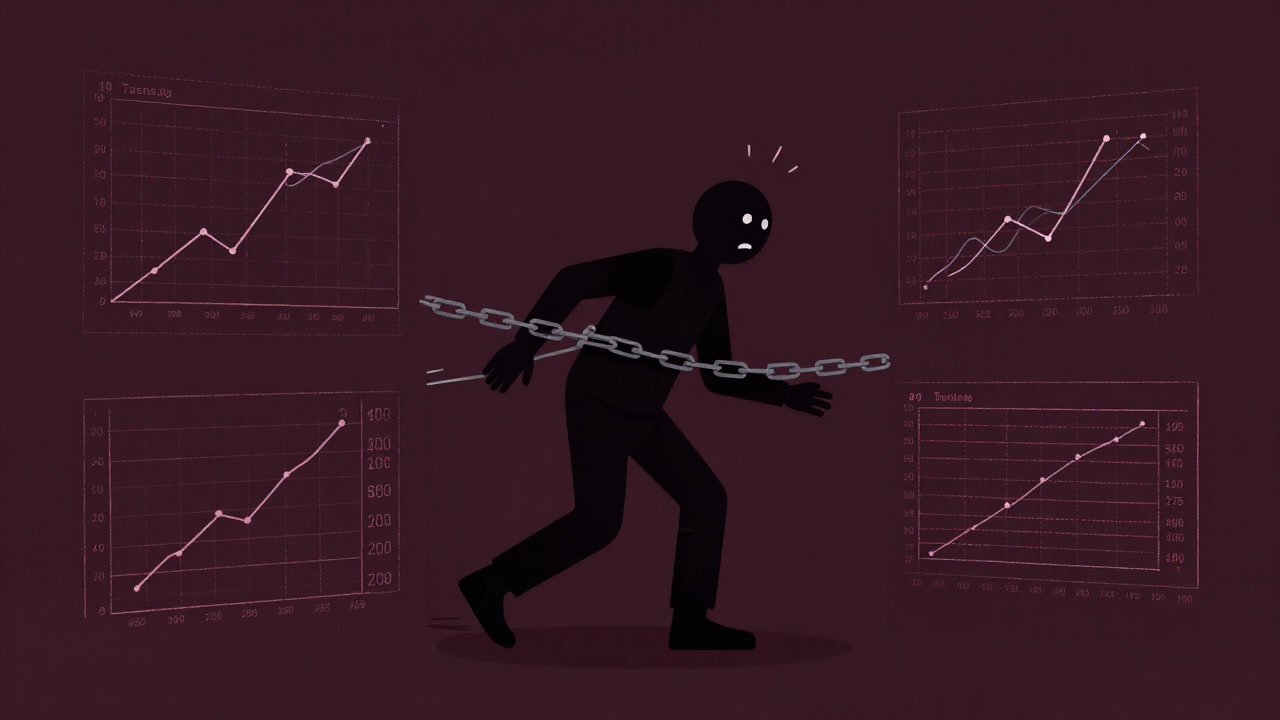
Overfitting is the curious disease of machine learning models that memorize every nuance of training data at the cost of any real-world adaptability. It sacrifices the friendship called generalization on the altar of statistical perfection. Like a student who masters past exam questions yet flunks the actual test, it shines in theory and collapses in practice. Mathematically, it boasts an ideal fit; pragmatically, it becomes a useless work of art. It is the holy ground where a model’s vanity collides with reality’s harsh irony.
Definitions
- A phenomenon where a model falls madly in love with its training data and bars all unfamiliar input at the door.
- A trap of learning that remembers every detail of a dataset, sacrificing its own flexibility.
- A statistical gamble that cashes in generalization for past successes.
- A self-satisfied ritual that discards any room to understand new challenges in order to zero out error.
- The tragic love story finale of bias and variance.
- Like hosting a wedding without knowing the test data—and getting jilted on the big day.
- A theatrical learning model whose stage set is its performance metrics.
- A mountaineer who has climbed every hill on the learning curve and forgotten that there are more mountains ahead.
- An algorithm that prioritizes memory above all, leaving reasoning power at home.
- An elitist learning method that memorizes every known exception and chooses failure when faced with an unknown one.
Examples
- “99% training accuracy? Wonderful… just don’t ask for over 90% on real-world data.”
- “Overfitting? No, it’s just the pure lovechild of the model and its training set.”
- “Weak on new data? That’s overfitting… like a model’s very own shadow ban.”
- “A model that knows the test set by heart—are we training a cheater of some sort?”
- “This model gets 100% on past problems, yet it’s utterly useless on the real exam.”
- “Inability to generalize is like an employee who breaks under every unreasonable demand from the boss.”
- “Overfitting again? You’re sacrificing yourself out of devotion to the training data.”
- “Deploy an overfitted model and watch it crash in live testing—a time-honored tradition.”
- “Prevent overfitting? Sure—if you’re fine with sacrificing all your training data.”
- “Bias-variance tradeoff? Pure idealism, isn’t it?”
Narratives
- At the end of the training process, the model memorized the training data perfectly but turned a blind eye to real-world input.
- An overfitted model is a closed citizen with no passport to the unknown.
- Legend has it engineers battled regularization until dawn, then praised a model with minimal training error.
- Facing production data, the overfitted model laid bare its impotence and was ordered back to the lab.
- The client rejoiced at the high training accuracy, then trembled at the post-deployment carnage.
- Regularization was the chain that bound the model and the only key to freedom from the monster called overfitting.
- The cruel tug-of-war between parameter count and data samples eventually led to a tragic finale.
- The test set is the final judgment, and overfitting is defeat with no escape.
- A curve too refined drowned in its own beauty, ignoring the data’s whispers and losing its purpose.
- Overfitted models worship only the glory of the training chamber, forgetting to knock on reality’s door.
Related Terms
Aliases
- Memory Machine
- Data Addict
- Curve Lover
- Shadow-Ban Criminal
- Training Maniac
- Overfit Overlord
- Statistical Narcissist
- Training Junkie
- Sample Stalker
- Model Lover
Synonyms
- Memorization Buffoon
- Data Cultist
- Number Naïf
- Excessive Tweaker
- Model Narcissist
- Training Evangelist
- Accuracy Worshipper
- Noveltyphobe
- Generalization Abandoner
- Variance Celebrity
Use the share button below if you liked it.
It makes me smile, when I see it.