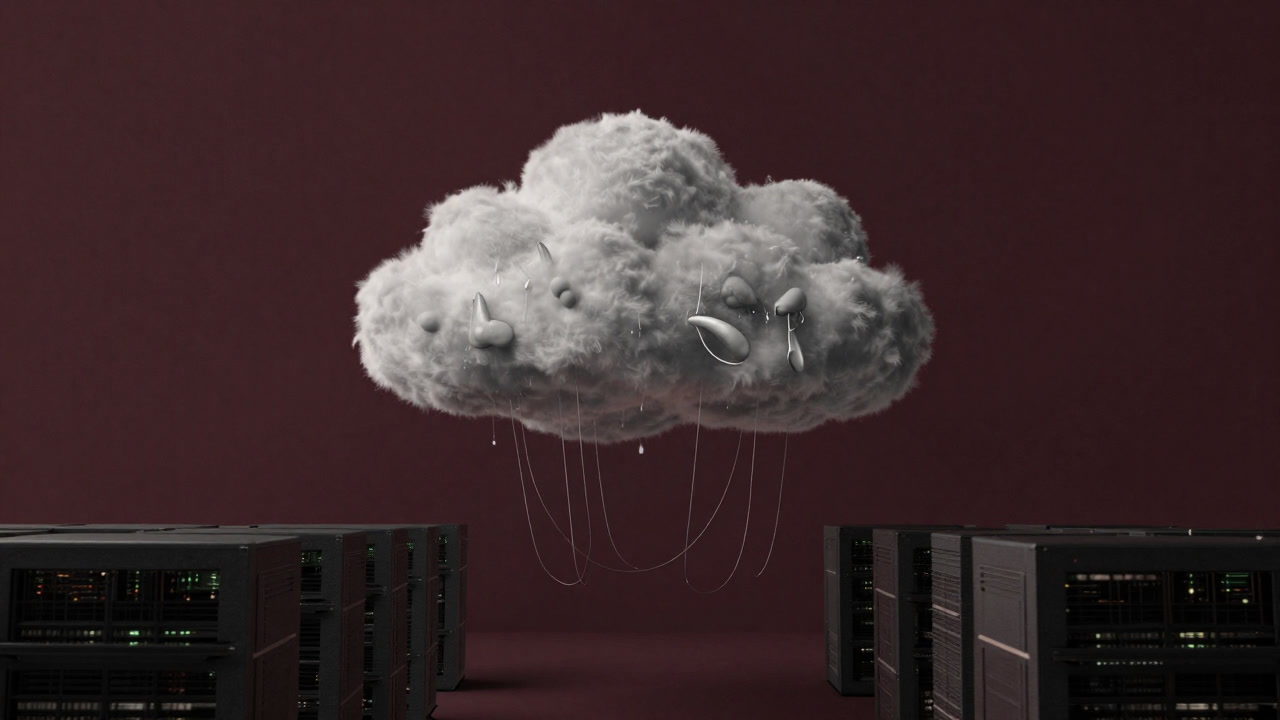
Description
PaaS is a magical cloud box into which optimistic developers dump their dream execution environments. Operation and scaling rarely follow the glossy brochure, trapping them in the Sisyphean task of decoding endless contract fine print. ‘Zero Downtime’ exists only in marketing slides; when things break, the support team embarks on a hellish call tree. Users crave immediacy and peace of mind, but reality delivers surprise invoices and emergency triage. Yet, it persists as the illusion of convenience.
Definitions
- A cloud platform that promises freedom but is essentially a new vendor lock-in device.
- Billed as dreamlike auto-scaling; in reality, a drama queen erupting in screams once thresholds are breached.
- Liberates developers from environment setup only to guide them into a labyrinth of contractual fine print.
- A hinge holding ‘99.99% uptime’ on a tiny 2pt footnote buried deep in the documentation.
- Self-styled ‘hands-off’ service that steals your operational knowledge and bills you thanklessly during crises.
- Haunted as the infrastructure of tomorrow, yet in practice a monthly subscription prison for its inmates.
- Boasts speed and efficiency, but the quickest thing it performs when trouble strikes is ticket generation.
- Transforms on-premise liberty into cloud incarceration, a two-faced grim reaper of infrastructure.
- Rebrands shared resources as ‘multi-tenant’ to lend you someone else’s digital trash can.
- The more of its ‘standard’ APIs you learn, the deeper you wander into a maze of compatibility hexes.
Examples
- “Deploying PaaS will simplify development,” they said, though I’m too scared to read the fine print in the contract corners.
- “Auto-scaling? I can already hear screams in the staging environment alone.”
- “It’s supposed to be so easy to deploy, yet here I am, trapped in environment variable hell…”
- “Support line? That’s a community for sharing midnight nightmare stories.”
- “Promised 99.9% SLA? Maybe we should cover the missing 0.1% ourselves.”
- “Cloud benefits? I felt more fear than gratitude when I saw the invoice.”
- “Instances won’t start? Ah, PaaS must be in a foul mood today.”
- “Where are the logs? They’ve vanished into the PaaS abyss and will never return.”
- “They said ‘hands-off operations,’ but that was a lie—brace yourself.”
- “World Cup is coming, yet support fled during our scale-out test.”
- “‘One-click everything’ exists only in sales decks.”
- “PaaS sells convenience, but reality delivers surprises instead.”
- “He preached ‘cloud-first,’ then retreated back to IaaS to avoid PaaS.”
- “Learning curve? PaaS rituals demand an infinite set of incantations.”
- “On-demand? I can’t even tell what’s running anymore.”
- “When PaaS stops, so do we—like tethered twins.”
- “New features? First navigate the compatibility labyrinth with old versions.”
- “This UI claims to be for beginners but confuses intermediates like a genius trap.”
- “Serverless? First spot the PaaS blind spots.”
- “Cloud migration? Prepare for an adventure escaping PaaS chains.”
Narratives
- What started as a PoC contract turned into a prison for our main system.
- The moment we discovered the hidden billing tables in the documentation, the dev team froze in silence.
- At midnight, the click of an engineer opening the PaaS dashboard sounds like a cleric entering a graveyard.
- Outage alerts always arrive at 3 AM, as if to celebrate our worsening insomnia.
- Those who preached operational tips secretly inscribed spells in the contract margins.
- PaaS apology emails are sprinkled with a third-person style, devoid of any sincerity.
- Seizing the downtime, the team raced to protect internal docs from corruption.
- Testing scalability becomes a horror show where fear is measured in unquantifiable metrics.
- With each renewal, a ritual of groveling to support became corporate culture.
- Legend says the true victor in the cloud is the one who minimizes the bill.
- Managed services promised to reduce ops load but delivered a new kind of burden.
- Viewing server-side charges left our front-end engineer frozen in terror.
- New PaaS feature announcements aren’t fireworks; they herald the next round of suffering.
- Hunting down bottlenecks felt like an all-night expedition until dawn.
- ‘Easy’ and ‘intuitive’ in the docs betrayed newcomers as a cruel trap.
- Underestimating redundancy settings means no one will come to aid when it matters.
- Enabling auto-updates leads to accidentally triggering version landmines.
- Believing PaaS was public infrastructure, we realized we were the taxed, not the residents.
- Logs quietly thrown into the sea drift never to be recovered, littering the depths.
- The silence after service stoppage felt as heavy as a prayer unanswered by ancient gods.
Related Terms
Aliases
- Contract Landmine Dispenser
- Charge Generator
- DevOps Demon
- Cloud Cage
- API Monster Summoner
- Infinite Invoice Fountain
- Support Bureaucrat
- Scalability Specter
- Vendor Lock Wizard
- Uptime Illusionist
- Chaos Automator
- Platform Prison Keeper
- Resource Vampire
- Env Hell Conductor
- Scale Horror Show
- Multi-Bill Trap
- Deployment Juggernaut
- API Labyrinth Designer
- SLA Ghost
- Subscription Overlord
Synonyms
- environment hell
- billing hell
- support maze
- scalability tragedy
- contract prison
- automation curse
- cloud cage
- operation labyrinth
- infinite billing
- dependency abyss
- lock-in cage
- ops nightmare
- API maze
- downtime minefield
- env binding
- scale ghost
- billing trap
- log labyrinth
- support nightmare
- scaling hell
Use the share button below if you liked it.
It makes me smile, when I see it.