Description
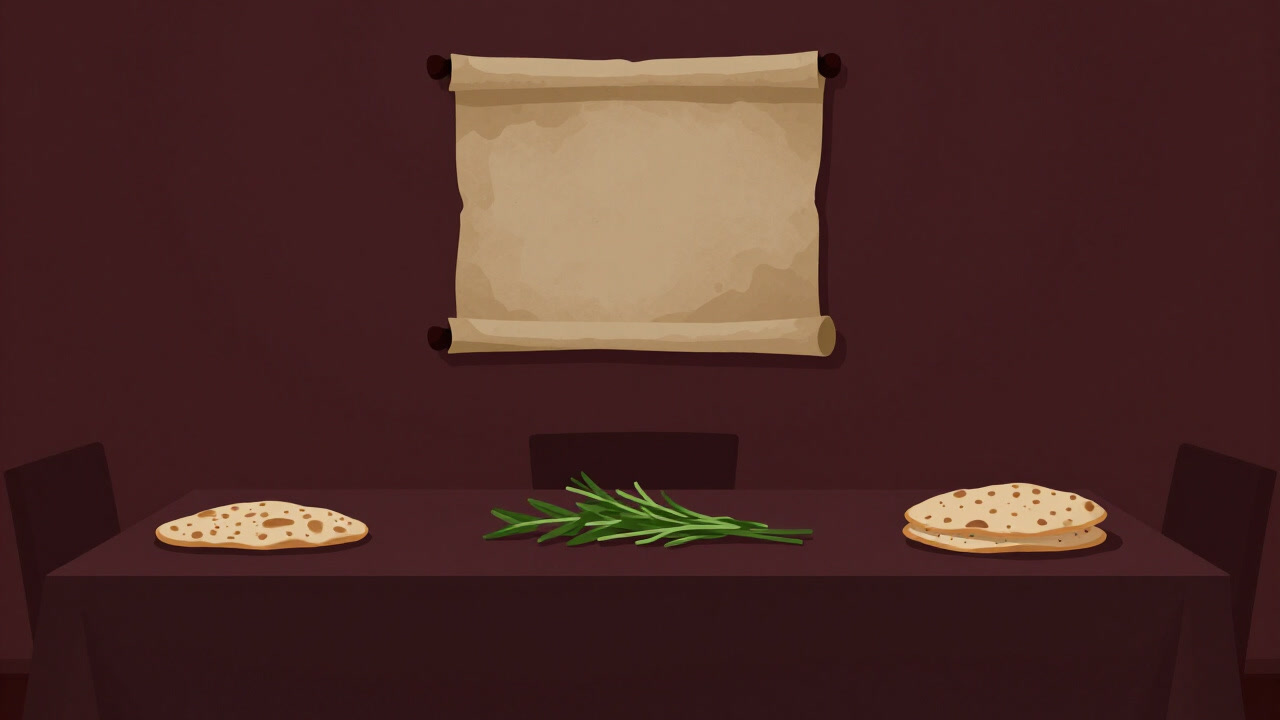
Passover is the annual reenactment of a dramatic jailbreak from Egyptian servitude, performed with bitter herbs and unleavened bread. The entire household is conscripted into a ritualistic spring cleaning to purge any trace of “leaven,” while symbolic foods line the table like grim props. Storytellers officiate an endless round of questions from wide-eyed children, testing the elders’ patience more effectively than any affliction. Hands kneading dough tremble with pious fervor, and the pile of dishes left behind stands as a monument to both liberation and drudgery. What begins as a sacred feast quickly descends into a bitter comedy, a farcical stage on which the chains of history are dutifully faked and then forgotten.
Definitions
- An annual historical simulation flavored with bitter herbs to relive an ancient prison break.
- A homewide yeast purge paired with a bite of past suffering cleaning project.
- A religious food theater that stages pseudo-freedom with crumbs and bitter greens.
- A generational talk marathon where elders endure the torture of grandchildren’s endless “why.”
- A ceremony proclaiming spiritual liberation tethered to the drudgery of dishwashing.
- A community play reenacting an exodus while monopolizing everyone’s evening.
- A no-crumb-allowed festival whose strictness rivals any celebration.
- A penitential feast disguised as a celebration of historical freedom.
- A ritual emotional ultramarathon fueled by ancestors’ woes on your plate.
- A sanity-stabilizing program that lets you taste “freedom” via condiment props.
Examples
- “Another Passover already? Someone stop the question relay before the herbs stab our tongues!”
- “Unleavened bread tastes like flat bricks… is this supposed to be freedom?”
- “The house is spotless again, but do you all really feel liberated?”
- “An elder who can’t answer a child’s ‘Why did they escape?’ is either incompetent or saintly.”
- “Those herbs are so bitter they feel more like chains than liberation.”
- “We celebrate freedom with a queue for dish duty—ironic, isn’t it?”
- “The Passover story is dramatic, but isn’t the staging over the top?”
- “Turning red hands from detergent and prayer to honor liberation—bold move.”
- “At this point, Netflix would tell the Exodus story faster.”
- “Chewing bitter herbs and whispering ‘Is this freedom…’ is a peak experience.”
- “The unwritten rule: ignore the sugar found during spring cleaning.”
- “The ‘zero-crumb challenge’ as a diet hack—ingenious.”
- “Passover feasts are stamina trials; no one leaves early.”
- “Are there still herbs left, or have the stories run dry?”
- “Wine symbolizes liberation… who decided that?”
- “I want to sign a treaty banning questions until next year.”
- “Setting a hard-hitting drama three millennia ago—bold artistic choice.”
- “Burnt bread: tradition or sheer negligence?”
- “Elder narration as background music—bitter and lulling.”
- “In the end, the leftover dishes outlast any memory.”
Narratives
- The altar was set with bitter herbs and unleavened bread, and the family lined up like an army bidding farewell to escapees.
- With each stretch of the elder’s narrative, the children’s eyes drifted between fascination and boredom.
- Gazing at the dust revealed by spring cleaning, everyone questioned in their hearts, “Are we truly free?”
- The dishwashing relay served as the real climax of Passover, more epic in suds and sweat than any hero’s tale.
- Each year’s updated question booklet contained only more unanswerable inquiries.
- The moment you chew bitter herbs, the specter of past bondage seems to resurrect on your tongue.
- What began as a celebratory feast soon devolved into a sideshow of penance and household chores.
- After the ritual, participants basked in a peculiar high of both liberation and exhaustion.
- Not a single bread crumb was permitted, and such enforced purity revealed a paradoxical craving for control.
- When the commemorative prayers ended, only the pile of dishes remained unchanged.
- The ancestral escape tale was dramatic, but modern attendees were weary of the over-the-top production.
- Passover nights inevitably transform supposed liberation into the weightlifting of tomorrow’s muscle ache.
- Although the altar ingredients were sanctified, they became mere food upon cooking—an ironic tragedy.
- The onslaught of children’s questions showed no end, renewing adults’ endurance test each year.
- The penance repeated in tradition’s name eventually prioritized suffering over ceremony.
- In the silence after the festival, everyone whispered, “Is this true freedom?”
- Homes post-Passover were filled with pride and a strange sense of emptiness.
- The elder’s commentary became so formulaic that it lulled listeners more than any scripture.
- Over time, the herbs’ bitterness melted into the sweetness of oblivion—a paradox.
- The more the liberation story was told, the more it faded, leaving only the foam of dishwashing shining in the end.
Related Terms
Aliases
- Slave Drama
- Bitter Herb Marathon
- Bread Filtering
- Mandatory Cleaning Festival
- Question Endurance Race
- Historical Playback
- Bubble Freedom Prize
- Memory Reset Party
- Altar Harassment
- Ceremony Survival
- Household Martyrdom
- Purification Holy War
- Bitter Offering
- Freedom Logic
- Past Immersion Tour
- Tabletop Documentary
- Question Gladiator
- Tradition Trap
- Edible Torture Theater
- Liberation Gestalt
Synonyms
- Herb Torture
- Purity Rehearsal
- Child Question Hell
- Dishwashing Revolution
- Story Reset
- Sanctity Enforcement
- Escape Wish Festival
- Ceremonial Labor
- Taste of the Past
- Pseudo-Liberation
- Tradition Prison
- Verse Marathon
- Bitter Praise
- Cleaning Requiem
- Household Theater
- Freedom Diet
- Memory Erasure Fest
- Bubble Juice
- Intergenerational Abuse
- Condiment Carnage
Use the share button below if you liked it.
It makes me smile, when I see it.