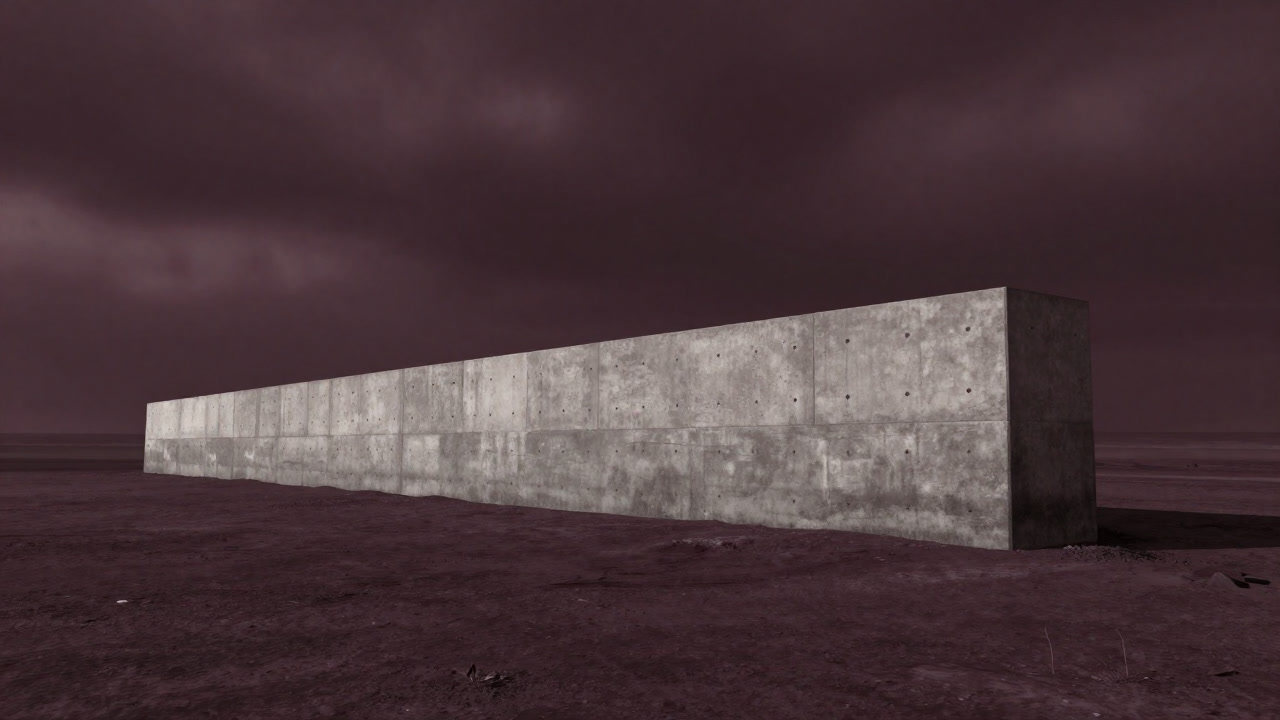
Description
A seawall is a fortress of earth and concrete erected to repel the ocean’s impolite encroachments upon dry land. Residents treat its looming bulk as a mundane backdrop, blissfully ignoring cracks in its armor until high tide reveals its folly. Politicians relish ribbon-cutting ceremonies and declare victory after every storm, conveniently forgetting that the next surge is the true test of their boastful claims. Engineers chant the liturgy of safety while balancing real risks and budgets as if performing mechanical prayers. Ultimately, the seawall becomes a symbol of postponed peril, offering communities the illusion of security until nature demands real vigilance.
Definitions
- A tidal surge deterrent disguised as a mound of earth and concrete.
- A governmental declaration of thrift in the face of oceanic reality.
- A colossal psychological safety bubble that swallows both residents’ peace of mind and evacuation plans.
- A witness to aging, preserving its presence past its intended lifespan while demanding renovation funds.
- A public works emblem that only garners attention when storms strike, then vanishes into oblivion.
- A civil engineering black hole that devours land sacrifices and budgetary allocations.
- A paradoxical artifact that pushes back the sea’s wrath yet creates new points of vulnerability.
- An invisible pipeline of safety myths maintained by the silent prayers of caretakers.
- A decorative hurdle that lulls communities into underestimating evacuation protocols.
- A monument to fragility awaiting the moment when overconfidence collapses.
Examples
- “Tsunami coming? No problem, there’s a seawall over there!”
- “They say seawalls stop floods. Have they considered the drainage first?”
- “I heard there’s a hole in the seawall. Don’t worry, it won’t show in the brochure.”
- “The new seawall is a symbol of safety. Who tests it and when? That’s classified.”
- “A ceremony for the seawall’s completion and roaring applause. Yet the real high tide hasn’t come for testing.”
- “A referendum? Reasons to oppose a seawall? Such luxury isn’t allowed.”
- “An aging seawall? Apparently the concrete crumbles on touch, but maybe that’s just a rumor.”
- “Thanks to this seawall, it’s harder to spot where money’s being wasted.”
- “Hey rookie, declare it’s safe before the sea breaks through.”
- “Like weeds clinging to the seawall, maintenance costs just keep growing.”
- “Surge estimate? Predictions in government stats are enough for us.”
- “Behold this grand castle of waste!”
- “Danger zone? As long as this seawall stands, it must be safe… right?”
- “They say the seawall will take the hit from a tsunami. Shouldn’t citizens be the ones protected?”
- “Even if we suffer damage, let’s first check the seawall’s condition.”
- “The new seawall is state-of-the-art! Unfortunately, the budget is decades-old.”
- “After the mayor’s speech, is there a ceremony for the seawall’s collapse?”
- “Seawall? That’s just a storage for our taxes.”
- “Safety measures? Those only matter on the seawall’s other side.”
- “Seawall height? The projected wave height can be tweaked to fit politicians’ agendas.”
Narratives
- The seawall is a civil engineering showcase selling the fiction of ‘safety’ to its citizens.
- It stands tall before the storm, then quietly hides its cracks afterward.
- Local governments rush maintenance for press photo ops rather than meaningful damage assessments.
- Only when a surge destroys the wall do its advocates lose their credibility.
- Design standards follow the voice of budgets more closely than the cries of the earth.
- Residents complain about traffic jams but never question the seawall’s aging defenses.
- Few know that waters breaching a seawall will devour a town without mercy.
- Funds spent on the embankment often trigger new issues like groundwater depletion behind the scenes.
- As long as a seawall stands, participation in evacuation drills stays dismally low.
- From atop the embankment, citizens suspend thought for the sake of comfort.
- Only when the seawall collapses do people truly reconsider what ‘safety’ means.
- Even when tsunami alarms blare, no one lets go of their smartphone.
- The irony of a ‘Safety First’ sign guarding the most precarious structure.
- Bids for seawall construction become a revolving money show boosting local economies.
- Sense of crisis reacts more to media fads than actual surge warnings.
- The term ‘seawall’ was coined as a stage prop for political self-promotion.
- Night sea breezes highlight the coldness of steel and concrete after the ritual of construction.
- The sound of repair work serves as a soundtrack of public apathy and bureaucratic waste.
- Scenic photos taken from the embankment move emotions more than evacuation routes ever will.
- The frontline of every seawall is where ocean fury and civil engineering vanity collide.
Related Terms
Aliases
- Ocean Lid
- Safety Factory
- Tax Hopper
- Surge Barrier
- Sand Monument
- Concrete Warehouse
- Vanity Wall
- Aging Chalk
- Waterproof Myth
- Wave Dodge Bot
- Disaster Postponer
- Safety Myth Plant
- Sea-Return Machine
- Budget Punch
- Invisible Crack
- Rebuilder’s Buffet
- Public Graveyard
- Billion-Dollar Scar
- Waste Module
- Future Fragility
Synonyms
- Tax Barricade
- Gravel Shield
- Wave Gate
- Safety Pendant
- Public Bulwark
- Fragility Myth
- Incomplete Fortress
- Illusory Rampart
- Cost Sink
- Old Guardian
- One-Shot Device
- Repair Labyrinth
- Shore Watcher
- Comfort Consumer
- Inept Hero
- Refit Business
- Municipal Accessory
- Wall of Prayers
- Disaster Token
- Wavering Defense
Use the share button below if you liked it.
It makes me smile, when I see it.