Description
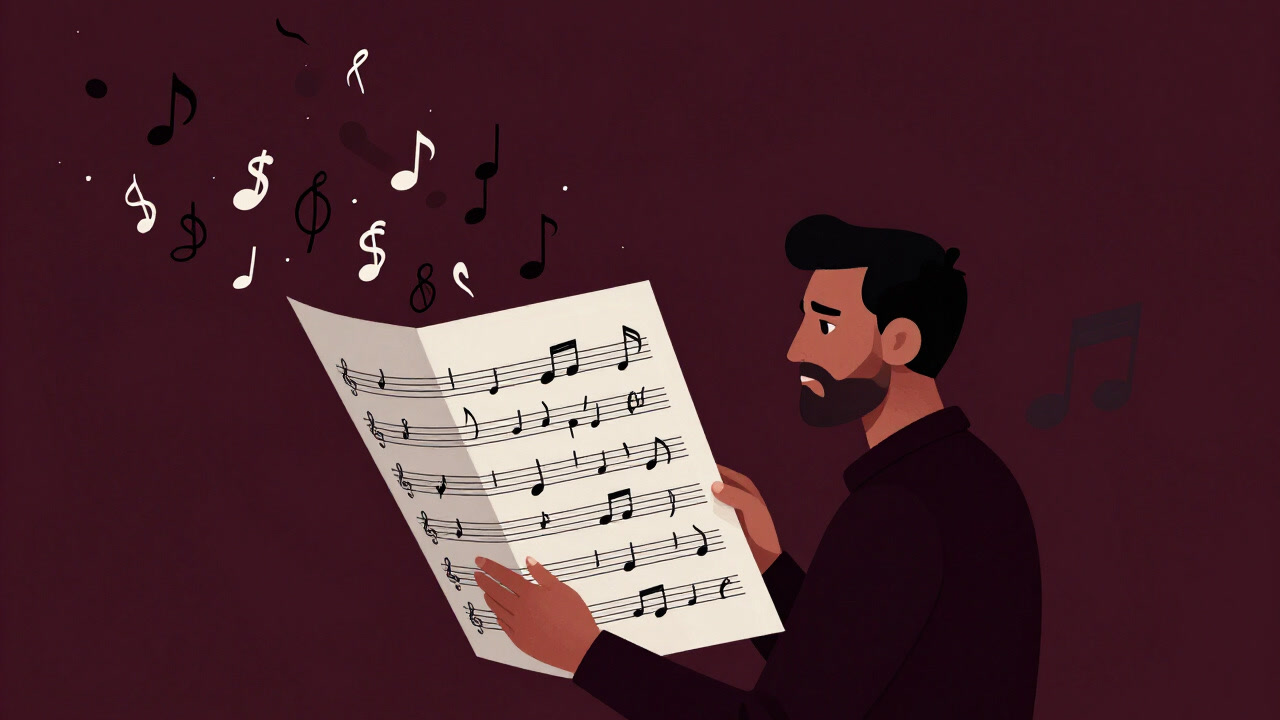
Serialism is the noble practice where composers ruthlessly shuffle twelve tones, offering audiences both order and chaos in a single sitting. It installs a hierarchy among pitches, smashing the utopian ideal that all notes are created equal. At times, it transforms rhythm itself into an assault on listeners’ sensibilities. By banishing traditional tonality, it becomes a ritualistic sorcery that transmutes sweetness into dread. Ultimately, the composer ascends as deity of structure, only to become servant to their own tone row.
Definitions
- A sonic labyrinth born from the lottery of randomly ordered intervals.
- A compositional method that tortures listeners under the guise of abolishing tonality.
- A power structure where the composer governs definitions of sound and subjugates the audience.
- A regime that proclaims tonal equality while establishing absolute dominance over all pitches.
- A musical incantation that denies melodic freedom and surrenders listeners to pure mathematical order.
- A lock that imprisons harmony’s pleasures and encloses sound within the cage of reason.
- A performance arena where twelve tones compete, mercilessly ignoring the losers.
- A rite celebrating aesthetic violence by stripping tradition of its tonal bones.
- A missionary preaching cold structuralism, denying music’s lyricism.
- A device that equalizes chords and transforms auditory pleasure into a system error.
Examples
- “My new piece is serialism. Just reshuffle the instruments into chaos and emotion is guaranteed.”
- “This work? The thrill lies in how utterly it baffles the audience.”
- “Tonal harmony? A mere illusion. Twelve tones reveal true freedom.”
- “Ears hurting? Consider it applause from the pros.”
- “What did you hear? Asking that is nonsense. Serialism is an experience.”
- “I even enslaved rhythm. Surprised?”
- “Harmony’s pleasures are passé. Welcome to the rapture of disorder.”
- “The composer’s command is law. Question the tone row and you’re out.”
- “Twelve-tone matrix? It’s like a math test—fun, isn’t it?”
- “Rumor has it the composer coded this while half-asleep.”
- “Performers in disarray? Proof of success.”
- “Encore? When the tone row ends, so does the show.”
- “True art is watching the audience flee.”
- “The classics? Spare me. Scientific leaps are the only art.”
- “Why can’t you feel the beat? It’s innovation so radical it defies rhythm.”
- “Melody? A traitor. Purity demands its removal.”
- “Critics’ approval or disdain is irrelevant. Tone rows are the only standard.”
- “Understand this piece and there’s no turning back.”
- “Next, I’ll tackle 24-tone; whether ears survive is another matter.”
- “The silence after the end is the ultimate catharsis.”
Narratives
- The serialism concert felt like a test to solve an audio puzzle. The audience was so exhausted they offered silence instead of applause.
- The budding composer recruited devotees to worship their tone row as deity. They performed rituals elegantly, earplugs in hand.
- Magazine reviews called it ‘ideal for resetting your hearing,’ as if it were a sonic freeze button.
- Hunting hidden tone rows between score lines is harder than a treasure hunt, and just as pointless once you find them.
- Legend says if a performer errs by one tone, the composer’s wrath grows by twelvefold.
- Enrollees in serialism courses apparently lose bits of their ego each time their sense of key diminishes.
- After the concert, nobody discussed themes—they only whispered, ‘It’s over….’
- The composer reveled in the thrill of shattering the audience’s consciousness with each new tone row.
- Program notes read like code; readers felt like initiates into a secret society.
- The history of serialism is a battlefield swirling with simultaneous rejection and praise.
- During performance, the rustling in seats sounded like protests against harmony.
- The composer boasted that tone row placement was a political decision, and the audience were its casualties.
- At the premiere, those who left early were dubbed ‘defectors from purity.’
- They called tone order an oracle, kneeling before speakers in reverent listening.
- Despite being labeled a concerto, the soloist often fades into oblivion.
- The professor defined serialism as ‘mathematical music,’ but the students had already left the classroom.
- That fleeting illusion of seeing twelve-tone contours signals a loss of mental equilibrium.
- Rumor has it the next tone row is decided by the composer’s sneeze.
- Serialism fan conventions exude the solemnity of a sonic religion.
- At the end of auditory endurance lies a leap off the cliff into silence.
Related Terms
Aliases
- Emperor of Tones
- Twelve-Tone Prison
- Tone Chaos
- Aural Trial
- Harmony Maker
- Deity of Order
- Structure Guru
- Noise Priest
- Tone-Row Sadist
- Aural Torture Device
- Realm of Randomness
- Musical Legislature
- Gatekeeper of Reason
- Discord Feast
- Cage of Order
- Tonality Wrecker
- Tyrant of Sound
- Rhythm Slaveholder
- Atonal Anarchy
- Mocker of Audiences
Synonyms
- Tonotherapy
- Cage Theory
- Math Music
- Chaos Concerto
- Sonic Labyrinth
- Abstract Sound
- Structuralist Tone
- Ear Kill
- Exclusive Music
- Ritual of Reason
- Discordian Creed
- Tone-Row Doctrine
- Musical Solitary
- Serial Soundscape
- Audio Cipher
- Rational Abuse
- Aural Verdict
- Tone Obligation
- Tonality Revolution
- Silent Protest
Use the share button below if you liked it.
It makes me smile, when I see it.