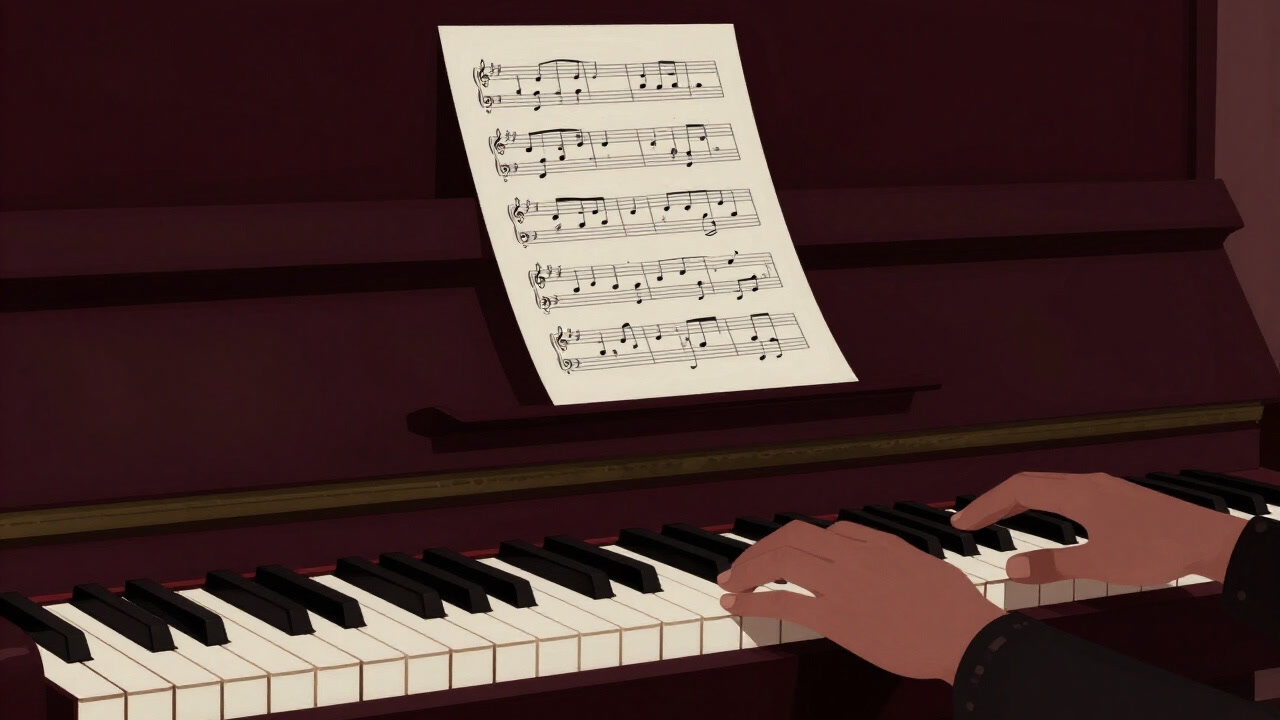
Description
A sonata is a breed of musical composition locked within the cage of form for centuries by composers. It promises a quiet beginning and a fierce ending, compelling listeners to bow to the tyranny of structure. Between the lines of its score lie the composer’s vanity and the performer’s endurance, woven together with sly precision. Under the holy banner of art, it lures audiences into a labyrinth of emotion only to release them with the polite ritual of applause. What it gains in dignity, it loses in spontaneity.
Definitions
- A crossroads of order and passion composed in three or more movements.
- An edifice of sound that feigns tranquility while hiding madness within.
- A test tube that simultaneously examines a composer’s logic and a performer’s skill.
- A high-minded incantation designed to titillate the classical connoisseur’s ego.
- A staircase of music ascending toward a predetermined climax.
- The ghost of improvisation shackled by the fetters of formal beauty.
- A timer that binds time-conscious listeners with guilt.
- A scrupulous testament left by masters of the past.
- A ballroom where melody and counterpoint dance a social waltz.
- A ritual that types in passwords to unlock emotional responses.
Examples
- “You think this sonata won’t spark a domestic incident by its third movement? Think again.”
- “Never trust the calm of the first movement—betrayal waits around the corner.”
- “The composer uses the sonata as torture to measure the audience’s endurance.”
- “Your friend ’enjoys’ sonatas? He must be a sadist.”
- “Listening to a sonata is social etiquette; applause is nonnegotiable at the end.”
- “Practice sonatas? That’s the first step to highbrow self-indulgence.”
- “The latest sonata literally puts ‘predictable harmony’ into practice.”
- “They call it classical, but it’s just the composer’s diary of woes.”
- “That sonata’s abrupt modulations steal your time like a sneaky thief.”
- “You ‘understand’ a sonata? You’ve bought into an adult lie.”
- “Every time a violinist speaks of a sonata, I feel forced to read a philosophy text.”
- “Your sonata is too logical and lacks feeling, screams the composer.”
- “Practicing a sonata kills emotion and turns fingers into automatons.”
- “By the end of a sonata, everyone starts questioning their own worth.”
- “Faced with a sonata, you’re greeted by applause of embarrassment.”
- “Her sonata is a battlefield between sentiment and reason.”
- “A sonata is a gift called a ‘promised betrayal.’”
- “Those who practice sonatas at midnight choose not to choose their own lives.”
- “A sonata’s score is a contest of complex bragging rights.”
- “No one ever calmly applauds after a sonata’s final chord.”
Narratives
- A sonata is a double life, liberating imprisoned notes while shackling them under the strict watch of form.
- The audience lulled by the first movement’s calm always exhausts its emotional budget in the second’s fervor.
- When a boy first heard a sonata, it resembled a harsher vow than any pledge of freedom.
- The concert hall air swells with tension, as if notes stand trial before an invisible court.
- The composer pours personal contradictions onto the paper, and the performer exposes them in silent display.
- At the finale’s abrupt end, listeners find themselves torn between joy and relief.
- An old score carries the lingering scent of past composers’ defeats.
- A single mistake in a sonata equates to performing self-denial before the public.
- Fingers racing across keys resemble souls in a hurry to live.
- The sound of applause can be heard as chains celebrating a fleeting release.
- The clash of musical form and emotion awakens the audience’s inner tyrant.
- During performance, everyone synchronizes with the performer’s breath and heartbeat.
- A rest isn’t a cue for silence, but a honeyed spell that lures listeners into a trap.
- A sonata forced to live by its score is a lifelong assignment.
- The moment a musician looks away from the page is an act of rebellion against ritual.
- Those who master sonatas find an even deeper labyrinth beyond.
- Audiences seek reasons to applaud; the sonata gives none and departs.
- A sonata incites emotional shipwrecks and permits thoughts to drift.
- The composer’s intent and the audience’s interpretation form an irreconcilable duality.
- Ghosts wander midnight practice rooms, offering sonatas prayers.
Related Terms
Aliases
- Prisoner of Notes
- Dictator of Form
- Labyrinth of Emotion
- Chains of Classical
- Performer Torture Device
- Applause Contractor
- Musical Test Tube
- Melody of Vanity
- Ceremony of Discipline
- Corpse of Improvisation
- Cage of Logic
- Timer of the Heart
- Trap of Art
- Hell of Practice
- Master’s Testament
- Signal of Silence
- Blueprint of Passion
- Obligation of Applause
- Judge of Melody
- Ball of Madness
Synonyms
- Curse of Three Movements
- Contract of Applause
- Maze of Melodies
- Shackles of Form
- Torture of Music
- Ghost of Improvisation
- Logic Camouflage
- Ladder of Passion
- Prison of Scores
- Worship of Sound
- Trial of Technique
- Design of Emotion
- Hourglass of Music
- Blended Madness
- Arena of Fingertips
- Deception of Silence
- Whisper of Structure
- Funeral of Notes
- Dancing Corpse
- Ritual of Melody
Use the share button below if you liked it.
It makes me smile, when I see it.