Description
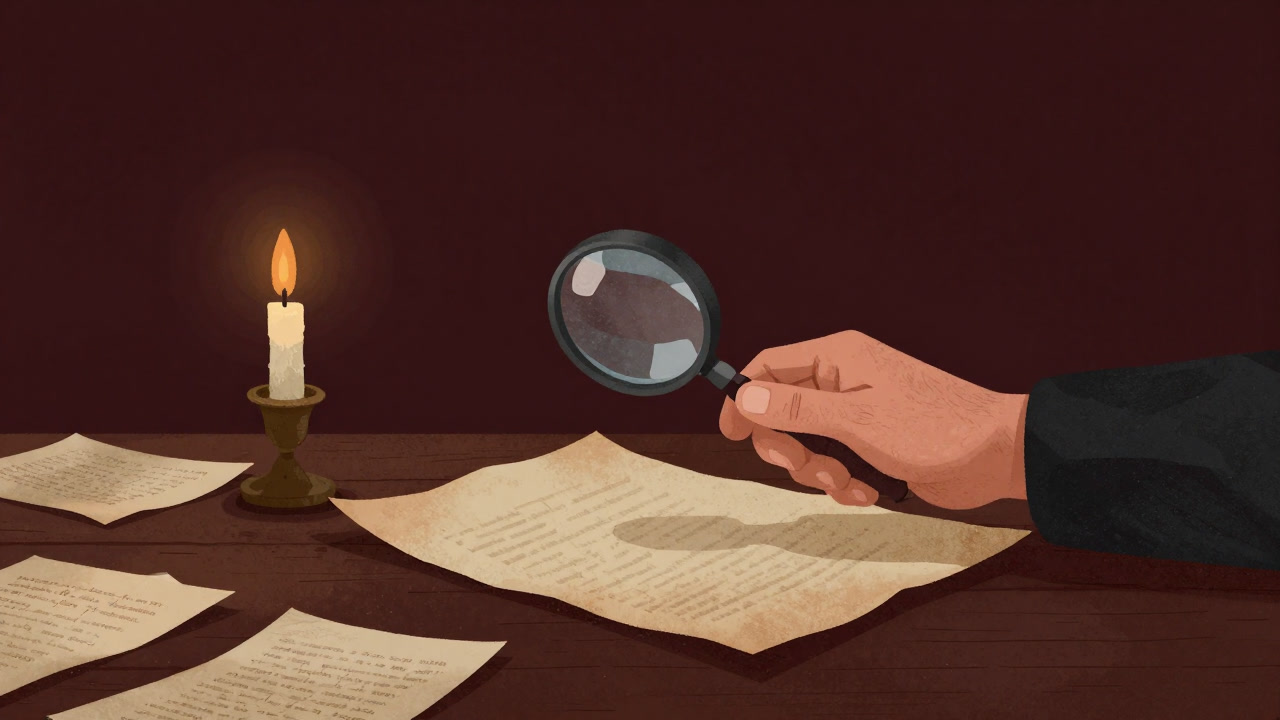
Source criticism is an intellectual carnival where fragments of the past are gathered to sketch a grand truth. Critics unearth hidden intents and biases behind the text, reflecting their own lens distortions with each discovery. From weathered manuscripts to the latest digital archives, no source is beyond scrutiny. Yet there is no guarantee of arriving at truth; more often, one creates a labyrinth of fresh doubts. Example: He rigorously critiqued a medieval manuscript but highlighted only the passages that suited his thesis.
Definitions
- An intellectual game filtering past sources through skepticism to prove reliability.
- The surveyor’s task measuring the chasm between text and authorial intent.
- An alchemy that assembles fragments of truth into a statue of persuasion.
- An executioner impaling biases and forgeries to extract cross-sections of history.
- A surveillance camera monitoring citation accuracy, threatening collapse with each error.
- A double-edged sword illuminating unverified claims while exposing one’s own bias.
- An archaeological endeavor unearthing countless question marks beneath the surface of texts.
- An exploration through the labyrinth of ambiguous testimonies, seeking a single exit.
- A protest driving stakes between historical fact and interpretation, challenging one’s stance.
- A tightrope walk stripping truth between academic authority and self-satisfaction.
Examples
- “You say this source is primary? You got it from Wikipedia.”
- “Source criticism? It’s a self-satisfaction ritual under the guise of seeking truth.”
- “No one cares if your citation is accurate before you do your critique.”
- “‘Consult the original’ they said, but ancient Greek isn’t supported.”
- “He studied source criticism and became more confident in his misreadings.”
- “Truth is neutral, until source criticism meddles with it.”
- “Before a critical eye, even the sturdiest archive is nothing but scraps.”
- “His critique of previous research is based on his own obscure blog.”
- “‘I have evidence in the copy,’ he boasts, evidence from an auction site.”
- “He mastered source criticism and equated book thickness with authority.”
- “Your footnotes are so verbose that I can’t see the main argument.”
- “If you can edit truth yourself, source criticism becomes moot.”
- “The real catchphrase isn’t ‘doubt everything,’ but ’let me verify it.’”
- “Her paper brims with source criticism methods, yet its conclusion is vague.”
- “Presenting source criticism findings, he just lists esteemed scholars endlessly.”
- “A printing error in an ancient text or a transmission filter? Criticize either.”
- “Your source criticism is just picking evidence that fits your desired conclusion.”
- “It was supposed to be source criticism, but it feels like self-critique.”
- “Even with primary sources, a critic sees it as just paper.”
- “Source criticism? Just another set of rules for the truth game.”
Narratives
- Source criticism is the agony of an artist gathering fragments of the past to compose a mosaic of truth.
- More often than not, the narrative a critic’s mind constructs outweighs what the manuscript’s words actually said.
- One critic turned a fading ink stain into a mystical revelation, building a temple of personal theory.
- In source criticism, the most formidable foe is not forgery but one’s own biases.
- A fingerprint on the margin of an ancient text sparks eternal debates on accident versus intent.
- With every citation, the critic’s voice echoes deeper into a self-referential chamber.
- Source criticism is where what the scribe intended collides with what the reader desires to see.
- A logical leap in textual analysis may be elegant, but atop it, conclusions stand precarious.
- The more one seeks balance between evidence and interpretation, the more the scale reveals its tilt.
- Critics don armor called credibility before venturing into the tempestuous seas of history.
- The missing pages speak volumes about the fragments they left behind.
- Source criticism is a dual journey: seeking truth while interrogating one’s own motives.
- One scholar pursued the ego of the restorer rather than the history concealed in the restored manuscript.
- Digital archives offer countless choices, yet the responsibility of selection falls on the reader.
- Critique for the sake of critique is a nihilistic ritual wearing the mask of truth.
- To illuminate sources is also to cast deeper shadows.
- The scarcer the found evidence, the wilder the critic’s imagination runs.
- The ambiguity of testimony provides an arena for arguments to critique that very ambiguity.
- Conclusions of source criticism often lead you into an infinite labyrinth of “more sources needed.”
- Truth may be the elusive illusion beyond the mirror of source criticism.
Related Terms
Aliases
- Truth Hunter
- Bias Detective
- Alchemist of Doubt
- Evidence Maniac
- Paper Chaser
- Document Janitor
- Fragment Collector
- Merchant of Truth
- Phrase Dissector
- Citation Master
- Forgery Sniper
- Archive Surgeon
- Chance Spoiler
- Interpretation Alchemist
- Pillar of Credibility
- Judge of Truth
- Source Pruner
- Data Harvester
- Evidence Domino Maker
- Doubt Concierge
Synonyms
- Doubt Machine
- Truth Mincer
- Evidence Hunter
- Critique Geek
- Fact Screener
- Research Thief
- Truth Filter
- Text Stripper
- Assertion Cradle
- Maze Guide of Study
- Doubt Sprinkler
- Citation Performer
- Data Knight
- Filter Magician
- Truth Pastor
- Source Undertaker
- Critique Chopper
- Evidence Tour Guide
- Truth Workshop
- Bias Recycler
Use the share button below if you liked it.
It makes me smile, when I see it.