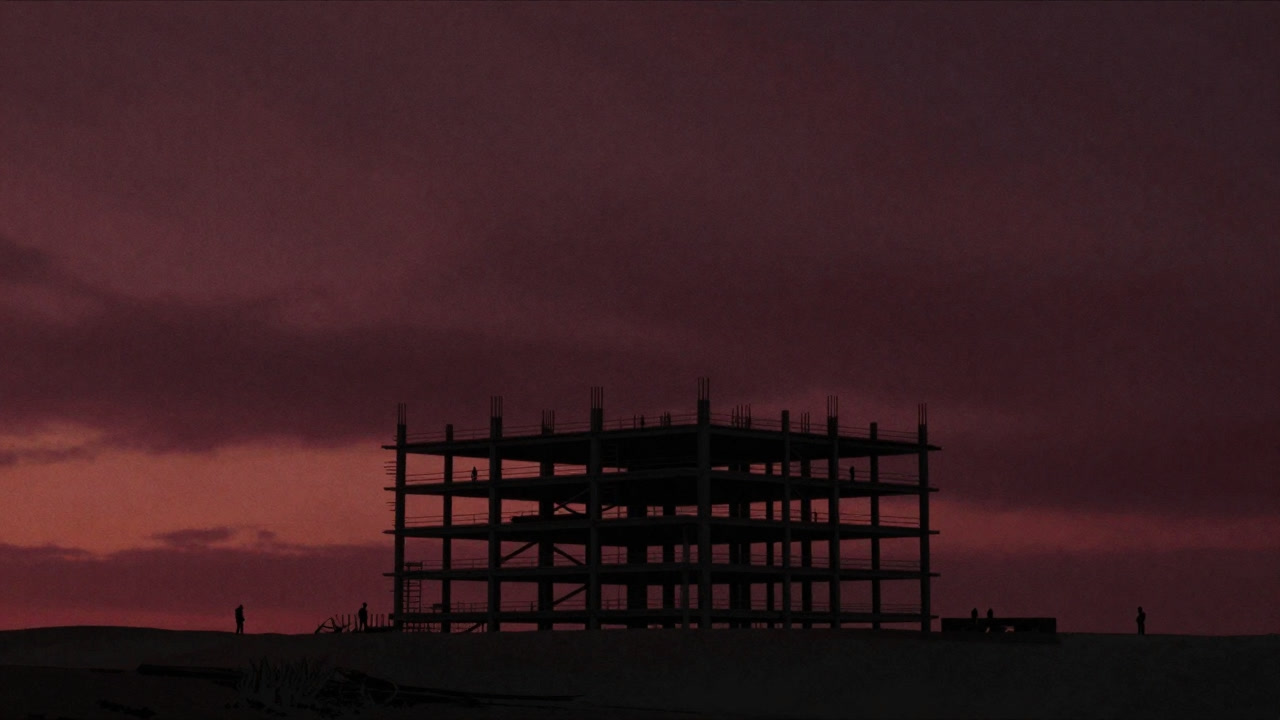
Description
Structural engineering is the discipline of calculating how to keep buildings and bridges from collapsing while always bracing for nature’s fury to win. Engineers spend days immersed in force diagrams and formulas, only to wrestle with unreliable seismic statistics. Under the banner of ensuring safety, failures result only in massive repair bills and evacuation orders. Theoretically perfect designs are in practice upheld by craftsmen’s whims and capricious materials. Ultimately, structural engineering is a profession built on praying to unseen forces while blindly trusting codes and equations.
Definitions
- A ritual of appeasing twin giants called gravity and budget while extending the skeleton of a building skyward.
- Magical arithmetic that confesses design flaws every time an earthquake arrives.
- A modern alchemy that worships the god of numbers and the idol of materials simultaneously.
- Proclaiming to breathe life into steel and concrete, when in reality it’s a struggle to defy gravity.
- An understudy to weather conditions that secretly complains, “Make me sturdier.”
- The art of drawing lines of defense named safety factors while tiptoeing around budgetary landmines.
- A paradox that the more immaculate the blueprints, the more room for real-world deviation.
- A stage where the dreams of those who build bridges and the reality of rising maintenance costs intersect.
- A kind of literature that claims to never fail in calculations but includes the possibility of falling flat in practice.
- An art of suffering that always sides toward safety in the tug-of-war between building codes and physical laws.
Examples
- “Can we make the beam a bit thinner?”
- “Certainly, but when the earthquake strikes, that slender beam will perform a graceful dance, though.”
- “Are the structural calculations finished yet?”
- “Yes, but there’s no guarantee they can resist a quake.”
- “I planned with a 200% safety factor.”
- “Then you’re laying the groundwork for budgetary ruin.”
- “The analysis software froze.”
- “Restart it before your structure does the same.”
- “This bridge has a 100-year lifespan.”
- “Maintenance costs will kill it sooner than that.”
- “We had a construction error on site.”
- “Humans and machines alike love making mistakes.”
- “Can you review the calculations once more?”
- “Reviewing them further only deepens the regret.”
- “The load capacity is at its limit.”
- “Life is built on the edge of limits, too.”
- “Construct it exactly to the drawings.”
- “Drawings are myth, the site is hell.”
- “I want a zero-risk structure.”
- “Zero risk also means zero budget.”
Narratives
- Structural engineers are those who question whether their designs were fraudulent every time an earthquake rattles the ground.
- The perfection of theory matters only on blueprints; the true adversaries are the unpredictable elements on site.
- Load calculations excel in math class but often lose to variations in concrete quality and weather.
- Each time a bridge is built, engineers must face trials from the gods, the law, and their clients simultaneously.
- Every increase in safety factor drowns a project in the sea of its own budget.
- Software errors in structural programs are offered as inevitable trials to engineers.
- Site carpenters are blissfully unaware of design struggles, yet nothing stands without them.
- Reading a soil report reminds one that architecture often lives in the realm of impractical theory.
- Cracks in structures grow with time, revealing the gulf between ideal drawings and real constraints.
- Whenever seismic codes are updated, past designs turn into museum-worthy relics.
- Wind tunnel experiments seem to demand more from structures, but what they truly need is just luck.
- The pounding of pile drivers serves as a form of prayer for structural engineers.
- To trust your calculations is to also budget for hefty apology fees.
- Pedestrian bridges at intersections are battlegrounds of designers’ vanity and citizens’ anxieties.
- Reflected sunlight off skyscraper windows is a blur of pride in the engineer’s eye.
- No matter how perfect the model functions, real-world vibrations remain undefeated.
- The deflection of beams mirrors the tremors of the human heart.
- Safety standards are mere excuses for when things don’t collapse.
- Longevity of structures is an eternal trade with maintenance costs.
- Structural engineering is the art of simultaneously appeasing two beasts: physical laws and building codes.
Related Terms
Aliases
- Vibration Tamer
- Load Hypnotist
- Safety Factor Zealot
- Gravity Con Artist
- Site Incubus
- Mathematical Whip
- Quake Mockery
- Design Alchemist
- Structure Fiend
- Blueprint Ghost
- Steel Astrologer
- Concrete Dreamer
- Beam Gambler
- Column Preacher
- Stress Bard
- Seismic Jester
- Soil Judge
- Shape Magician
- Quake Supplicant
- Analysis Alchemist
Synonyms
- Civil Alchemy
- Mechanical Illusion
- Architectural Fortune
- Structural Gamble
- Gravity Ephemeral
- Safety Superstition
- Material Loyalty
- Code Binding
- Design Frenzy
- Concrete Myth
- Statistical Oracle
- Seismic Entertainment
- Load Frolic
- Beam Jungle
- Column Circus
- Structural Chaos
- Stress Labyrinth
- Foundation Maze
- Section Fairytale
- Structural Parade
Use the share button below if you liked it.
It makes me smile, when I see it.