Description
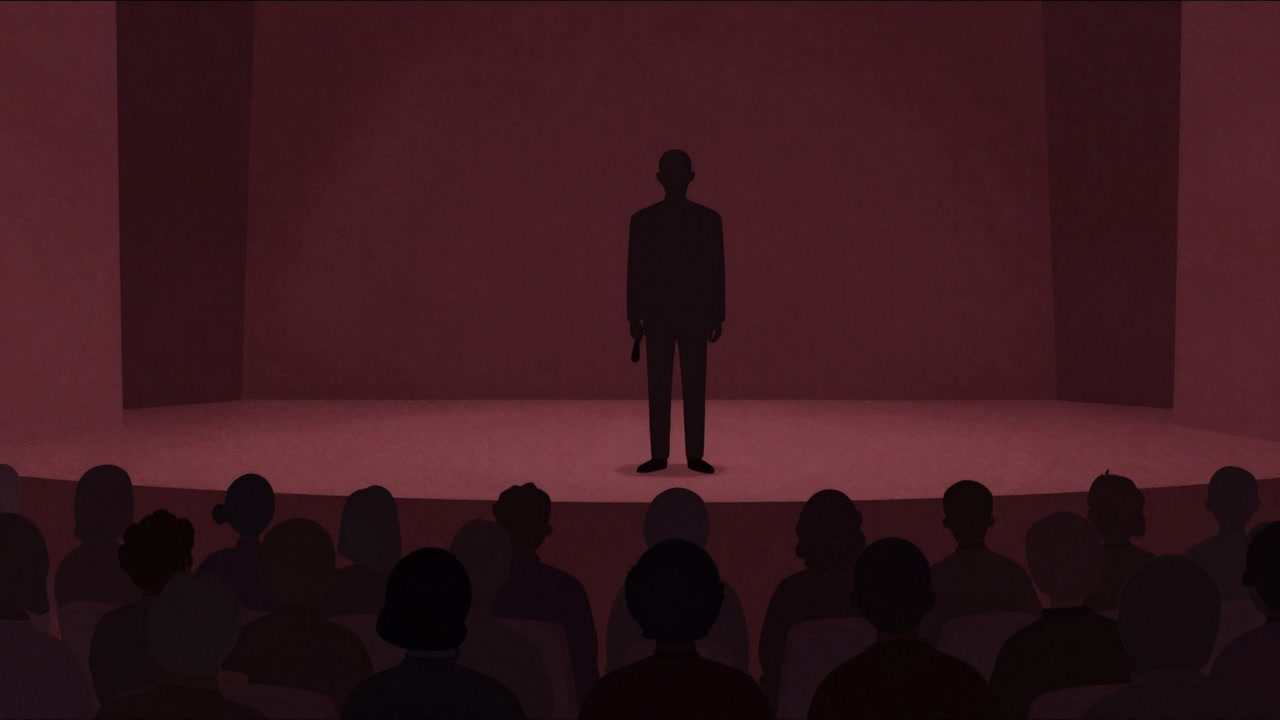
A town hall meeting is a social ritual where citizens perform the act of raising their voices in public, while their actual opinions vanish into a mountain of meeting minutes. Those on stage soak in applause, a blend of cheers and jeers, treating the Q&A as a solo lecture of their own rhetoric. Participants loudly assert their rights but are more inclined to drown out their neighbor’s voice than listen. Topics swell with fervor, only to return to a state of blank equilibrium when it’s time for conclusions. Afterwards, only a photograph under a ‘Hooray for Democracy’ banner remains elegantly preserved.
Definitions
- A performance event held in public where citizens pretend to have their voices heard while their opinions disappear into a pile of meeting minutes.
- A gathering where politicians brandish the ‘voice of the people’ but actually take home primarily votes for the next election.
- A place where questions thrown by citizens get caught in an organizational net and processed into campaign slogans.
- A momentary art piece during which only the microphone on stage is excited, while real issues lie mute.
- An accessory to democracy that offers freedom of expression bundled with the refusal to implement.
- A one-way Q&A contest conducted under the guise of ‘dialogue.’
- A paper-wasting festival in which minute-takers are the most enthusiastic performers.
- The intersection where the ideal of citizen participation meets the reality of blame-shifting.
- A political exhibition requiring emotional labor as participants stand, applaud, and sit repeatedly.
- A ritual where only feedback surveys are truly tabulated, and the meeting’s actual discussions vanish.
Examples
- “What are your thoughts on this budget proposal?” “Could you actually let me take your question first?”
- “We’ll listen more to the citizens’ voices!” “Yes, we’ll listen—but none of it will ever make it into policy.”
- “Youth opinions are important too!” “Anyone with concrete proposals?… Ah, no takers.”
- “We ask for opinions on the school closure issue.” “Thank you for your valuable input. Moving on to the next topic.”
- “I propose traffic congestion measures!” “We’ll compile that in a survey by next time, so feel free to forget it.”
- “Even if you say ‘speak up’…” “Don’t worry, they won’t dig deeper than the ocean.”
- “It’s Q&A time!” “Please keep questions within 30 minutes and answers within 30 seconds.”
- “I brought ideas for regional revitalization.” “Wonderful. Now tell us your impressions instead of concrete plans.”
- “Budget for park improvements.” “I’ll note your request, but the budget will be spent elsewhere.”
- “Any questions?” “Oh, sorry, we’re satisfied just by listening.”
- “We want more security cameras.” “Providing peace of mind is our job, so please rely solely on cameras.”
- “What about disaster measures?” “We’ll think about it when a disaster occurs, so please don’t be afraid today.”
- “The air conditioning is ineffective.” “Contact facilities management later. Please feel today’s coolness in your heart.”
- “I want to call for free school lunches.” “Education is important. But funding is off the table today.”
- “We’ll gather everyone’s voices.” “Those voices will mainly be forwarded to the next election campaign team.”
- “There will be a business card exchange after the meeting.” “Number of cards exchanged doesn’t correlate with the weight of opinions.”
- “Any comments on the room temperature?” “This is a place to feel enthusiasm, not comfort.”
- “When will it become policy?” “That question itself is what we call policy.”
- “We want easier participation.” “We limit opinions to those who can actually participate.”
- “When will a conclusion be reached?” “As a result of listening thoroughly to citizens’ voices, we’ll address it next time.”
Narratives
- After introducing himself, the mayor switched through prepared slides and opened the floor for questions. The participants were enthusiastic, filling every chair despite the evening hour. Yet all passionate opinions were swept away into the waters of small talk when time ran out.
- Claiming to capture the voices of the hall, the local council member grabbed the microphone and delivered a one-sided speech for thirty minutes. The citizens’ voices amounted to only a few whispers racing in at the very end.
- The survey sheets distributed at the meeting slipped into bags without being collected. The politician proudly reported a high collection rate, though in reality fewer than 5% were ever returned.
- In response to the residents’ enthusiastic cheers, the speaker waved back with a broad smile—but there was not a single promise to reflect it in policy.
- The Q&A came with a time limit. As the questioner stood tense before the microphone, the host’s “Next question, please” rang out before they could organize their thoughts.
- Pronouncing “Your opinions matter,” the council member climbed into a car and departed. Citizens could do nothing but applaud him away.
- The opinions raised by citizens survived only as scribbles in that day’s minutes before being shelved in the archives of policy documents.
- Event staff smartly glossed over the earnest questioner and merely rolled the microphone to an empty seat.
- Though advertised as open to all, the only ones who could truly speak were those with the courage to raise their hands and the persistence not to give up the queue.
- On social media after the meeting, comments praising its “constructiveness” flooded in—though the content was drowned in a torrent of identical hashtags.
- The venue’s whiteboard was filled with opinions, next to which the words ‘We’ll summarize later’ were scribbled.
- The souvenir pen handed out on the way home stands as a symbol of politics masquerading as concern for citizens.
- The screen on stage was said to display referendum results but actually switched to slides praising the budget proposal.
- When a parent with children asked a question, an attendant gently suggested, ‘Please use the children’s area,’ but no questions were accepted from there.
- When questions ran out, background music drifted through the hall, gently lowering body temperature and ushering in the homeward mood.
- At the announcement, ‘Please indicate the same opinions with applause instead of raising your hand,’ citizens clapped in robotic rhythm.
- Participation was restricted to pre-registered attendees, and the right to speak was left to a lottery.
- At the end of the meeting, a banner reading ‘Together for your future’ was raised for a commemorative photo.
- That banner quietly remained in a spot still seen by citizens the next day.
- A town hall meeting has become a ritual told down not by the loudness of voices, but as a disposable consumable.
Related Terms
Aliases
- Politician Showcase
- Opinion Vacuum
- Vote Harvest Fest
- Mic Solo Show
- Democracy Manual
- Hand-Raising Arena
- Performance Plaza
- Civic Tea Party
- Citizen Safari
- Approval Battle
- Opinion Graveyard
- Question Capsule
- Agenda Marathon
- Volume Meter
- Passion Machine
- Speech Carnival
- Participant Recycler
- Applause Parade
- Minutes Factory
- Policy Teaser
Synonyms
- Public Speaking Event
- Citizen Salon
- Opinion Filter
- Q&A Battle
- Policy Teaser
- Debate Disco
- Volume Festival
- Podium Theater
- Will Simulation
- Discussion Cafe
- Inquiry Machine
- Heat Fair
- Democracy Expo
- Paper Wasteland
- Mic Mismatch
- Voice Time
- Forum Fraud
- Participation Rite
- Assembly Caravan
- Applause Contest
Use the share button below if you liked it.
It makes me smile, when I see it.