Description
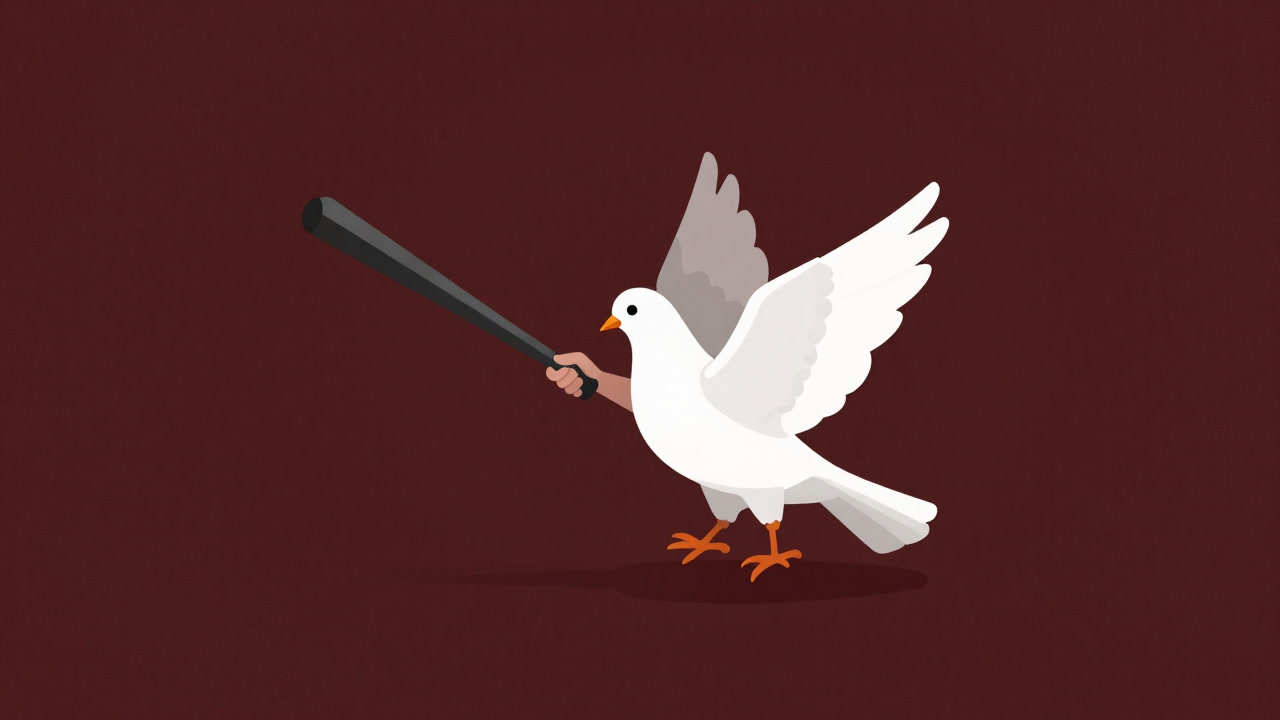
Use of force is the act of discarding reason and letting fists speak beyond the reach of diplomacy. While peace is lauded, the true resolution of conflict often depends on hypocrisy’s mace. It masquerades as a civilizing ritual under the banner of national honor, even as it shatters another’s tranquility. Once bathed in procedures and treaties, violence graduates into polite society’s parlance. It reveals the mirrored truth that one party’s security stands upon another’s crushed hopes.
Definitions
- Use of force is violence in its formal attire, adorned with the trappings of peace.
- An awkward substitute for dialogue when words prove too feeble to resolve conflict.
- A social contract that proves one’s security by threatening another’s safety.
- A performance art on the international stage, showered with both praise and condemnation.
- Tactfully legalized cruelty, courtesy of procedures and legal clauses.
- A visible vow of life-endangering commitment, or the most extreme term sheet.
- The ultimate tool to silence foes and conveniently rewrite inconvenient truths.
- A modern tragedy where gunpowder and legal codes share the spotlight.
- The state’s most violent mode of self-expression, disguised as self-respect.
- Ink made of armaments, writing bloody treaties in the language of war.
Examples
- “Neighbor holding military drills? Splendid. Let’s return their peace salute with our own fireworks.”
- “Ceasefire talks? We should first calibrate the volume of our cannons for a proper handshake.”
- “Use of force is the last resort of diplomacy? Funny how it always becomes the first.”
- “Our national security is defined as ‘pummeling harder than the neighbor.’”
- “Another UN resolution passed? Time for the demonstration phase.”
- “A tank parade: the aesthetics of intimidation, unchanged since ancient times.”
- “Peace talks? First, send them a rocket emoji to set the mood.”
- “Arms exports are civilization’s gift; gifting and hitting are separated by a thin line.”
- “Increasing military budget? It’s like buying peace of mind for the citizens.”
- “On this map, yellow attacks and red defends—color-coded peace education at its finest.”
- “A preemptive strike? It’s an entertainment before the main act of retaliation.”
- “They call it an exercise, but you never know when it’s the real performance.”
- “Drones? A high-tech courier service that delivers violence without humans.”
- “Bombing runs: sermons from the sky, if you will.”
- “Border security? Nothing says deterrence like heavy artillery over barbed wire.”
- “Warning shots: the pinnacle of wordless negotiation.”
- “Your peace lives within the gusts of my explosions.”
- “Military alliances? Nothing seals friendship like shared cannons.”
- “Weapons are infrastructure far more comprehensible than words.”
- “Strategic points? Really just a competition of who can fire the loudest.”
Narratives
- In front of embassies, armored columns photograph better than peace flags ever could.
- They call it the last resort of war because it’s the fastest handshake between nations.
- When artillery tears through silence, the essence of peace comes into sharp focus.
- In strategy sessions, firing angles are discussed immediately after ceasefire drafts.
- At the UN podium, military uniforms grab more attention than diplomatic speeches.
- Border closures have become a new etiquette of bayonet greetings.
- The slogan ‘Disarm now’ is actually a polite way of saying ‘Get bigger guns.’
- When airstrikes end, reconstruction teams pose for photos among the ruins.
- Opening theme music on war coverage channels abruptly shifts to gunfire.
- On parade day, citizens perform a duet of salutes and applause.
- When a ceasefire is declared, state media keeps reporting troop counts ad infinitum.
- Behind every peace treaty, a battery of guns lurks in the shadows.
- Peace protesters distributing leaflets eventually find their windows shot out in irony.
- Refugee columns become ‘armed migrants,’ after which no one dares to pity them.
- Someone once whispered that borders are drawn not by lines but by fire.
- Soldiers supposedly carry the legend ‘Bearers of Peace’ stamped on their backs.
- In conflict zones, the gunshot replaces the evening chime as timekeepers.
- Peacekeepers hold rifles and cameras with equal pride.
- War memorials display real shrapnel as ‘trophies of peace.’
- Measuring the success of force involves casualty counts and approval polls standing side by side.
Related Terms
Aliases
- Peace Theater
- Legalized Beating
- State Vampire
- Iron Fist Diplomacy
- Sanction Fireworks
- March of Boots
- Roar Poet
- Etiquette of Fists
- Authorized Violence
- Power Gymnastics
- Bloody Handshake
- Gunshot Greeting
- Destruction Presentation
- Knife Summit
- Soldier’s Toast
- Cannon Symphony
- Iron Pact
- Legal Abuse
- Strategic Slap
- Invasion Protocol
Synonyms
- Violence Etiquette
- Fist Language
- Cannon Sermon
- Armed Ritual
- War Waltz
- Peace Black Comedy
- Force Banquet
- Bomb Language
- Aesthetics of Pressure
- Military Carnival
- Bayonet Dance
- Beating Ritual
- Bombardment Parade
- Barricade Art
- Suppression Opera
- Bullet Messaging
- Intimidation Infrastructure
- Lecture of Death
- Massacre Prototyping
- Steel Ceremony
Use the share button below if you liked it.
It makes me smile, when I see it.