Description
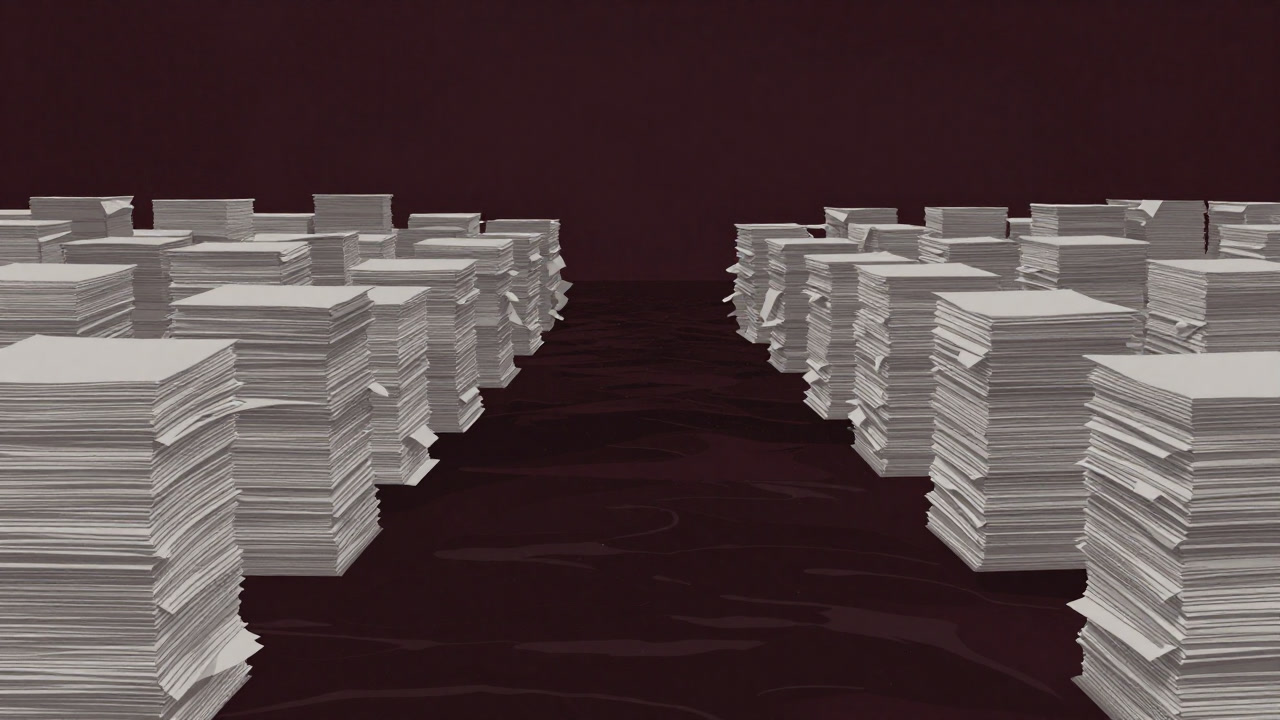
Watershed management is the grand alchemy of directing rain clouds and politicians to feign environmental salvation while channeling budgets. It is the umbrella term for deepening forests of paperwork under the guise of planning water’s destiny. Claimed to listen to nature, it translates into formulas and meetings that expose intangible vested interests. Ultimately, no one is held accountable, and a waiting order for the next typhoon season completes the infinite cycle.
Definitions
- A democratic theater that controls water flows through paperwork and conferences.
- A modern Ark project running dams and dialogues in parallel.
- An economic simulation that compresses nature’s voice into equations and prioritizes profit distribution.
- A system that pretends to decide water’s fate while secretly determining the flow of benefits.
- A political show choreographing the balance between deforestation and community consensus.
- A business model that claims to reduce flood risk while sowing seeds for new vested interests.
- A public-private drama playing the honeymoon of environmental protection and development.
- The art of overlaying typhoon paths with bureaucratic flowcharts simultaneously.
- A public works archetype that preaches transparency but actually becomes a black box.
- A time-bomb project that defers responsibility until the next heavy rain.
Examples
- “Watershed management meeting? We’ve added 100 more pages of documents again. Meanwhile the rain won’t wait.”
- “Dam construction? No, that’s just a side dish in watershed management.”
- “This plan is community-consensus based. Who exactly is the ‘community’ here?”
- “We’ve included flood measures in next year’s budget. Effectiveness? That depends on politicians’ moods.”
- “Protect the watershed ecosystem? Let’s start by adjusting the conference room’s air conditioning first.”
- “After analyzing rainfall data, we concluded that we need more meetings.”
- “Vested interest coordination? We’re just the watershed management team, though.”
- “We’ll issue certificates to citizens stating ‘We manage this river.’”
- “Environmental protection and development can coexist—at least until the next typhoon arrives.”
- “Strengthening the levee is a campaign promise for next year. Even post-disaster, it’s not too late.”
- “A legendary quote emerged in the meeting: ‘Water flows downhill.’”
- “The mayor’s inspection was sudden, so we improvised a watershed management model.”
- “These graphs aren’t accurate but appearance is what matters.”
- “We expanded green zones, so we’re environmental heroes now.”
- “Field surveys are scheduled for next year. First, let’s secure the budget.”
- “After hearing residents’ voices, we decided not to change anything.”
- “In the end, watershed management is sealed with verbal promises and stamps.”
- “Predictive models? Those are our artwork pieces.”
- “We learned that increasing meetings dilutes the sense of crisis.”
- “The ultimate goal of this project is to hand it over to the next team.”
Narratives
- The project titled ‘Watershed Optimization Initiative’ prioritized slogans over performance metrics.
- Despite claiming to prepare for local downpours, staff overtime increased due to report creation.
- The levee reinforcement plan existed merely as a demonstration to put on the ‘discussion table.’
- With every meeting, a new working group was born, and no one knew when it would end.
- The scale model in the city hall corridor stood as a symbolic object of administrative cost.
- Though a resident briefing was held, the number of applause beats overshadowed the questions asked.
- Data from the rainfall observatory transforms into the most critical document when passing office approvals.
- They talk about inter-agency collaboration, but it’s just a ritual of expanding the CC lists in emails.
- Posters reading ‘Eco-Friendly Watershed Management’ adorned the entrance of the municipal office.
- By fiscal year-end, watershed management achievements only rose on graphs in a mysterious fashion.
- Every change of personnel renamed the project, making confusion a constant state.
- No one looks at the flood risk maps, but they are always distributed in meetings.
- In emergencies, the PR staff—rather than engineers—were summoned first.
- The natural restoration site was invisible; what appeared were suit-clad hearing teams.
- Funding meetings felt like gatherings of crystal seers divining the watershed’s future.
- Model calculations concluded that the optimal solution was simply ‘hold another meeting.’
- A strange rule emerged: the higher the budget utilization rate, the farther floodwater seemed.
- By the time there weren’t enough chairs in the conference room, the project deadline was forgotten.
- What was called disaster prevention was largely just excuses rolled over to the next year.
- All that remained were project names, their substance hollowed out over time.
Related Terms
Aliases
- Flood-Avoidance Project
- Paper Dam
- Meeting Flood
- Vested Interest Grease
- Riverside Theater
- Budget Alchemist
- River Modeller
- Storm Navigator
- Nature Translator
- Water Solutions Shop
- Rain Invocation Team
- Conference Alchemist
- Eco Chessmaster
- Watershed Mage
- Graph Artisan
- Slogan Farmer
- Stamp Strategist
- Forecast Artist
- Consensus Magician
- Watershed Waster
Synonyms
- Watershed Show
- Storm Management
- Dam Conference
- Water Chaos Control
- Eco Meetingcraft
- River Orchestra
- Rain Manipulation
- Nature Vested Interests
- Environmental Simulation
- Resident Performance
- Green Zone Ranking
- Disaster Delay Manufacture
- Stamp Management
- Paper Chain
- Water Rights Drama
- Environmental Black Box
- Budget Flood
- Meeting Meander
- Sustainability Squeeze-In
- Resource Fake
Use the share button below if you liked it.
It makes me smile, when I see it.