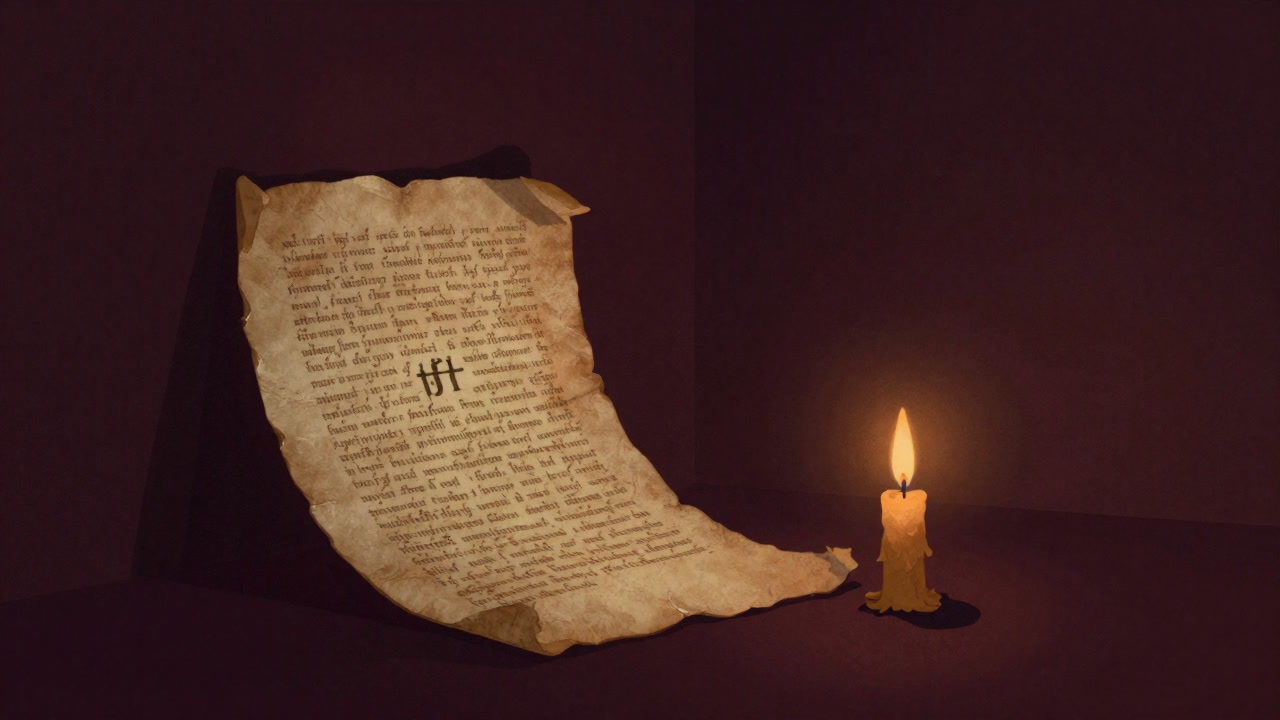
Description
Wisdom literature is a collection of archaic texts where ancestral maxims and contradictions intertwine. It emanates the scent of profound insight even as its mystical tone often induces headaches. Countless aphorisms proclaim ’eternal truth’, yet the authors superimpose their own doubts as a secret ingredient. Disguised as guides to life, they are masters of a trick, leading readers into a labyrinth of puzzlement.
Definitions
- An ancient compendium of sage advice, most of which is destined to be forgotten before reading.
- A tome that chastises human folly while its very consumption becomes the ultimate time thief.
- A parade of ’eternal truths’ that fade along with their historical context.
- The most compelling teachings require Herculean effort to apply.
- Passages that appear wise at first glance metamorphose into pure confusion upon reading annotations.
- A dark grimoire that plunges truth-seekers into the abyss of self-loathing.
- Standing proudly on library shelves yet in reality a dusty repository of nitpicking.
- Donning the mask of moral instruction while choreographing the author’s self-justification behind the scenes.
- A millennia-old script lauded as ‘words of the wise’ yet, in truth, a script for farce.
- An ultimate self-indulgence device that makes you feel wiser the more you read.
Examples
- ‘Seeking truth? Check the wisdom literature aisle—right next to the ancient dust bunnies.’
- ‘They call it ’eternal wisdom’, though I suspect the eternal part refers to the time it’ll take to finish.’
- ‘I quoted an old proverb and everyone nodded… then realized I had no point.’
- ‘This chapter promised enlightenment, but all I gained was existential dread.’
- ‘If you follow all this advice, you’ll discover new levels of self-doubt.’
- ‘The wise man wrote volumes we have no volume to read.’
- ‘I’d recommend this to my friends — if they enjoy 200 pages of footnotes.’
- ‘Whoever titled this ‘The Book of Clarity’ apparently never met its editor.’
- ‘The margin notes might be more insightful than the main text.’
- ‘I study wisdom literature for the same reason I watch horror movies: controlled suffering.’
- ‘They say knowledge is power, but these scrolls mostly emit dust.’
- ‘An ancient text claimed to hold the key to life; I think the key is lost in the index.’
- ‘Why chase wisdom when ignorance is so much more comfortable?’
- ‘Reading this is like scaling a mountain of paradox with flip-flops.’
- ‘Every maxim here is just an elaborate excuse for another maxim.’
- ‘Advice from 2000 years ago: wash hands and beware of strangers.’
- ‘I tried living by these aphorisms, now I’m just broke and confused.’
- ‘Wisdom literature: where the footnotes need footnotes.’
- ‘Apparently my ancestors wrote wisdom in code—of which no one left the cipher.’
- ‘After reading this, I feel enlightened and completely empty.’
Narratives
- Each time one unfurls the tattered scroll, the avalanche of footnotes at the bottom threatens to collapse the reader’s will.
- Legend has it that a sage discovered his own contradiction mere lines later and frantically appended more revisions.
- A village boy attempted to study wisdom literature to become wise, but fled in terror at the sight of the inscribed epitaph.
- When the librarian proudly displayed the ‘oldest manuscript,’ patrons clasped their heads in silent dread.
- Seekers look for solace in its teachings, only to wander the labyrinth of marginalia and lose their way.
- An aphorism quoted in academic papers was scrutinized line by line by peers, ending in more criticism than clarity.
- A maxim appears elegant until one tries to apply it and painfully extracts every ounce of patience from life.
- Night after night, those who devour the manuscripts seem to savor self-inflicted suffering more than wisdom.
- Nobody notices that a scribbled marginal note often hits closer to truth than the main text.
- This literature pretends to stimulate intellectual curiosity but is, in fact, a device for self-flagellation.
- The weathered characters resemble cave paintings, each blot telling of some ancient misery.
- Hands stop turning pages the instant one faces their own ignorance.
- It is said that sages deliberately chose obscurity knowing well that no one would understand.
- Ironically, when people strive to become wise, the market for wisdom literature booms.
- In front of such texts, scholars cannot resist posting brags on social media.
- The red corrections in the margins seem like traces of the author’s own despair.
- Memorize a single verse and brace for the inevitable storm of annotations.
- Each passing generation exaggerates the same words with a fresh spin of interpretation.
- Quoting a sage in parliament is received as painful truth and met with raucous condemnation.
- Upon the final page lies only the preface to the next volume, clandestinely preserved.
Related Terms
Aliases
- Manual of Fools
- Sage’s Prank
- Ancient Self-Help
- Footnote Inferno
- Labyrinthine Tome
- Charlatan’s Guide
- Perpetual Draft
- Philosophical Flourish
- Reader Punisher
- Whisper of Knowledge
- Ghost of Manuscripts
- Truth Hunting Chronicle
- Lost Wanderer’s Companion
- Synapse Confuser
- Satirical Sage’s Book
- Vault of Doubt
- Scripture of Folly
- Time Thief Scroll
- Universal Excuse Compendium
- Sage’s Caricature
Synonyms
- archaic gibberish
- florid dissertation
- sermon in disguise
- sage’s excuse
- paper parade
- verbal trap
- wisdom sales pitch
- paper scam
- encrypted adage
- idealist showroom
- parody self-help
- labyrinth literature
- word snare
- sage’s sneer
- undecipherable compendium
- chant to the void
- vicious aphorism
- ironical manuscript
- decorated hot air
- legendary satire
Use the share button below if you liked it.
It makes me smile, when I see it.