Description
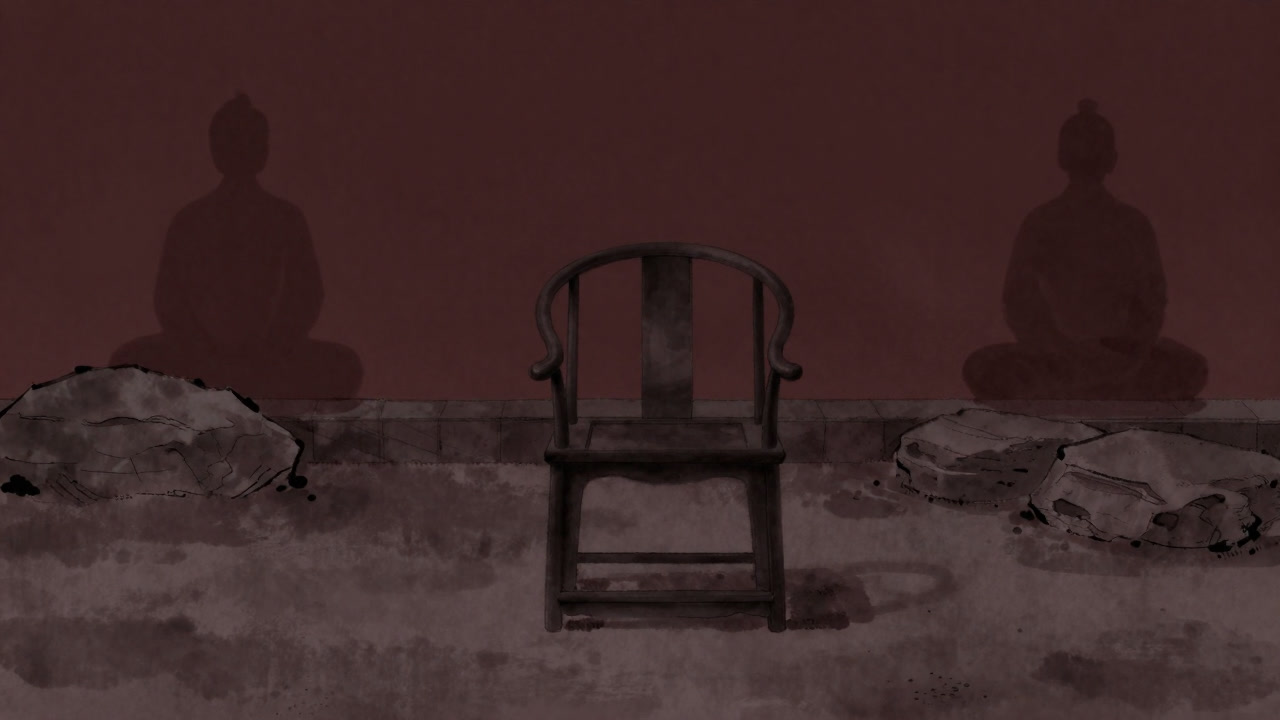
Wu-wei is the art of doing nothing while feigning transcendence, a form of self-indulgent enlightenment. It masquerades as profound serenity even as it shirks responsibility, serving as camouflage to earn the respect of onlookers. Mocking the busyness of the world, it amounts to little more than a pretext for evading real effort. Its tranquility blurs the line between sloth and wisdom in an exquisite performance art.
Definitions
- A spiritual technique of feigning attainment by renouncing all effort.
- A ceremonial act of gaining self-satisfaction by merely observing the world like a seated monk.
- A strategic idleness that attracts attention through intentional inaction.
- A paradoxical social blessing praising the act of doing nothing.
- A mental game of feeling attuned to cosmic harmony without lifting a finger.
- A sleight of hand that reframes lack of initiative as Eastern wisdom.
- An excuse disguised as naturalness that secretly abandons all obligations.
- A method of turning personal inaction into a celebrated virtue.
- A thought experiment that eliminates tasks under the pretext of removing waste.
- A metaphysical performance of perpetual sabotage cloaked in silence.
Examples
- ‘Wu-wei is the ultimate cheat code to transcend busyness.’
- ‘How’s your wu-wei practice today? Oh, sold out motivation again.’
- ‘Meeting? It’s part of my wu-wei routine—no action, no blame.’
- ‘They say he achieved enlightenment through wu-wei; in reality, he’s just a nap prodigy.’
- ‘Mastered wu-wei and became a pro at ignoring all notifications.’
- ‘More people are praising wu-wei while posting daily activity updates on social media.’
- ‘Today is dedicated to wu-wei, so please hold all calls.’
- ‘Boss: “Why isn’t the project moving?” Employee: “Engaged in wu-wei practice.”’
- ‘Wu-wei? My friend laughed and said it’s just a fancy excuse to slack off.’
- ‘A course on wu-wei? You pay top dollar to learn how to do absolutely nothing.’
- ‘Those who preach wu-wei love tweeting long essays about not doing anything.’
- ‘Best strategy: do nothing and get no complaints—wu-wei perfected.’
- ‘Wu-wei is the magic that makes tasks disappear from your to-do list.’
- ‘At the end of wu-wei lies either emptiness, growth, or just a really good nap.’
- ‘In club activities, wu-wei is praised but yields zero improvement.’
- ‘The Wu-wei Society? A gathering whose sole purpose is to achieve nothing.’
- ‘Next trend after wu-wei: streaming 24/7 inaction meditations.’
- ‘Some take wu-wei so seriously they won’t even wash their clothes.’
- ‘Modern humans never forget to spend money, even in the name of wu-wei.’
- ‘He claims to be a wu-wei master yet insists he’s always so busy.’
Narratives
- Wu-wei is an advanced technique of empty meetings, arms crossed, while the clock devours your hours.
- When projects stall, people cling to wu-wei, for inaction is hailed as the mark of the sage over results.
- Those who preach wu-wei paradoxically demand minute instructions from their subordinates.
- Since perfecting wu-wei, she has mastered the art of infinite lunch breaks.
- Abandoning oneself to wu-wei turns even email notifications into sublime shackles.
- Idleness disguised as wu-wei exerts the perfect pressure to hush the entire office.
- At morning briefs they lecture on wu-wei yet frantically scurry about when the meeting ends.
- If you wish to know what lies beyond wu-wei, spend more time doing nothing—and discover that nothing is the answer.
- As a ritual of wu-wei, one must delay email replies and respond with blank subjects.
- Graduates of wu-wei avoid answering the boss’s calls, inevitably submitting transfer requests.
- In pursuit of wu-wei, he even loses the ability to discard outdated documents.
- Companies embracing wu-wei sometimes hold stagnation in higher esteem than efficiency.
- Rumor has it that monks preaching wu-wei secretly study economics textbooks.
- Once you practice wu-wei, only the fear of busyness remains forever.
- Wu-wei fosters a silent solidarity where humanity unites in collective loafing.
- He took wu-wei too far and eventually forgot to stand up from his office chair.
- Believers of wu-wei become shadows at their desks, unmoving even at quitting time.
- The concept of wu-wei is deemed most dangerous in societies that prize performance above all.
- On nights devoted to wu-wei, offices grow eerily silent, the clock ticking dutifully.
- The terminus of wu-wei might just be a holiday that arrives with all tasks forgotten.
Related Terms
Aliases
- King of Laziness
- Zen Master of Idleness
- God of Rest
- Grand Inactionist
- Elite Slacker
- Naturalness Guru
- Sabotage Engineer
- Professional Quitter
- Priest of Silence
- Time Thief
- Action Evader
- Inertia Comedian
- Genius of Uselessness
- Idol on Hiatus
- Self-Proclaimed Master
- Meditation Loafer
- Abandonment Entity
- Gentleman of Lethargy
- Hero of Boredom
- Fluffy Revolutionary
Synonyms
- Natural Inaction
- Action Halt
- Lethargic Enlightenment
- Aesthetics of Abandonment
- Nonresistance Doctrine
- Oversleeping School
- Loafing Philosophy
- Daydream League
- Dormancy Faith
- Nonactivity Principle
- Doctrine of Doing Nothing
- Abandonment Thought
- Philosophy of No Plan
- Virtue of Pause
- Stasis School
- Teaching of Rest
- Wu-Wei Movement
- Blank Practice
- Truth of Uselessness
- Randomness Creed
Use the share button below if you liked it.
It makes me smile, when I see it.